

London Escorts sunderland escorts asyabahis.org dumanbet.live pinbahiscasino.com sekabet.net www.olabahisgir.com maltcasino.net faffbet-giris.com asyabahisgo1.com www.dumanbetyenigiris.com pinbahisgo1.com sekabet-giris2.com www.olabahisgo.com maltcasino-giris.com faffbet.net betforward1.org www.betforward.mobi 1xbet-adres.com 1xbet4iran.com romabet1.com www.yasbet2.net www.1xirani.com www.romabet.top www.3btforward1.com 1xbet https://1xbet-farsi4.com بهترین سایت شرط بندی betforward

Global Statistics

All countries
695,781,740
Confirmed
Updated on September 26, 2023 9:06 pm
All countries
627,110,498
Recovered
Updated on September 26, 2023 9:06 pm
All countries
6,919,573
Deaths
Updated on September 26, 2023 9:06 pm

Global Statistics

All countries
695,781,740
Confirmed
Updated on September 26, 2023 9:06 pm
All countries
627,110,498
Recovered
Updated on September 26, 2023 9:06 pm
All countries
6,919,573
Deaths
Updated on September 26, 2023 9:06 pm
Home Blog Page 59

How ICE ‘abandoned’ cities and forced communities like Los Angeles to embrace sanctuary status

0
How ICE ‘abandoned’ cities and forced communities like Los Angeles to embrace sanctuary status

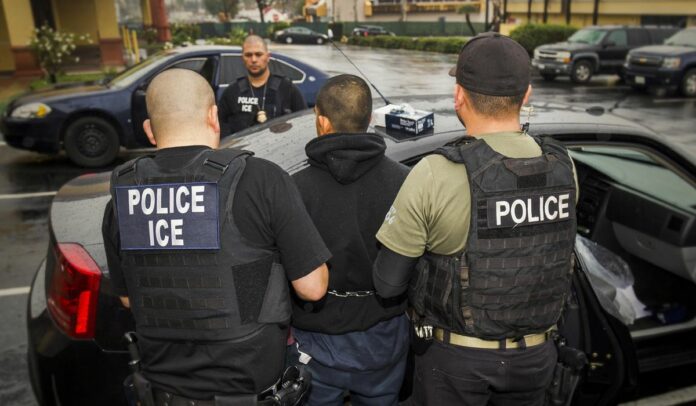
The federal government “abandoned” local sheriffs and police departments on immigration, leaving them in a legal limbo and spurring their embrace of sanctuary policies, the Los Angeles County Sheriff’s Department said.

Sheriff Alex Villanueva’s office lashed out at the Department of Homeland Security after its No. 2 official, Ken Cuccinelli, sent a scorching letter complaining about a new policy refusing all cooperation in turning migrants over to U.S. Immigration and Customs Enforcement.

Lt. John Satterfield, the sheriff’s spokesman, told The Washington Times that Mr. Cuccinelli played loose with his numbers and seemed to be making retaliation “threats” to arrest more immigrants who are in the county illegally.

“ICE abandoned its law enforcement partners long ago,” Lt. Satterfield said in a lengthy response to The Times after it reported on Mr. Cuccinelli’s letter this month.

The finger-pointing underscores how much is at stake in the debate over deportations and sanctuary jurisdictions.

ICE says it wants cooperation and said it goes out of its way to try to work with the sheriff’s department.

David Marin, the agency’s Los Angeles field office director, says he has deportation officers on standby 24 hours a day to be available should the sheriff’s office call, and they respond to the main jail in 15 or 20 minutes.

“We have not abandoned them, in fact we have made much more of an effort to work with them,” Mr. Marin said. “It just doesn’t help public safety when these criminals are released back into the community.”

Sheriff Villanueva’s policy isn’t the most expansive in the nation, but, given his county’s size and demographics, it’s the most consequential, accounting for tens of thousands of deportees over the last decade.

After President Trump took office, California imposed limits on law enforcement cooperation with ICE, but made exceptions for major crimes. Sheriff Villanueva in March announced a temporary pause on cooperating even in those exception cases, citing the coronavirus pandemic.

Last month he made the pause a permanent ban. He said cooperating with ICE was frightening immigrants into not reporting crimes.

Mr. Cuccinelli responded with his letter hoping to “shame” the sheriff into reversing, saying innocent people will die because criminals get released rather than deported.

“What we are seeing is the pollution of law enforcement by politicization,” he told The Times.

Lt. Satterfield said the sheriff’s department used to cooperate fully with detainers — demands from ICE to hold an undocumented immigrant for pickup by deportation officers. But the sheriff’s department was sued during the Obama years, with civil liberties groups saying ICE detainers weren’t signed by a judge and thus weren’t legally binding.

Lt. Satterfield says ICE refused to back up its detainers, calling them “a mere ‘suggestion,’ and not a requirement.”

A judge agreed, finding that the sheriff’s department held thousands of migrants under illegal ICE detainers. An appeals court last week sent the case back to the judge for a new review, but Lt. Satterfield said the lawsuit marked a major change for Los Angeles, which felt abandoned by the federal government.

Mr. Marin, the ICE Los Angeles chief, said what happened in the last administration has no bearing on the current situation, because state law prohibits localities from holding migrants for ICE anyway.

But he said the state does allow localities to notify the agency to come pick up people with serious criminal records, and Los Angeles won’t even allow that. He said since the sheriff adopted his policy, they have received zero calls.

ICE has to track the cases through public records and then go out into the community to find them, Mr. Marin said. That is more dangerous for all sides — the officers, the targets and others who might be around when the arrest is made.

It also inevitably means “collateral” arrests of people who weren’t targets for the officers, but who were found in the vicinity and are considered deportable.

Lt. Satterfield complained about those arrests.

“Threats of ‘collateral damage’ are not well taken,” he told The Times in response to Mr. Cuccinelli’s letter. “Hopefully, ICE agents are given the discretion, regardless of who they encounter in the field, to only detain and deport those previously convicted of serious and violent crimes.”

Mr. Marin said officers do have discretion and use it all the time.

A recent operation to try to roll up illegal immigrants who had been accused of victimizing people through domestic violence or other personal crimes netted 314 people in Mr. Marin’s area of operation.

Of those, 301 were targets. Of the 13 collateral arrests, all but one had a criminal record, which made them priorities for deportation, Mr. Marin said. The one noncriminal arrest was released on his own recognizance.

Jessica Vaughan, policy studies director at the Center for Immigration Studies, said ICE treating detainers as voluntary was “a politically motivated decision” made by the Obama administration. She said ICE wanted to fight, but the Justice Department, which controls legal strategy, refused.

“Instead they decided to leave the sheriffs who were getting sued twisting in the wind in federal court,” she said. “It was a deliberate decision on the part of the Obama administration officials at the Department of Justice.”

But she said Los Angeles’s decision will cost the county in terms of more victims.

“Sheriff Villanueva has abandoned the people of Los Angeles County in favor of protecting criminal aliens,” she said.

All sides agree Sheriff Villanueva’s new policy will make a significant difference in ICE’s numbers — though how much is in dispute.

In his letter, Mr. Cuccinelli referred to 11,536 detainers “issued in Los Angeles County” in the last fiscal year, covering 180 homicides, 750 sex crimes and 1,400 weapons offenses. He said releasing people with those records puts communities at risk.

Lt. Satterfield said the sheriff’s department only received 5,093 detainers, and only 20 of those included someone charged with murder or attempted murder. Of those, 15 were released to another agency and one of the detainers “was actually canceled by ICE.”

For the sex crimes, he said the sheriff’s department only got 40 detainers, and in 10 cases the department released them because ICE didn’t respond to pick them up.

ICE, in its response to The Times, said the numbers Mr. Cuccinelli cited were for all law enforcement agencies in the county. That means they included people outside of the sheriff’s control, such as those held by the city of Los Angeles.

Sheriff Villanueva announced a temporary ban on releasing inmates to ICE in March, as the coronavirus pandemic was ramping up. His announcement last month made that bar permanent.

Weeks later, the county board of supervisors, worrying that a future sheriff might try to overturn the policy, approved a motion formally enshrining it.

The board’s actions also expand the bar on cooperating with ICE to all county officials, and bans all federal immigration officers and agents from any county property, unless they carry a judicial warrant.

Sign up for Daily Newsletters

Read More

CDC updates, again, guidelines on testing people without coronavirus symptoms

0
CDC updates, again, guidelines on testing people without coronavirus symptoms

The CDC has updated coronavirus testing guidelines for people who do not have symptoms of Covid-19
Read More

WHO says the coronavirus is killing about 50,000 people a week: ‘That is not where we want to be’

0
WHO says the coronavirus is killing about 50,000 people a week: ‘That is not where we want to be’

The World Health Organization warned Friday that the coronavirus is “not going away,” noting that it’s still killing about 50,000 people a week. 

“That is not where we want to be,” Dr. Mike Ryan, executive director of the WHO’s health emergencies program, said of Covid-19 deaths during a news conference at the agency’s Geneva headquarters. “It’s not where the Northern Hemisphere wants to be going into the winter season. It’s not where developing countries want to be with their health services under nine months of pressure.”

Ryan said the virus still has a “long way to burn.” WHO officials said they are beginning to see “worrying trends” in the number of Covid-19 cases, ICU admissions and hospitalizations in the Northern Hemisphere as it enters the colder seasons.

“It has not burned out, it is not burning out, it is not going away,” Ryan said, “and especially for those countries entering their winter season in terms of people coming together more indoors. There’s a lot of work to do in order to avoid amplification events, drive down transmission of this epidemic, protect the opening of schools, and protect the most vulnerable in our society from severe disease and death.”

European health officials have warned for weeks about a rising number of Covid-19 cases. More than half of European countries have reported a 10% or greater increase in cases in the past two weeks and, of those, seven have seen newly reported cases increase more than twofold, the WHO’s regional director for Europe, Dr. Hans Kluge, said Thursday in a news briefing. 

In the U.S., health officials are reporting an average of about 39,000 new Covid-19 cases per day, according to data compiled by Johns Hopkins University data. Covid-19 cases were growing by 5% or more, based on a weekly average to smooth out daily reporting, in at least 34 states as well as Washington, D.C., as of Friday, according to a CNBC analysis of Johns Hopkins data, an increase from eight states at the same time last week. 

“The energy has not gone out of this pandemic. There’s a lot of energy left in this spring and this can drive the pandemic forward,” Ryan said. 

U.S. health officials fear the outbreak could get worse as the nation enters the fall and winter seasons. Health officials have repeatedly warned that they are preparing to battle two bad viruses circulating later this year as the Covid-19 outbreak runs into flu season. Earlier this month, Dr. Anthony Fauci, the nation’s leading infectious disease expert, said daily new cases were “unacceptably high” in the U.S. this close to the fall. 

“Once you get the level of infection down really, really low, it almost self-propagates itself to stay low, but you’ve got to get it low,” Fauci told The Wall Street Journal’s “The Journal” podcast published on Thursday.

“Once it’s way up there it’s tough to get it down,” he said. Fauci said that number for the U.S. would be “hundreds of cases, thousands, but not 20, 30, 40 thousand cases a day.”

Dr. Maria Van Kerkhove, the WHO’s technical lead on the Covid-19 pandemic, noted Friday that global health officials have “literally hundreds” of seroepidemiology studies ongoing that examine the extent of coronavirus infection in different populations. The studies indicate that “a majority of the world’s population is susceptible to infection from this virus,” she said.

“That means the virus has a long way to go,” she said.

Van Kerkhove said it’s “absolutely critical” for countries to have a strong plan for when outbreaks arise. She told CNN’s “New Day” program earlier Friday that the rise in hospitalizations in some European countries, like the U.K. and France, are “worrying trends” because the Northern Hemisphere hasn’t “even started to hit the flu season yet,” which could add more strain to an already burdened health system. 

“What’s really important right now is for countries in their response is that they break down the problem, they break down the outbreak into the lowest administrative level as possible as the data will allow,” she said. “It’s not just about case numbers. These are incredibly important and we need to be able to track these trends but we also need to look at hospitalizations, we need to look at ICU occupancy and how many people are being admitted into intensive care.”

Read More

Idaho pastor who prayed against mask mandate is in intensive care with coronavirus

0
Idaho pastor who prayed against mask mandate is in intensive care with coronavirus

An Idaho pastor who called himself a “no-masker” and prayed with his congregation against a local mask ordinance has been in a hospital intensive-care unit with Covid-19 for more than two weeks.

Pastor Paul Van Noy of Candlelight Christian Fellowship in Coeur d’Alene also wrote on Facebook in July, “It has been clearly and scientifically proven that many masks do not aid in the prevention of Covid-19 transmission. I have said here at Candlelight, ‘If a person wants to wear a mask they should be allowed to do so. However, if they don’t, that’s ok too.'”

“One additional thought for those who are believers in Jesus. There is no need to fear the cause or effect of Covid-19,” he added.

Candlelight Christian Fellowship in Coeur d’Alene, Idaho.Google Maps

The pastor wrote in a notice on the church’s website on Thursday that he was marking 15 days in intensive care and was told he would be there “a few more days.” That followed a church update earlier this week saying Van Noy felt he was “really starting to turn the corner—for the better,” although he was still on oxygen support.

Van Noy in his notice encouraged the congregation to meet in his absence.

Let our news meet your inbox. The news and stories that matters, delivered weekday mornings.

He said he shut down the church for 13 days beginning on Aug. 31, but services resumed this past Sunday “with understandably low attendance.”

“Now it is time to get back to church,” he wrote Thursday. “I want to encourage all of you to begin to regather this Sunday and let nothing hinder you from doing so,” he wrote.

At least six members of the church have tested positive for coronavirus, NBC affiliate KHQ reported.

“I am a no-masker, personally,” Van Noy told his congregation during a July sermon in which he also asked congregants to pray that local officials would not pass a mask mandate.

“I don’t want to be told I have to wear a mask,” he said from the pulpit. “We’re adults and we don’t need the government to tell us what to do.”

When the Panhandle Health District’s Board of Health did pass a face-covering mandate for Kootenai County, Van Noy wrote in a Facebook post that congregants didn’t have to follow it because in his estimation the church is a membership organization and not a “public” place covered by the mask rule.

“We do maintain the right to refuse entry to nonmembers at our discretion,” he wrote.

While “it is Godly and biblical to comply with good leadership and be submissive to local and federal authority … in this case the circumstances do not require submission,”the pastor concluded.

A few weeks later, on Aug. 14, Van Noy wrote on Facebook, apparently quoting something he didn’t link to but called “a good read”: “The curve is flattened, the CDC, WHO, Dr. Fauci, our governors, and many more were completely wrong about the potential threat of this virus.”

“If you are still living in fear, Don’t be. The media, global organizations, the government, and its agencies ‘mislead’ the public,” he posted. “Open up your businesses, churches, and homes. Don’t fall for the lies any longer. If you fell for the lies this time, wake up and join the army of truth-seekers fighting on the front lines.”

Van Noy’s wife, Brenda, also got the coronavirus, but was recovering when she wrote on Facebook earlier this month that she hadn’t “taken this Covid seriously enough.”

“I’m humbled. I have Covid and some of my friends have Covid now but more seriously my husband is in critical care in ICU with Covid and it is serious. Please take this serious,” she wrote.

Elisha Fieldstadt

Elisha Fieldstadt is a breaking news reporter for NBC News.

Read More

Pelosi snaps at reporter who asks about smaller coronavirus relief bill: ‘Just go read my statement’

0
Pelosi snaps at reporter who asks about smaller coronavirus relief bill: ‘Just go read my statement’

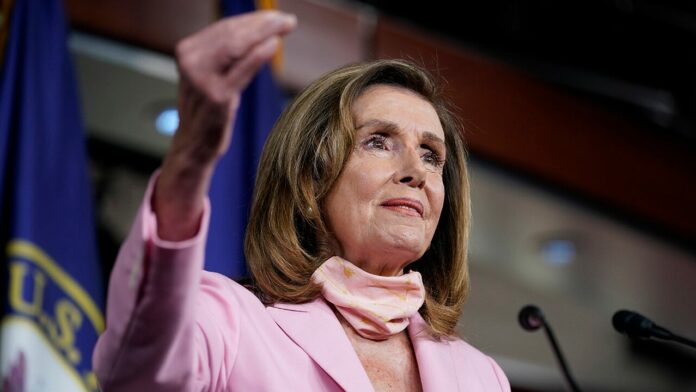
House Speaker Nancy Pelosi on Friday reiterated her hard-line demand for a $2.2 trillion coronavirus relief package, snapping at a reporter who asked why she would not support a smaller bipartisan bill introduced earlier in the week.

“Just go read my statement,” Pelosi said after a New York Times reporter asked what specifically she did not like about a $1.5 trillion plan released by the Problem Solvers Caucus on Wednesday.

The 50-member bipartisan group, evenly divided between House Republicans and Democrats, unveiled the compromise amid a monthlong impasse between the two parties over how much the next aid package should cost.

The bill would include a fresh round of $1,200 stimulus checks, expanded federal unemployment aid at $450 per week until states could adopt a more complicated system that would provide up to $600 a week (as long as it didn’t exceed a worker’s former salary), reopen the Paycheck Protection Program and provide additional funding for state and local governments.

SENATE FAILS TO ADVANCE ‘TARGETED’ $300B CORONAVIRUS BILL; RELIEF IN LIMBO

Pelosi panned the legislation and rejected calls from moderate Democrats to hold a vote on the smaller relief bill.

“We can put a bill on the floor, but we want to put a bill on the floor that will become law,” she said Thursday during an interview on MSNBC.

Eight Democratic committee chairs said in a statement the legislation “falls short of what is needed to save lives and boost the economy.”

“When it comes to bolstering the public health system, supporting state and local governments, and assisting struggling families, the Problem Solvers’ proposal leaves too many needs unmet,” the statement said.

Democrats have offered to come down to $2.2 trillion from the roughly $3 trillion HEROES Act, which the House passed in May. But the White House and Republican leaders want to keep the price tag closer to $1 trillion amid growing concerns among some lawmakers over the nation’s ballooning deficit, which is projected to hit a record-shattering $3.3 trillion this year, according to the Congressional Budget Office.

BIPARTISAN LAWMAKERS OFFER $1.5T VIRUS RELIEF SOLUTION IN EFFORT TO BREAK LOGJAM

Senate Democrats last week blocked a $300 billion “skinny” proposal from Republicans.

Aked whether she was allowing perfect to be the enemy of good by holding out for $2.2 trillion, Pelosi said Friday: “It’s not perfect. Perfect is $3.4 trillion.”

Rep. Max Rose, a New York Democrat who flipped a Republican seat during the 2018 midterm elections, urged Democrats and Republicans to back the bill, saying that Americans are “sick and tired of politics.”

“To the leadership, we said this very simple message: It’s time for you to stop playing games. Let’s stop the charade. Let’s stop this stupidity. Let’s put the country first,” he told Fox News.

President Trump has expressed support for the $1.5 trillion plan.

CLICK HERE TO GET THE FOX NEWS APP

“I like the larger amount, I’ve said that,” Trump said during a White House press briefing. “Some of the Republicans disagree, but I think I can convince them to go along with that because I like the larger number. I want to see people get money.”

Congress is scheduled to be in session through early October.

It must also pass a spending bill to avert a government shutdown at the end of September.

Read More

How Black veterans experience racial bias in mental healthcare

0
How Black veterans experience racial bias in mental healthcare

New research shines a light on how Black veterans receiving treatment for mental health issues perceive and experience racial bias in a healthcare context.

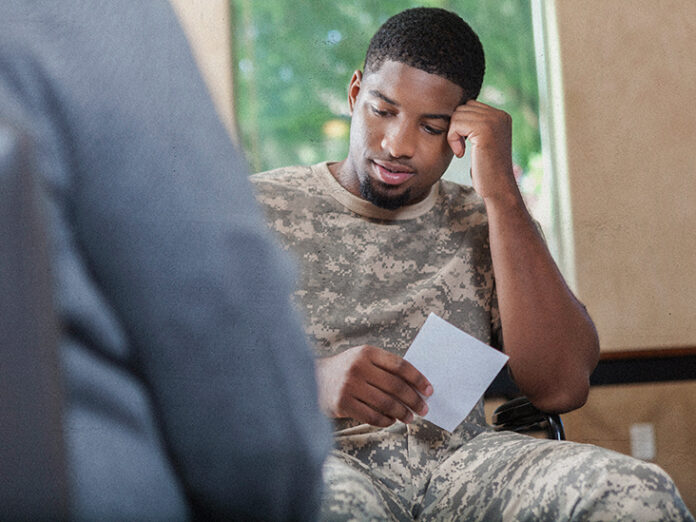
black veteran, male, speaking to therapistShare on Pinterest
New research on racial bias in healthcare contexts in the United States places the testimonies of Black veterans at its center.

A new study highlights how Black veterans perceive their experiences of accessing treatment for mental health issues.

The authors of the study, which appears in the journal Patient Education and Counseling, note that it is one of the first to detail the qualitative nature of racial biases in a healthcare context from Black people’s perspective.

The current Black Lives Matter movement responding to anti-Black police brutality has evidenced the violence and discrimination that Black people in the U.S. (and elsewhere in the world) experience.

Although the passing of the 13th amendment to the constitution in 1865 legally abolished slavery, its effects continue to structure the present world.

A 2015 systematic review looking at racial bias in healthcare indicated that racial bias manifests itself through positive attitudes toward white people and negative attitudes toward people of color. It added that this bias has a significant impact on patient outcomes.

While many healthcare providers are explicitly committed to equal treatment of all individuals, biases can also operate implicitly. An explicit commitment to equal treatment is no guarantee that equal treatment will follow.

Crucially, how people recognize bias has associations with the racial group with which they identify. As the authors of the present study note, drawing on previous research:

“Whites are more motivated to disavow stereotypes that cast Whites as racists, and use a higher threshold for racist behaviors, often reserving them only to behaviors and attitudes that are blatantly racist.”

Consequently, to account for racial bias in a healthcare setting, researchers need to consider the experiences and perceptions of non-white people.

In the present study, the researchers looked at how Black U.S. veterans perceived and experienced their treatment for mental health issues.

The researchers recruited the participants from a wider study looking at what factors affect minority veterans’ access to mental healthcare. In the present study, the authors were particularly interested in the participants’ experience of race and racism as a barrier to access.

The study occurred between April 2014 and May 2015 at a Department of Veterans Affairs Health Center. The researchers interviewed 85 African American veterans.

Of this number, 76.7% were male, 57% were unemployed, and the participants’ average age was 49.72.

The interviewers used exploratory and non-directive questions to discuss communication between the individual and care provider, and the effects that race or racism may have in these interactions.

Where possible, the researchers matched the participant and interviewer’s racial backgrounds to enable open discussion around issues of race and racism.

The study found two key themes in the experience and perception of Black veterans as they accessed mental healthcare.

The first was the representation of diversity in healthcare settings. For example, a 72-year-old male participant noted the lack of diversity in the artwork within the health center:

“The [ART] project, if you go where the atrium is, you see all these posters up on the wall. You don’t see one brother, and you don’t see one Mexican … And you got all these white boys on this wall as though no Black person from [STATE in the U.S.] ever fought in combat … I don’t think anybody’s even noticed that. I don’t think anybody is trying to be racist. But can you imagine how I feel? … There must be over 100 pictures down there. See, this is America. Your question was, does it [race] play a role? Yeah, it plays a role … Veterans they look for things. You go to the wall and start looking at all these pictures … You say I wonder if any African Americans are up here . . . because you understand what has gone on before.”

The second theme was the microaggressions perceived in interactions with healthcare providers. For example, a 47-year old female noted the stereotyping she experienced:

“They see me, an African-American female … The first personification of us is … that I have two children out of wedlock, I was an addict, I was incarcerated … [they] think that I come from an impoverished background, [that] I have no education … [They] talked to me as if I was a third-grader … just by the way they talk to me, it was really insulting.”

The authors note that resolving these perceptions and experiences of racial bias is not straightforward.

There is no one-size-fits-all response to diversity: non-white peoples are not a homogenous group, and, like all people, maintain a range of intersecting identities and experiences that affect their treatment in healthcare contexts.

As a consequence, the authors stress that “a person-centered approach to care” that is mindful of “identity-threatening cues” and that fosters “strong interpersonal relationships and open communication between patients and providers” may be the first step in resolving these issues.

For Dr. Johanne Eliacin, a research scientist at the Regenstrief Institute, Indianapolis, IN, and the U.S. Department of Veterans Affairs, and leader of the research:

“Most healthcare providers are committed to providing good and equitable treatment to all patients regardless of their race or sexual orientation, but doctors, nurses, and other clinicians are not immune to social and cultural influences that can lead to stereotyping and implicit racial bias — major contributors to healthcare disparities.”

“We aren’t asking providers to walk on eggshells; we are encouraging them to engage in two-way communication in order to better understand the people they serve and, ultimately, to promote health equity.”

Read More

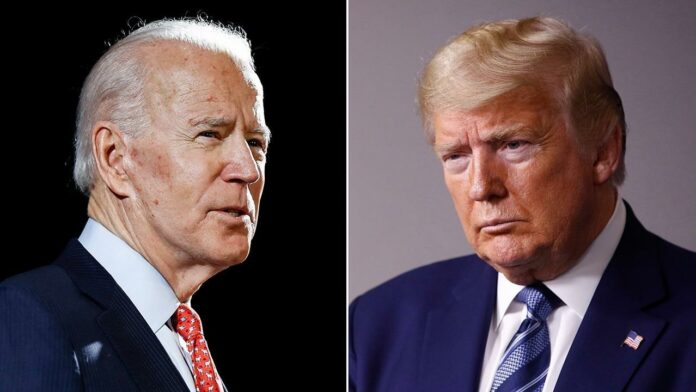
CNN mum as Biden claims nobody would have died if Trump had ‘done his job’ on coronavirus

0
CNN mum as Biden claims nobody would have died if Trump had ‘done his job’ on coronavirus

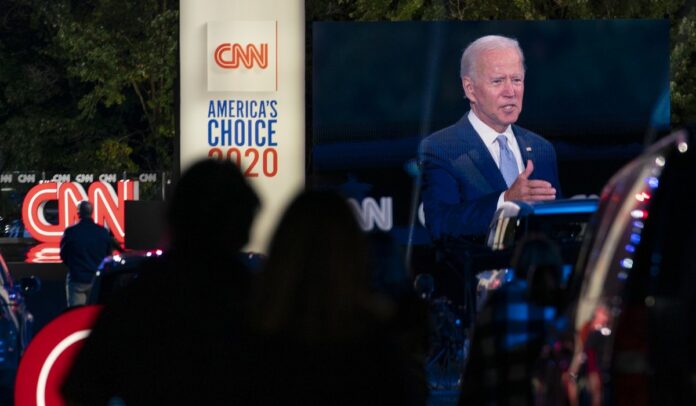
Democratic presidential nominee Joseph R. Biden declared at Thursday’s CNN town hall that nobody would have died from the novel coronavirus if President Trump had “done his job,” a whopper that CNN anchor Anderson Cooper let slide.

“And if the president had done his job, had done his job from the beginning, all the people would still be alive,” Mr. Biden said at the town hall. “All the people — I’m not making this up, just look at the data. Look at the data.”

He was immediately challenged on social media by right-of-center commentators and fact-checks by news outlets, notably The Washington Post, which concluded, “Actually, Biden is making this up.”

“There is no data to support this, even if the president had moved rapidly in January to deal with the coronavirus and been able to persuade the Chinese leadership to be more forthcoming about the situation,” said the Post fact-check.

During the event, however, Mr. Cooper did not question Mr. Biden’s claim, a sharp contrast from Wednesday’s appearance by Mr. Trump with ABC News anchor George Stephanopoulos, who repeatedly took issue with the president’s statements.

Mr. Cooper has made no secret of his anti-Trump views, while Mr. Stephanopoulos is a former Clinton White House communications director. Mr. Trump defeated Hillary Clinton in the 2016 presidential election.

All the while, @andersoncooper and @CNN stand in silence while #ChinaJoe lies. #shameful #NotJournalism https://t.co/rMTdJ2Yz0m

— rick nagasawa (@ricknagasawa) September 18, 2020

CNN followed up with an online fact-check debunking five remarks made by Mr. Biden, such as his declaration that he would be the first president without an Ivy League degree, but did not dispute the “all the people would still be alive” statement.

A CNN fact-check of the ABC event said that Mr. Trump made 22 “false or misleading statements,” such as his claim that he placed a “ban” on travel from China, which CNN pointed out made exemptions for U.S. citizens and permanent residents.

Look, there’s just no equivalence.

Biden makes some false and misleading claims. It’s important to note them. We will. But his assertions of fact have been largely factual.

Trump, as we saw at the town hall and see again tonight, has been incessantly and egregiously dishonest.

— Daniel Dale (@ddale8) September 18, 2020

“[Mr. Trump] responded to a series of tough questions from Pennsylvania voters, and some more from moderator George Stephanopoulos, much like he responds to easy questions from his favorite conservative television hosts — with a barrage of dishonesty,” said CNN fact-checker Daniel Dale.

The CNN town hall held at PNC field in Moosic, Pennsylvania, was panned on the right for serving up softballs to Mr. Biden, with the conservative Media Research Center’s NewsBusters calling it a “cakewalk” versus the ABC “ambush” of Mr. Trump.

The novel coronavirus has killed more than 198,000 Americans and nearly 947,000 people worldwide since emerging from China late last year, according to the Johns Hopkins University tracker.

Sign up for Daily Newsletters

Read More

Early voting begins in Minnesota, other states ahead of November elections | TheHill

0
Early voting begins in Minnesota, other states ahead of November elections | TheHill

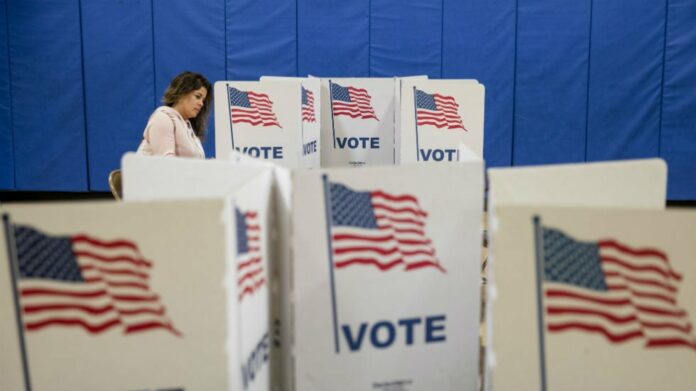
Voters in Minnesota, Virginia, South Dakota and Wyoming on Friday began casting their ballots for the November elections as the early voting periods began in those states.

Starting Friday up until Nov. 2, voters in Virginia can submit ballots in-person at precincts across the state and may send in ballots by mail up until Oct. 23. Those who have requested absentee ballots in Minnesota, South Dakota and Wyoming may now cast their ballots in-person or by mail up until the day before Election Day. 

Early voting in Minnesota comes as both President TrumpDonald John TrumpHR McMaster says president’s policy to withdraw troops from Afghanistan is ‘unwise’ Cast of ‘Parks and Rec’ reunite for virtual town hall to address Wisconsin voters Biden says Trump should step down over coronavirus response MORE and Democratic presidential nominee Joe BidenJoe BidenCast of ‘Parks and Rec’ reunite for virtual town hall to address Wisconsin voters Biden says Trump should step down over coronavirus response Biden tells CNN town hall that he has benefited from white privilege MORE are set to visit the state on Friday. Trump is scheduled to hold a rally in the evening at an airport in the city of Bemidji, while Biden is expected to go to a union training center in Duluth. 

The Trump campaign hopes to flip the Midwestern state, which Democratic nominee Hillary ClintonHillary Diane Rodham ClintonHillicon Valley: FBI chief says Russia is trying to interfere in election to undermine Biden | Treasury Dept. sanctions Iranian government-backed hackers The Hill’s Campaign Report: Arizona shifts towards Biden | Biden prepares for drive-in town hall | New Biden ad targets Latino voters FBI chief says Russia is trying to interfere in election to undermine Biden MORE won in 2016 by just under under 45,000 votes. However, recent polling from FiveThirtyEight shows Biden leading the president by approximately 17 percentage points. 

Tweets early Friday morning showed long lines already forming outside precincts, with one image capturing dozens of voters standing outside a Richmond, Va., building ready to cast their ballots six weeks before the official Nov. 3 elections. 

There may be 6+ weeks until Election Day 2020, but early voting in Virginia actually starts today — and there are dozens of voters in line to vote in person even before the building here in Richmond, VA opens pic.twitter.com/LchWhknggp

— Amanda Golden (@amandawgolden) September 18, 2020

Other states, including New Jersey, Michigan, Vermont and Illinois, are set to begin early voting in the coming week, with 29 other states and the District of Columbia following suit throughout October. 

Early voting comes as lawmakers and others have raised concerns about the safety of in-person voting during the coronavirus pandemic. In response, several states have expanded absentee voting, with South Carolina voting Tuesday to allow all voters to cast absentee ballots in November’s elections. 

Trump has continued to criticize mail-in voting, claiming without evidence that the practice leads to large-scale fraud. 

“What they’re doing is using COVID to steal an election,” the president said last month. “They’re using COVID to defraud the American people, all of our people, of a fair and free election. We can’t do that.”

Read More

Battle for Minnesota: Biden, Trump hold dueling rallies in unlikely battleground

0
Battle for Minnesota: Biden, Trump hold dueling rallies in unlikely battleground

It’s been nearly a half-century since a Republican won Minnesota in the race for the White House. You have to go back to President Richard Nixon in 1972.

But after narrowly losing the state four years ago to 2016 Democratic nominee Hillary Clinton, President Trump is aiming to end the losing streak as he eyes Minnesota in hopes of turning it from blue to red this November.

BLOOMBERG’S BUCKS PAY QUICK DIVIDENDS FOR BIDEN

On Friday, both the president and his Democratic challenger – former Vice President Joe Biden – are set to hold dueling rallies a few hours apart in the northern part of a state that has joined the list of general election battlegrounds. And the visits come on a crucial day, as early in-person and absentee voting gets underway in Minnesota.

Both the Democratic and Republican state parties were urging supporters to take advantage of early voting.

The president will hold an evening event at the airport in Bemidji, which is closer to the Canadian border than to the metropolitan area of the Twin Cities of Minneapolis and Saint Paul. Hours earlier, the Democratic presidential nominee will visit a union training center in Duluth, on the banks of Lake Superior and close to the border with Wisconsin, another crucial swing state up that’s up for grabs.

The stop by Trump is his second in the past month.

“I put tariffs on foreign steel and the Iron Range came roaring back to life,” Trump touted during a stop in Mankato, Minn., on Aug. 17,  as he pushed the point that mining operations in the Iron Range in the northeastern part of the state spiked after he slapped tariffs on steel and aluminum from overseas. The area produces much of the nation’s steel.

Once a reliably blue region, Trump overperformed in the rural mining districts in the 2016 election. And the Iron Range’s congressional seat was one of the few to flip from blue to red in 2018, during a Democratic surge that helped the party reclaim the majority in the House for Representatives for the first time in eight years.

“This president has the backs of the blue collar and middle-class worker,” claimed Rep. Pete Stauber, who represents the Iron Range in Congress, told reporters on Friday.

The congressman also pointed to the president’s emphasis on law and order this summer, following the protests and unrest in the Twin Cities that spread across the country – sparked by the May 25 death of George Floyd while in Minneapolis police custody – as a winning issue in his district.

Trump lost the state – and its 10 electoral votes – to Clinton by just under 45,000 votes, or less than 2 percentage points. For over a year, the president’s reelection team has been eying Minnesota, as well as Nevada and New Hampshire, two other states Trump narrowly last in 2016.

A CLOSER LOOK AT THE IRON RANGE – A KEY REGION IN THE FIGHT FOR BATTLEGROUND MINNESOTA

The president’s running mate, Vice President Mike Pence, will return to Minnesota next week, less than a month after he made a late August trip to Duluth to headline a “Workers for Trump” campaign event. During the stop, six local mayors from traditional Democratic strongholds backed Trump, arguing that Biden and the Democrats were out of touch with working-class voters in the Iron Range and small towns across America.

Ahead of his trip to Duluth, Biden put out a statement of support for the Iron Range and spotlighted endorsements by unions, including the United Steelworkers and the AFL-CIO.

The former vice president argued that “despite the economic recovery set in motion by the Obama-Biden Administration across the Iron Range, under President Trump, demand for Iron Range products has suffered. Steel shipments are down more than 25% nationwide from last year, mining operations have idled, and thousands of Rangers have lost their jobs, all while China produced the largest monthly volume of steel on record.”

While this is the first visit to Minnesota during the general election by either Biden or Democratic vice presidential nominee Sen. Kamala Harris, the Biden campaign has been carpeting the airwaves with TV commercials. The state is one of 10 battlegrounds where the Biden campaign is spending an eye-popping $65 million this week to run TV and digital ads.

Sen. Amy Klobuchar, Minnesota’s senior senator, has targeted the president for failing rural areas in her state and across America.

Klobuchar, a Biden rival during the Democratic presidential primaries who was briefly in consideration as his running mate, said earlier this month in a local TV interview that “there is a big story going on in rural America where they need some help and I think that why you’re going to see better and better numbers… for Joe Biden” in Minnesota.

But Republicans are optimistic that Trump may be able to flip the state this time around.

TRUMP CAMPAIGN MAKES FULL COURT PRESS FOR BATTLEGROUND NEW HAMPSHIRE

“The tide has been turning and continues to turn for the Trump campaign. I have Democrats who confidently tell me they think Trump can win this state,” Minnesota based GOP strategist and former state senator Amy Koch tells Fox News.

The latest public opinions polls paint a very different picture.

An average of the latest surveys compiled by Real Clear Politics shows Biden topping the president by a large 10.2 point margin. Koch, the first and only woman elected as the state senate majority leader in Minnesota, doesn’t believe the polls.

“While these public polls may say one thing, the internal teams are telling me their polls are much closer than the public ones,” she shared.

And Koch noted that “we’ve never had so many presidential and vice presidential visits ever in a campaign season. It just hasn’t happened in Minnesota. We’ve been a solid blue state since 1972.”

Bemidji – where Trump speaks on Friday – is the birthplace of the fictional Paul Bunyon. It’s located in Beltrami County, which Trump won in 2016 – becoming the first GOP presidential nominee to carry the county since George W. Bush in 2000.

But Minnesota’s much more than just the Iron Range and other northern parts of the state.

“The president hopes that there’s no apathy on his side and he keeps his supporters motivated and that somehow the Democrats aren’t motivated and that gives him the victory,” noted Minnesota based Democratic consultant Mike Erlandson.

But Erlandson, a former chair of the Minnesota Democratic-Farmer-Labor Party, emphasized that “I don’t get a sense that the bluer areas of the state, the Twin Cities, are apathetic.”

If Trump does pull off the upset and becomes the first Republican to carry the state in nearly 50 years in a presidential election, it would send shockwaves across the country. And it would likely signal victories by the president in other key battlegrounds.

That’s what the president’s hoping for. He predicted during his stop last month that Minnesota voters “will deliver a historic victory.”

And Biden and Democrats are determined to prevent that from happening.

Read More

How could voting benefit mental health?

0
How could voting benefit mental health?

Voting is a democratic right that gives each citizen the opportunity to influence how future governments address issues important to their community, including aspects of healthcare. But does casting one’s ballot offer any benefits to health? We take a look at some research that suggests that voting may help boost mental health.

In a previous Special Feature, we looked at the intricate ways in which a person’s political participation is tied to their state of health.

Studies have shown that individuals with poor self-reported physical and mental health are less likely to cast their votes in elections than those who experience good health.

Although it remains unclear why this is the case, some researchers have hypothesized that a vicious cycle might be at play. Poor health may reduce motivation, as well as render individuals more socially isolated, which may further decrease their civic engagement.

In turn, the lack of political participation among individuals who report poor health may mean that they do not get a chance to steer healthcare policies and resources in the direction that might help them access a wider range of benefits.

If you would like to check your registration status or register to vote, we have added some useful links at the bottom of this article.

Breaking the cycle of a lack of civic engagement can have a positive impact in more ways than one.

Besides allowing people to weigh in on processes and policies that are bound to affect the society they live in, studies have suggested that the act of voting, in itself, can bring some benefits to mental health and well-being.

In this Special Feature, we look at what some of those benefits are.

In 2001, Lynn Sanders, an associate professor in the Department of Politics at the University of Virginia in Charlottesville, presented the findings of a study on political participation and its psychological benefits at the Annual Meeting of the American Political Science Association in San Francisco, CA.

Her research revolved around a cohort of female participants involved in The National Longitudinal Survey (NLS) of Young Women. According to the study paper, these participants “were age 14–24 [years] at their initial interview in 1968, [and they had] been interviewed 20 times between 1968 and 1999.”

Sanders wanted to find out whether or not voting and active participation in political issues might have any effect on psychological distress.

She found that participation appeared to “[alleviate] psychological distress, which might offset some of the negative mental health consequences associated with disadvantaged social status.”

The participants who seemed to benefit the most from political participation were those who were more “prone to psychological distress.”

As for why this may be the case, Sanders speculated that being politically active may offer individuals a sense of empowerment: They did their best to take their “fate” into their own hands, so to speak.

“Perhaps the most powerful and politically important conclusion emerging from the research I report here is that political activity stands to be a resource that might offset some of the negative mental health consequences associated with disadvantaged social status,” she notes in her paper.

“Part of the disadvantage faced by historically oppressed groups is higher exposure to unfair treatment, including discrimination due to race and gender. Increasingly, our attention has turned to other forms of unfair treatment, including age- and disability-based discrimination. Disadvantaged social status is significantly correlated with mental health.”

“Evidence from the NLS surveys suggests that fighting back helps make discrimination less psychologically consequential. The compelling evidence reported here of more pronounced benefits of political participation among the psychologically vulnerable supports claims from empowerment theorists that political involvements are especially important for historically disenfranchised citizens.”

– Lynn Sanders

Another study — by Prof. Malte Klar, from the University of Göttingen in Germany, and Prof. Tim Kasser, from Knox College in Galesburg, IL — suggested that there may be a link between political activism and various measures of happiness. The researchers published their findings in Political Psychology in 2009.

Profs. Klar and Kasser analyzed the data provided by two surveys and an additional study. The two surveys addressed 341 college students, and the additional study addressed 718 activists.

Based on these data, the researchers conclude that political activism is associated with different forms of subjective happiness and with social well-being.

“The results of [the first two surveys] […] suggest that activists are more likely to experience the satisfaction of basic psychological needs, an indicator of more frequent experiences of intrinsic motivation,” the researchers write in their study paper.

They “also showed that significantly larger percentages of activists met preexisting criteria for ‘human flourishing’ than did those less engaged in activism,” Profs. Klar and Kasser add.

In a final study, the investigators worked with 296 college students. They quizzed the students on their state of well-being after they had either “engaged in a brief activist behavior, a brief nonactivist behavior, or no behavior.”

Overall, in terms of subjective well-being, there was little difference between the three groups. However, Profs. Klar and Kasser noticed that the students who had engaged in an activist behavior reported “significantly higher levels of subjective vitality” than their peers who had engaged in a nonactivist behavior.

“[T]he results of Study 3 provided some data suggesting that the causal arrow may (also) flow from activism toward well-being,” the researchers write.

Some research has also suggested that people who frequently experience racism and discrimination may become more resilient when faced with these stressors if they engage in political activism.

In a 2018 study paper published in Cultural Diversity and Ethnic Minority Psychology, researchers from North Carolina State University in Raleigh, the University of Chicago in Illinois, and the University of Michigan in Ann Arbor discuss the effects of activism on Black and Latinx college students attending predominately white institutions.

For their study, the researchers analyzed data collected through the Minority College Cohort Study. In the cohort they assessed, which had a total of 504 participants, 44% of the participants were Black and the rest were Latinx.

The researchers explain that people who experience racial or ethnic discrimination may often experience more stress, heightened anxiety, and symptoms of depression.

However, through their study, they found that the Black and Latinx college students appeared to be more resilient to such stressors if they were politically active.

“Black students who were more politically active during freshman year reported less stress at the end of freshman year,” the researchers found. This was not true for the politically active Latinx students.

However, for politically active Latinx students, “[race- or ethnicity-related] microaggressions were related to less stress and less depressive symptoms.”

Although not everyone may experience positive mental health effects in relation to civic engagement, having a sense of social conscientiousness can help people take more control of their own lives and help bring communities closer together.

In the words of iconic American poet Maya Angelou: “If you don’t like something, change it. If you can’t change it, change your attitude.”

To check your voter registration status, click here to visit the website of VoteAmerica, a nonprofit, nonpartisan organization dedicated to increasing voter turnout. They can also help you register to vote, vote by mail, request an absentee ballot, or find your polling place.

Read More