


London Escorts sunderland escorts asyabahis.org dumanbet.live pinbahiscasino.com sekabet.net www.olabahisgir.com maltcasino.net faffbet-giris.com asyabahisgo1.com www.dumanbetyenigiris.com pinbahisgo1.com sekabet-giris2.com www.olabahisgo.com maltcasino-giris.com faffbet.net betforward1.org www.betforward.mobi 1xbet-adres.com 1xbet4iran.com romabet1.com www.yasbet2.net www.1xirani.com www.romabet.top www.3btforward1.com 1xbet https://1xbet-farsi4.com بهترین سایت شرط بندی betforward

Global Statistics

All countries
695,781,740
Confirmed
Updated on September 26, 2023 9:06 pm
All countries
627,110,498
Recovered
Updated on September 26, 2023 9:06 pm
All countries
6,919,573
Deaths
Updated on September 26, 2023 9:06 pm

Global Statistics

All countries
695,781,740
Confirmed
Updated on September 26, 2023 9:06 pm
All countries
627,110,498
Recovered
Updated on September 26, 2023 9:06 pm
All countries
6,919,573
Deaths
Updated on September 26, 2023 9:06 pm
Home Blog Page 862

Coronavirus: Spanish study casts doubt on herd immunity

0
Coronavirus: Spanish study casts doubt on herd immunity

A Spanish Civil Guard controls a checkpoint on the highway between the regions of Galicia and Asturias in Ribadeo on July 6, 2020

Image copyright
AFP

Image caption

The study estimates that around just 5% of the Spanish population has developed antibodies

A Spanish study has cast doubt on the prospect of herd immunity as a way of tackling the coronavirus pandemic.

The study of more than 60,000 people estimates that around just 5% of the Spanish population has developed antibodies, the medical journal the Lancet reported.

Herd immunity is achieved when enough people become infected with a virus to stop its spread.

Around 70% to 90% of a population needs to be immune to protect the uninfected.

The prevalence of Covid-19 antibodies was below 3% in coastal regions, but higher in areas of Spain with widespread outbreaks, the report said.

“Despite the high impact of Covid-19 in Spain, prevalence estimates remain low and are clearly insufficient to provide herd immunity,” the study’s authors said in the report.

“In this situation, social distance measures and efforts to identify and isolate new cases and their contacts are imperative for future epidemic control.”

The study is thought to be the largest of its kind on the coronavirus in Europe.

There have been studies of a similar kind in China and the US and “the key finding from these representative cohorts is that most of the population appears to have remained unexposed” to the coronavirus, “even in areas with widespread virus circulation,” the Lancet article said.

What’s the latest in Spain?

The country has recorded more than a quarter of a million cases and at least 28,385 deaths. But daily fatalities have been in the single figures for most of the past three weeks.

However, officials in the north-western region of Galicia have re-imposed restrictions on an area of 70,000 people following an outbreak.

Officials linked local outbreaks to bars in the area. Capacity in bars and restaurants have been limited to 50%.

There are now 258 cases of Covid-19 in Galicia, including 117 in Lugo province, authorities say.

On Saturday the autonomous government of Catalonia re-imposed controls on an area of 210,000 residents after a sharp rise in infections there.

Catalan President Quim Torra said no-one would be allowed to enter or leave Segrià, a district west of Barcelona that includes the city of Lleida.

Media playback is unsupported on your device

Media captionHow vaccines and herd immunity works

Read More

Aerosols, Droplets, Fomites: What We Know About Transmission Of COVID-19

0
Aerosols, Droplets, Fomites: What We Know About Transmission Of COVID-19

A sneeze can carry the coronavirus pathogen in droplets and in aerosols — and they could land on a surface, making it a fomite.

Peter Dazeley/Getty Images


hide caption

toggle caption

Peter Dazeley/Getty Images

A sneeze can carry the coronavirus pathogen in droplets and in aerosols — and they could land on a surface, making it a fomite.

Peter Dazeley/Getty Images

By now, it’s common knowledge that the coronavirus can be spread by being in close contact with someone who’s infected and then breathing in their respiratory droplets. Or by touching a contaminated surface and rubbing your eyes, nose or mouth.

An open letter signed by 239 researchers addressed to the World Health Organization, published Monday in Clinical Infectious Diseases, calls for attention and guidance around a third route of transmission: tiny respiratory particles that float in the air and are called aerosols. They could be responsible for infecting someone who comes along and breathes them in.

Researchers are actively debating the importance of aerosol transmission and whether precautionary approaches should be taken even without clear answers about its role in the spread of the coronavirus.

“The ratio is something we need to figure out,” says Kimberly Prather, an atmospheric chemist at Scripps Institution of Oceanography, who signed the letter to WHO.

Here’s what we know about the different modes of transmission:

Droplet

What it is: A microscopic virus-filled particle of breath or spittle, around 5 to 10 microns — about the size of a red blood cell — that comes out of the nose or mouth of an infected individual when they breathe, speak, cough or sneeze. Droplets generally fall to the ground within a few feet of the person who expels them.

How a virus could spread this way: Through what researchers call “the respiratory route.” Virus-laden droplets are expelled from the nose or mouth of an infected person and find their way into nearby eyes, noses and mouths, “like if you’re standing next to your kid and they cough in your face,” says Seema Lakdawala, a flu researcher at the University of Pittsburgh.

How much does it contribute to the spread? Directly coming into contact with respiratory droplets is currently considered the most frequent mode of transmission, according to the U.S. Centers for Disease Control and Prevention and WHO.

Aerosol

What it is: A virus-packed particle, smaller than 5 microns, that’s also expelled from an infected person’s mouth when breathing, speaking, coughing or sneezing. Unlike a droplet, smaller aerosol particles can remain suspended in the air.

“They’ll continue to float and follow the air streams in a room,” Prather says.

How a virus could spread this way: Through the respiratory route in which a person breathes in clouds of tiny virus particles that have accumulated and may be traveling on air currents.

How much does it contribute to the spread? It’s an open question that begs more research. “Aerosols probably have some contribution toward spread, but we don’t know to what extent and what situations are most relevant,” says Abraar Karan, a physician at Harvard Medical School who treats coronavirus patients. Viral spread via air currents has been documented in certain indoor environments: at a restaurant in Guangzhou, China, where people sitting downstream from an air conditioner caught COVID-19, and at a March choir practice in Washington state, where many choir members got sick with coronavirus after likely breathing in tiny airborne particles generated by individuals who were infected but symptom-free at the time. What’s still unclear is how long the virus lingers in the air, how far it travels (possibly through a room but not down the street) and how commonly it spreads this way.

Fomite

What it is: An object covered with virus particles, possibly because someone recently sneezed or coughed respiratory droplets onto it, or swiped a germ-covered hand on it. A countertop or a phone could become a fomite in that same manner. The particles could survive from several hours to several days.

Essential Vocab For COVID-19: From Asymptomatic To Zoonotic

How a virus could spread this way: Through indirect transmission if people touch the surface of a virus-covered object, pick up the virus on their hands and then introduce the virus to their eyes, nose or mouth.

How much does it contribute to the spread?: The CDC describes this as a “possible” route of coronavirus transmission but maintains that close contact between people is thought to be responsible for most new infections.

Read More

(VIDEO) County Health Officer Talks Delayed COVID-19 Test Result, Social Gatherings

0
(VIDEO) County Health Officer Talks Delayed COVID-19 Test Result, Social Gatherings

John Ross Ferrara /

Today
@ 4:30 p.m. /

COVID-19 and Humboldt

(VIDEO) County Health Officer Talks Delayed COVID-19 Test Result, Social Gatherings

In today’s media Q-and-A, Humboldt County Health Officer Dr. Teresa Frankovich discusses what’s causing delayed COVID-19 test results at local facilities and the importance of limiting social gatherings.

Following the holiday weekend, Humboldt saw an uptick of five new coronavirus cases today, which the County said was a direct result of people attending social gatherings.

“As much as I hate to say it, we really, really need people to limit those gatherings outside their household unit,” Frankovich said during her Q-and-A response today. “The real issue is not trying to make our cases zero. We need to control our number of cases so people have access to the healthcare they need when they need it.”

Read More

Coronavirus updates: Total coronavirus cases exceed 15,000 in San Antonio

0
Coronavirus updates: Total coronavirus cases exceed 15,000 in San Antonio

By mySA.com Staff, Priscilla Aguirre, and Madalyn Mendoza

Updated

  • San Antonio Mayor Ron Nirenberg (right) and Bexar County Judge Nelson Wolff are continuing to strongly encourage the public to wear masks to protect themselves from COVID-19. The virus shows no signs of slowing down in the local area or across Texas. Photo: Kin Man Hui /Staff Photographer / **MANDATORY CREDIT FOR PHOTOGRAPHER AND SAN ANTONIO EXPRESS-NEWS/NO SALES/MAGS OUT/ TV OUT

    San Antonio Mayor Ron Nirenberg (right) and Bexar County Judge Nelson Wolff are continuing to strongly encourage the public to wear masks to protect themselves from COVID-19. The virus shows no signs of slowing down in the local area or across Texas.

    less

    San Antonio Mayor Ron Nirenberg (right) and Bexar County Judge Nelson Wolff are continuing to strongly encourage the public to wear masks to protect themselves from COVID-19. The virus shows no signs of slowing

    … more

    Photo: Kin Man Hui /Staff Photographer

Photo: Kin Man Hui /Staff Photographer

San Antonio Mayor Ron Nirenberg (right) and Bexar County Judge Nelson Wolff are continuing to strongly encourage the public to wear masks to protect themselves from COVID-19. The virus shows no signs of slowing down in the local area or across Texas.

less

San Antonio Mayor Ron Nirenberg (right) and Bexar County Judge Nelson Wolff are continuing to strongly encourage the public to wear masks to protect themselves from COVID-19. The virus shows no signs of slowing

… more

Photo: Kin Man Hui /Staff Photographer

This article will be updated throughout the week with coronavirus case counts and other need-to-know information about the pandemic in San Antonio. 

July 6

Cases continued to lurch upward: The total coronavirus cases in Bexar County exceeded 15,000 in Bexar County on Monday, as two more deaths reported.

City limits COVID-19 testing: Starting Monday, the City of San Antonio will implement a rule change for testing COVID-19 at their no-cost, city-operated testing locations. These locations at the Freeman Coliseum, Kazen Middle School and Cuellar Community Center will now only test residents who report symptoms of coronavirus.

July 5

Highest single day death count since pandemic began: The coronavirus continued its unabated spread through the area Sunday as Bexar County reported 198 new cases and eight new deaths.

Among the deaths was a male, 19 years or younger, making him the city’s youngest victim since the start of the pandemic. He had an underlying genetic disorder, the city said in a release.

TRACKING COVID-19: Maps and graphics show the spread of the virus through San Antonio and Texas.

Read More

6 Sacramento County clinics to close amid COVID-19 testing shortage

0
6 Sacramento County clinics to close amid COVID-19 testing shortage

Sacramento County is temporarily halting five of its six community COVID-19 testing centers. The Oak Park location is the only one to remain open. Despite increasing COVID-19 testing, there is now a testing supply shortage nationwide, according to Sacramento County Public Health Director Dr. Peter Beilenson.”The good news is we’re testing about 16,000 people a week — up from maybe 300 or 400 a few months ago. So, it’s vastly better,” Beilenson said. “But we’ve now run into a new national supply chain issue, where there is not enough media transport liquid for the virus tests to be done. And so, our community-based sites are now on hold temporarily as we try to get more in. But, this is a national issue and it’s happening all over the country.”The shortage is of the testing “transport media,” which is the chemical solution. As a result, five of Sacramento County’s community clinics will temporarily come to a halt, Beilenson said. “We’ve a had a very, very effective process of doing community testing. We were basically full at every site. So, things had been working extremely well. UC Davis is our partner in this and we’ve been very pleased at how this rolled out,” Beilenson said. “The problem is we don’t have enough testing.”More than 4,600 COVID-19 tests were conducted at the six community clinics in Sacramento County since opening on May 15. Appointments were available to anyone regardless if they are symptomatic or had known exposure. “The vast majority of our cases—and we had several hundred cases over the last week or so—the vast, vast majority are people under 40 who are more likely to be asymptomatic. So, you want to test them,” Beilenson said.The COVID-19 community testing clinic in St. Paul’s Missionary Baptist Church, at 3996 14th Ave., will remain open. Unlike the other five, the Oak Park location is run by the county.The five community clinics on hold are:Natomas Unified School District at 1931 Arena Blvd.South Sacramento Christian Center at 7710 Stockton Blvd. Tetteh Pediatric Health at 7248 S. Land Park Drive #118La Familia’s Maple Neighborhood Center at 3301 37th Ave. Room 7Robertson Community Center at 3525 Norwood Ave.”The overall testing capacity across the state is being pushed right now,” a UC Davis Health spokesperson said in a statement to KCRA3. “There are a number of virus hotspots around the state and around the country, and there is a finite number of tests that can be done each day. In addition to the increased virus spread, some people are seeking to be tested even though they don’t have symptoms or have not been around someone who is sick. With the current levels of demand for testing, it is important to prioritize testing to help diagnose and confirm those people who actually have the virus, so they can isolate themselves early and avoid exposing other people.The county adds National Guard COVID-19 testing pop-ups will resume Tuesday and Thursday this week at Valley Hi-North Laguna Library until further notice. The county is now working to use Quest Diagnostics to resume the community clinics. The lab has a three- to five-day turnaround for COVID-19 test results, according to the laboratory’s website. UC Davis Health is quicker, Dr. Beilenson added.“While our average turnaround time continues to be one day for Priority 1 patients, it is now three to five days for all other populations,” Quest said in a statement on June 29.The testing shortage also explains why the Verily drive-thru testing site at CalExpo is showing a lack of appointment availability, Beilenson said. Turnaround times are also impacted, averaging anywhere from two days to a week for test results, according to Verily’s website. Hospitals in Sacramento County tell KCRA3 they are aware of the testing supply shortage, but are currently averaging a turnaround from same day to 48 hours for test results.

SACRAMENTO, Calif. —

Sacramento County is temporarily halting five of its six community COVID-19 testing centers. The Oak Park location is the only one to remain open.

Despite increasing COVID-19 testing, there is now a testing supply shortage nationwide, according to Sacramento County Public Health Director Dr. Peter Beilenson.

“The good news is we’re testing about 16,000 people a week — up from maybe 300 or 400 a few months ago. So, it’s vastly better,” Beilenson said. “But we’ve now run into a new national supply chain issue, where there is not enough media transport liquid for the virus tests to be done. And so, our community-based sites are now on hold temporarily as we try to get more in. But, this is a national issue and it’s happening all over the country.”

The shortage is of the testing “transport media,” which is the chemical solution. As a result, five of Sacramento County’s community clinics will temporarily come to a halt, Beilenson said.

“We’ve a had a very, very effective process of doing community testing. We were basically full at every site. So, things had been working extremely well. UC Davis is our partner in this and we’ve been very pleased at how this rolled out,” Beilenson said. “The problem is we don’t have enough testing.”

More than 4,600 COVID-19 tests were conducted at the six community clinics in Sacramento County since opening on May 15. Appointments were available to anyone regardless if they are symptomatic or had known exposure.

“The vast majority of our cases—and we had several hundred cases over the last week or so—the vast, vast majority are people under 40 who are more likely to be asymptomatic. So, you want to test them,” Beilenson said.

The COVID-19 community testing clinic in St. Paul’s Missionary Baptist Church, at 3996 14th Ave., will remain open. Unlike the other five, the Oak Park location is run by the county.

The five community clinics on hold are:

  • Natomas Unified School District at 1931 Arena Blvd.
  • South Sacramento Christian Center at 7710 Stockton Blvd.
  • Tetteh Pediatric Health at 7248 S. Land Park Drive #118
  • La Familia’s Maple Neighborhood Center at 3301 37th Ave. Room 7
  • Robertson Community Center at 3525 Norwood Ave.

“The overall testing capacity across the state is being pushed right now,” a UC Davis Health spokesperson said in a statement to KCRA3. “There are a number of virus hotspots around the state and around the country, and there is a finite number of tests that can be done each day. In addition to the increased virus spread, some people are seeking to be tested even though they don’t have symptoms or have not been around someone who is sick. With the current levels of demand for testing, it is important to prioritize testing to help diagnose and confirm those people who actually have the virus, so they can isolate themselves early and avoid exposing other people.

The county adds National Guard COVID-19 testing pop-ups will resume Tuesday and Thursday this week at Valley Hi-North Laguna Library until further notice.

The county is now working to use Quest Diagnostics to resume the community clinics. The lab has a three- to five-day turnaround for COVID-19 test results, according to the laboratory’s website. UC Davis Health is quicker, Dr. Beilenson added.

“While our average turnaround time continues to be one day for Priority 1 patients, it is now three to five days for all other populations,” Quest said in a statement on June 29.

The testing shortage also explains why the Verily drive-thru testing site at CalExpo is showing a lack of appointment availability, Beilenson said. Turnaround times are also impacted, averaging anywhere from two days to a week for test results, according to Verily’s website.

Hospitals in Sacramento County tell KCRA3 they are aware of the testing supply shortage, but are currently averaging a turnaround from same day to 48 hours for test results.

Read More

Coronavirus immunity can be ‘short-lived,’ expert warns

0
Coronavirus immunity can be ‘short-lived,’ expert warns

A British immunologist warned Monday that immunity to the coronavirus could be ” rather short-lived” and individuals shouldn’t rely on that alone to cope with the infectious disease.

Danny Altmann, a professor of immunology at Imperial College London, told CNBC that only 10 to 15 percent of the population of a town or city is likely to be immune to COVID-19.

“And immunity to this thing looks rather fragile — it looks like some people might have antibodies for a few months and then it might wane, so it’s not looking like a safe bet,” he told the network. “It’s a very deceitful virus and immunity to it is very confusing and rather short-lived.”

HARVARD TO BRING AS MANY AS 40 PERCENT OF UNDERGRADS TO CAMPUS IN FALL, BUT MOST WILL STAY HOME

He also warned that a second wave of infections is possible, but governments are better prepared to handle the outbreak than when the virus first took a grip on the world months ago.

“Anybody who thinks that it has got more mild or gone away or that somehow the problem’s going to solve itself is kidding themselves,” he told CNBC. “It’s still a very lethal virus, it still infects people very, very readily. And I think humanity isn’t used to dealing with those realities.”

“The devil is in the detail, vaccines aren’t that easy,” Altmann added. “There’s more than 100 in trial at the moment, and many things can go wrong along the way. I place no bets at the moment myself.”

The World Health Organization warned last week that the virus is spreading as many countries begin lifting lockdown measures to repair their shattered economies.

“Although many countries have made some progress, globally, the pandemic is actually speeding up,” said WHO Director-General Tedros Adhanom Ghebreyesus during a June 29 briefing.

Several states have re-imposed restrictions amid an uptick in COVID-19 cases and hospitalizations, including the shuttering of beaches over the holiday weekend.

As of Monday, more than 11.5 million people have tested positive and over 535,400 have died, according to Johns Hopkins University.

CLICK HERE FOR THE FOX NEWS APP

Altmann told CNBC lawmakers need to find a balance between protecting individuals and preventing an economic freefall. However, he cautioned the main goal is to prevent more infections.

“We need to continue to be led by the science and the medicine and do the right thing,” he said. “And doing the right thing means everything you can do to block transmission.”

Read More

San Quentin State Prison’s coronavirus outbreak, as experienced by an inmate incarcerated there.

0
San Quentin State Prison’s coronavirus outbreak, as experienced by an inmate incarcerated there.

Life

California transferred COVID-19 patients to us. Now we’re overrun by the virus.

A view of San Quentin State Prison

Photo illustration by Slate. Photo by Justin Sullivan/Getty Images.

Coronavirus Diaries is a series of dispatches exploring how the coronavirus is affecting people’s lives. For the latest public health information, please refer to the Centers for Disease Control and Prevention’s website. For Slate’s coronavirus coverage, click here.

This as-told-to diary is based on a conversation with Adamu Chan, an incarcerated journalist at San Quentin State Prison in California. San Quentin is experiencing a massive COVID-19 outbreak—more than 1,400 cases—after the state transferred infected people from another prison into San Quentin. The conversation has been transcribed, condensed, and edited for clarity by Aviva Shen.

Probably in the beginning of March, maybe the end of February, we started hearing about the virus. It was in the news. There was a lot of speculation about how it was going to affect life in general. I remember back at that time things were relatively normal within the prison. I’m part of a team of video journalists that produce a show that’s televised in all 36 prisons in California. And so at that time, we were developing some content that talked about the coronavirus, and also, at the same time, we were interviewing people in the prison and kind of getting their perspectives on what people were feeling and what they felt was coming.

And then on March 17, the prison went on a quarantine lockdown, and I was moved to this part of the prison, H Unit, which is made up of dorms. I was up in the cells before, in North Block. This part of the prison still hasn’t experienced an outbreak, which is pretty amazing since more than 1,000 people in the prison right now have been confirmed to have the virus. I feel blessed that I’m able to talk on the phone and just be healthy right now.

Back then, they were moving people around the prison and, I think, trying to make sure that certain vulnerable populations were in places where they were able to social distance. But we’ve realized over the past few months that, actually, those measures didn’t work, because the prison is vastly overcrowded. There’s no way to social distance. There’s no way to isolate people. It’s been a catastrophe.

Since March we’ve been locked out of the media center, which is where we all work—the podcast Ear Hustle is there, the newspaper is there—so that’s kind of the center of information that comes out of the prison in the world. I’ve been isolated from the other journalists I work with. I’ve been trying to receive messages from them through people that we know, people whom we have contact with in common.

I still have friends in North Block. North Block is a huge cell block. Everyone is double-celled in a really small cell, which is like 5-by-10 feet. There’s no proper ventilation. There’s no air coming into the cell block. Everybody’s kind of breathing the same air. And so the stories that I’ve heard, which I think are to be expected, are that people can’t breathe and that people are collapsing and falling left and right. That’s really scary. I know a lot of people in vulnerable populations—older people, people with preexisting health conditions—who are up there whom I care about. I’m really concerned about them.

It’s really, really overcrowded. This is a public health emergency.

In other parts of the prison, they’re not having access to the phone in a way that we are here, because we’re the dorm—it’s open space and the phones are accessible. Up in the cell blocks, the phones are outside of the cells. So if you’re locked in a cell, you can’t use the phone. So it’s harder to get information from up there. There are some people I know who have the virus and are asymptomatic. But I also heard somebody I know, who was a subject of a film that I made, is in the ICU right now. I don’t know much about his condition.

I noticed that the California Department of Corrections and Rehabilitation’s statements to the media have put out there that they’ve been providing hand sanitizer and masks, which is, to a certain degree, true. We did get masks I think about a month into the quarantine lockdown. Where I am, there’s one hand sanitizer dispenser in a building of 100 people, and it hasn’t always been readily available. But I think the whole idea of talking about hand sanitizer is not really the point. Like, the virus is already here. There are outbreaks already. I’m not sure if hand sanitizer is going to stop an outbreak here. It’s really, really overcrowded. This is a public health emergency.

Overcrowding has been an issue for decades. Even in the years before the pandemic, the Supreme Court ruled that the conditions in Southern California prisons were unconstitutional and ordered the state to relieve the overcrowding problem because people were dying because of lack of medical care and lack of mental health care. And this was in the years before the pandemic. Now, here we are, in the heat of it, and we’re still not getting any answers about when the overcrowding will be relieved. There are people in the community who have stepped up recently and said that they will aid in the reentry of people coming out of prison. There are numerous family members who are willing to take people back into their homes. So there are places for people to go, and people who are willing to accept them. Our No. 1 demand is that people are allowed to leave this place. I think the No. 2 demand is that CDCR stop transferring people around the state and spreading the virus to other prisons.

I think a lot of what I was doing, even beyond journalism work, was just working on building community here. I mean, this is a community. There’s a big creative arts community here. People are involved in theater and in writing and graphic arts; other people are involved in education and teaching; there’s a college program here, a music program, and, above all of that, a lot of people here who are interested in self-development and trying to find out solutions to violence and investigating their childhood and things like that. Those things have been interrupted right now. So I worry about people whom society had labeled as violent or wrong and who were actively working to take on new identities and new ways of being. And that’s being interrupted now. I worry about that. And I worry about that for myself too. I think that those community bonds that I share with other people are really important. I’m not able to see those people. I don’t know what’s going on with those people.

I’m trying to stay as healthy as possible and trying to stay as clean as possible. I’m trying to wear my mask. But other than that, I’m not really sure what I can do to prevent the coronavirus from getting in here. There is quite a bit of distance between H Unit and the cell blocks in the other parts of the prison, so I think that’s one of the reasons it hasn’t hit here yet. But there are correctional officers who are working shifts up in the affected areas and then coming down here. There is more ventilation here, and as you know, that is one of the best ways to combat the virus. We have windows here, and there’s a door that stays open. But this dorm is overcrowded too. If it was to get in here, there isn’t a lot of social distancing here. We all use the same restrooms; we use the same showers. Our sleeping areas are really close together—like, inches away from each other. So this area is problematic too. And in some ways, it feels like we’re just waiting until the virus hits here. That’s what it feels like. It just feels like we’re just sitting here waiting.


Read More

Minnesota sets new COVID-19 case count target

0
Minnesota sets new COVID-19 case count target

Minnesota health officials have changed the report card by which they grade the state’s response to COVID-19 — adding a goal of reducing the number of new cases reported each day from 435 over the past week to about 283.

The ambitious target comes as other states report rising COVID-19 case counts, and Minnesota risks a surge of its own following the family and group gatherings over the holiday weekend that could have spread the coronavirus that causes the infectious disease.

Health officials over the July 4th weekend offered some optimistic reports of people and businesses adhering to social distancing requirements, but it will take two or more weeks to assess any effect of holiday celebrations on the pandemic, said Jan Malcolm, state health commissioner.

“We’re certainly aware there were a lot of get-togethers, and the good news is hopefully those were mostly outdoors” where the virus doesn’t seem to spread as easily, Malcolm said. “But that doesn’t completely negate the concern about really prolonged contact in close quarters, so we will be watching.”

The new state dashboard measure of daily cases per 100,000 people replaces an old measure that looked at the number of days in which total cases had doubled in the state.

That doubling figure was meaningful earlier in the pandemic when case growth first started to accelerate but no longer offers much information on the state’s progress, Malcolm said. The new case growth measure mimics those being used in other states and by the U.S. Centers for Disease Control and Prevention, giving Minnesota a source of comparison for its performance.

“It’s a better way to look at where we are in the epidemic,” Malcolm said.

Minnesota on Monday set a target of no more than 5 cases per 100,000 people per day, which equates to about 283 cases found through diagnostic testing per day. At the moment, the state’s rate is about 7.7 cases per 100,000 people per day.

New York and New Jersey recently advised incoming travelers to quarantine themselves for 14 days if they came from states with a new case rate of 10 or more per 100,000 people per day. Chicago set fines for violations of its new quarantine order for anyone arriving from states where the rate is 15 or more per 100,000 people per day.

The daily case growth measure is one of five that will help Gov. Tim Walz and Minnesota health leaders in policy decisions regarding the pandemic.

Walz this week is debating whether to mandate that people wear masks in indoor public spaces to try to slow the virus transmission that occurs from face-to-face contact. He also must assess whether outbreaks in a handful of bars and restaurants necessitate renewed restrictions on these businesses, which were allowed to reopen only at limited capacities on June 10.

On the other hand, the governor also has the option of further loosening restrictions following the end of a statewide stay-at-home order on May 18 and the gradual, limited reopening of businesses, restaurants, fitness clubs and entertainment venues in June.

The next phase of reopening Minnesota would expand the capacities at which most businesses could operate amid the pandemic but would still cap large public gatherings at no more than 250 people.

Minnesota also is grading itself on the percentage of COVID-19 tests in the state that are positive, the percentage of infections with known transmission sources and the rate of new hospital admissions for the disease. The state is meeting the first two goals and is close to meeting the third. It also is meeting its daily COVID-19 testing goals, despite increasing the minimum target from 50 tests per 10,000 people per day to 100.

Minnesota is conducting about 162 tests per 10,000 residents each day.

Testing has identified 38,569 cases of COVID-19 in Minnesota since the start of the pandemic. That includes 33,907 people who have recovered to the point that they are no longer considered risks for infecting others but does not include people with mild or no symptoms who never got tested.

Federal health officials believe every case found by testing represents another 10 cases that went undetected.

Recent case growth in Minnesota and other states has been concentrated among teens and young adults.

The number of cases detected in Minnesotans aged 5 to 19 has nearly doubled from 1,752 on June 1 to 3,488 on Monday, while the number of cases among Minnesotans in their 20s has increased nearly 80% from 4,660 to 8,474 in the same time frame.

Severe COVID-19 cases are less common in this age group. Of all COVID-19 deaths in Minnesota, only two involved people 29 or younger. People 70 and older make up more than 80% of the deaths, even though they represent only 11% of the state’s cases. The total of 1,474 COVID-19 deaths in Minnesota include 1,156 residents of long-term care or assisted-living facilities.

The number of people hospitalized for COVID-19 on Monday was 258 — including 125 people needing intensive care — which represents the lowest total since April 22.

Doctors have learned more about how to treat COVID-19, and long-term care facilities have done a better job of preventing the virus from spreading to their highly vulnerable residents who are likely to need hospital care, said Dr. Ruth Lynfield, state epidemiologist.

The growth in cases among young adults might not be resulting in more deaths right now, but it could if those people spread the virus to elderly people at greater risk, she stressed.

“We worry,” she said, “that maybe next week or the week after, when transmission occurs to older people, we might see an increase in hospitalizations.”

Read More

Can probiotics help with depression? New research suggests a link

0
Can probiotics help with depression? New research suggests a link

Can probiotics help with depression? New research suggests a link – CNN
Read More

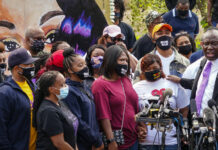
Phoenix Police Kill Man in Parked Car, Igniting New Protests

0
Phoenix Police Kill Man in Parked Car, Igniting New Protests

U.S.|Phoenix Police Kill Man in Parked Car, Igniting New Protests

The fatal shooting, captured on video, comes at a time when cities around the United States are grappling with anger over deaths at the hands of the police.

Credit…Caitlin O’Hara for The New York Times

The fatal shooting of a man in a parked car by Phoenix police officers over the weekend, captured on video in gruesome detail, is fueling a new round of protests against violent policing tactics.

The video showed several uniformed officers surrounding a parked car while pointing their guns at the man inside the vehicle. One of the officers shouted at the man, threatening to shoot him. The Phoenix Police Department identified the man as James Porter Garcia, 28.

Then, in front of witnesses who were recording the episode, the officers unleashed a volley of gunfire. The victim was taken to a hospital where he was pronounced dead, according to a statement by the Phoenix Police Department.

The shooting in the city’s Maryvale neighborhood comes at a time when cities around the United States are grappling with anger over the deaths of African-Americans and Latinos at the hands of the police. Elsewhere in Arizona, the police in Tucson came under scrutiny in June over the killing, also captured on video, of Carlos Ingram Lopez.

“It does not shock us that despite all the scrutiny from community Phoenix PD continues to respond violently to calls,” Carlos Garcia, a member of the Phoenix City Council, said in a Facebook post about the episode. He added, “We cannot allow for dishonest narratives to be built by violent departments.”

Protests over the killing broke out in Phoenix on Sunday night, with dozens of demonstrators marching to the Maryvale Estrella Mountain police station. About 30 officers in riot gear blocked access to the building during the protest, according to reports on social media.

Details surrounding the fatal shooting remain murky. The Police Department in its statement said officers were responding to a 911 call about an aggravated assault.

The department said James Garcia had a handgun and pointed it at an officer before being fatally shot by the police. Sgt. Mercedes Fortune, a spokeswoman for the department, said officers talked to Mr. Garcia for about 10 minutes before shooting him. Ms. Fortune said he told officers to shoot him and lifted his gun toward the officers before he was killed.

The department released body-camera footage from an officer who arrived on the scene after the shooting, showing a handgun being retrieved from inside the vehicle.

Still, Steven Merry, a friend of the victim, told local media that the man was unarmed.

“They put the gun on his head like this and they’re still telling him not to move, to get his hand off a gun he don’t have and then they shot him again,” Mr. Merry told KSAZ.

Activists are demanding the release of body-camera footage from the two officers who fatally shot Mr. Garcia, though it remains unclear when such video could be made available. Ms. Fortune contended on Monday that releasing the additional footage would compromise the investigation of the killing. Police departments in Arizona often take weeks or months to respond to such requests.

Read More