Nurse Mike Gulick was careful about not bringing the coronavirus home to his partner and their 2-year-old daughter. He ‘d stop at a hotel after work simply to shower. He ‘d clean his clothes in Lysol disinfectant. They did a tremendous quantity of handwashing.
However at Providence Saint John’s University hospital in Santa Monica, California, Gulick and his coworkers fretted that looking after contaminated clients without first being able to wear an N95 respirator mask was dangerous. The N95 mask removes 95%of all air-borne particles, consisting of ones too tiny to be blocked by regular masks. But administrators at his medical facility stated they weren’t essential and didn’t supply them, he stated.
His spouse, likewise a nurse, not just used an N95 mask however covered it with a 2nd air-purifying respirator while she cared for COVID-19 clients at Cedars-Sinai Medical Center across town in Los Angeles.
Then, last week, a nurse on Gulick’s ward checked positive for the coronavirus, which triggers the disease COVID-19 The next day, medical professionals doing rounds on their ward asked the nurses why they weren’t using N95 masks, Gulick said, and told them they should have much better security.
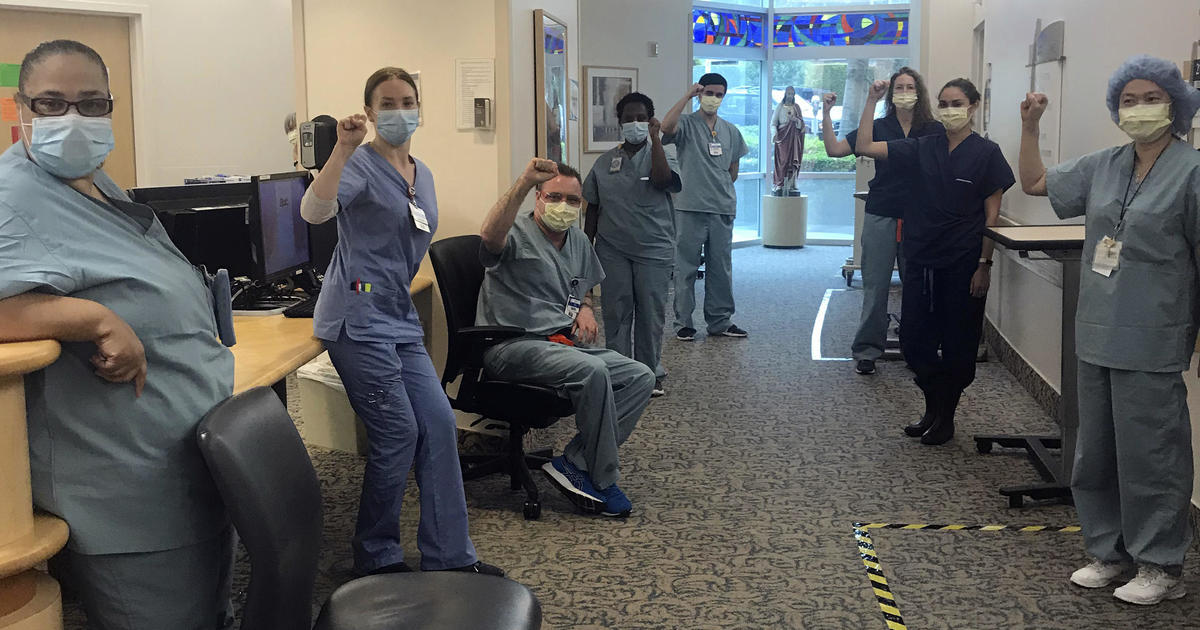
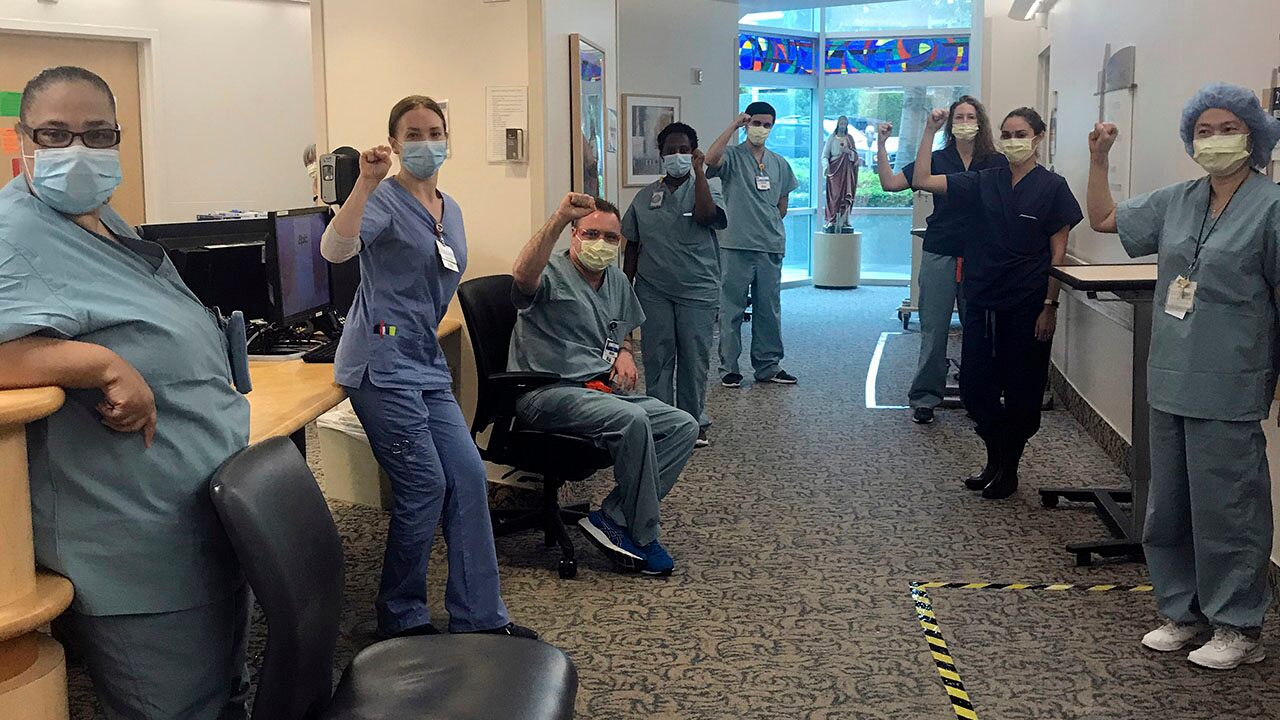
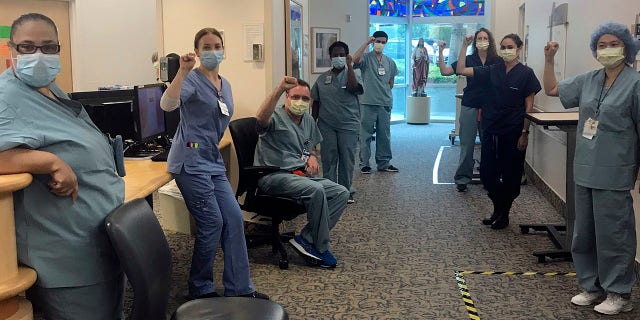
In this image offered by Lizabeth Baker Wade, nurses at Providence Saint John’s Health Center in Santa Monica, California raise their fists in uniformity on April 10, 2020 after informing managers they can’t take care of COVID-19 patients without N95 respirator masks to secure themselves.
Lizabeth Baker Wade/ AP.
For Gulick, that was it.
They are amongst hundreds of doctors, nurses and other health care workers across the nation who say they’ve been asked to work without appropriate security
Guidelines from the Centers for Illness Control and Prevention do not need N95 masks for COVID-19 caretakers, however many healthcare facilities are choosing for the included security due to the fact that the infection has actually shown to be very infectious.
Angela Gatdula, a Saint John’s nurse who fell ill with COVID-19, stated she asked healthcare facility supervisors why physicians were using N95 s however nurses weren’t.
” When I got the phone call that I was positive I got truly scared,” she stated.
” The next nurse that gets this may not be lucky.
As COVID-19 cases skyrocketed in March, the U.S. was hit with a vital scarcity of medical materials including N95 s, which are mostly made in China. In reaction, the CDC lowered its standard for healthcare workers’ protective gear, suggesting they use bandannas if they run out of the masks.
Some exasperated health care workers have grumbled to the Occupational Security and Health Administration.
” I … worry retribution for being a whistleblower and plead to please keep me anonymous,” wrote a Tennessee medical employee, who complained staffers were not permitted to use their own masks if they weren’t straight treating COVID-19 patients.
In Oregon, a March 26 complaint cautioned that masks were not being offered to nurses dealing with thought COVID-19 patients. Another Oregon grievance declared nurses “are told that wearing a mask will result in disciplinary action.”
One New Jersey nurse who asked not to be named out of worry of retribution stated she was searching for a brand-new task after complaining to OSHA.
” Do I regret filing the grievance? No, at least not yet,” she said. “I know it was the best thing to do.”
Some are requiring to the streets.
Nurses at Kaiser Permanente’s Fresno Medical Center in main California required more protective supplies at a protest during their shift modification Tuesday.
10 nurses from the center have actually evaluated favorable with COVID-19, Kaiser said.
Amy Arlund, a crucial care nurse at the center, stated that prior to the pandemic, following infection control protocols they’re currently utilizing would have been grounds for disciplinary action.
Every situation is different, but here are some best practices to follow if you suspect someone you live with is sick with the coronavirus — or even you.
Angela Lang/CNET
For the most up-to-date news and information about the coronavirus pandemic, visit the WHO website.
As the coronavirus pandemic continues to heavily affect people around the world, it’s likely you know someone whose life has been impacted by the disease. And if someone you live with becomes infected — or maybe it’s you — it’s important to know the right steps to take to avoid spreading the virus to others, as well as how to care for that person.
Situations are different: You might have a roommate (or three), or live in a household with your family, or a significant other. You should already be practicing social distancing as best you can in a roommate situation, but it isn’t always possible. And if you’re helping care for others in your family, self-isolation can be difficult or impractical.
Keep track of the coronavirus pandemic.
We’ve drawn suggestions from the Centers for Disease Control and Prevention, as well as first-hand advice from people we know who have recovered from coronavirus. Here are recommendations for how to adjust if you suspect someone in your household has COVID-19, but is not sick enough for hospitalization. Note this is not an exhaustive list and guidance from public health agencies could change over time.
Contact the doctor
At the first sign of what could be coronavirus, contact the doctor immediately to list symptoms and ask for advice on whether you should pursue COVID-19 testing. In many cases, the doctor will need to order the test for you (more on this below).
If the patient has underlying health conditions that put them at higher risk for fatality, the doctor will also be able to weigh in on which medications they should and shouldn’t take and how they’ll need to adjust their lifestyle, including what kind of vital signs you should monitor as the illness progresses.
Isolate the person who’s sick
As soon as your roommate or family member suspects they have symptoms of COVID-19 (or tests positive for the coronavirus), they need to isolate from others until they test negative, or until the symptoms are long gone (more details below).
They should wear a face mask or cloth covering if they’re in the same room as you or your housemates and everyone needs to make sure they’ve thoroughly washed their hands for 20 seconds after interacting. It’s also important to keep the house sanitized. A healthy person could reduce contact with a sick person by filling a water pitcher and preparing food for the patient, leaving both at a safe distance for the member of your household to collect.
The CDC suggests isolating in a bedroom away from others. However, we understand that’s not always an option — for example, if you live in a studio apartment with a significant other or share a small house with many others.
If there isn’t an extra room for them to stay in, make sure to maintain a six feet distance at all times to practice social distancing. Unfortunately, that might mean someone’s sleeping on the couch, on a mattress on the floor or so on.
Read: Where to buy face masks and cloth coverings online
You can make a face mask at home for the infected person to wear.
Angela Lang/CNET
What if you only have one bathroom?
The CDC recommends the presumptive coronavirus patient use a different bathroom if possible. However, if you only have one bathroom, the person who’s ill should wear a mask when they leave their isolation room. After they leave the bathroom, make sure the toilet, sink, shower, handles and soap dispensers get sanitized.
Wash your hands for at least 20 seconds and avoid touching your mouth, nose and eyes. Also, avoid using the same hand towel as the potentially infected person. You may need to set up a caddy for items that only the sick person uses, like a separate soap dispenser, towel, toothpaste tube and so on.
How to care for a person with presumed or confirmed COVID-19
If there are multiple people who live in your home, the CDC suggests only one person should take care of the sick one to limit the number of people who might come in contact with the virus. That includes bringing them food or medicine; checking their temperature, vitals and blood pressure; and laundering their clothes and bedding.
However, it’s a good idea for the carer to wear gloves and a face mask when coming in contact with anything the infected person has touched, before washing their hands directly after.
When you bring food, for example, you can place it inside the room they’re staying in, but avoid contact with them and make sure your nose and mouth are covered — theirs, too.
While in isolation, your roommate may start to feel lonely, so make sure you’re comforting them by sending them texts, calling to talk from the next room, or even talking to them outside the door. Michigan Health suggests opening a window for air circulation.
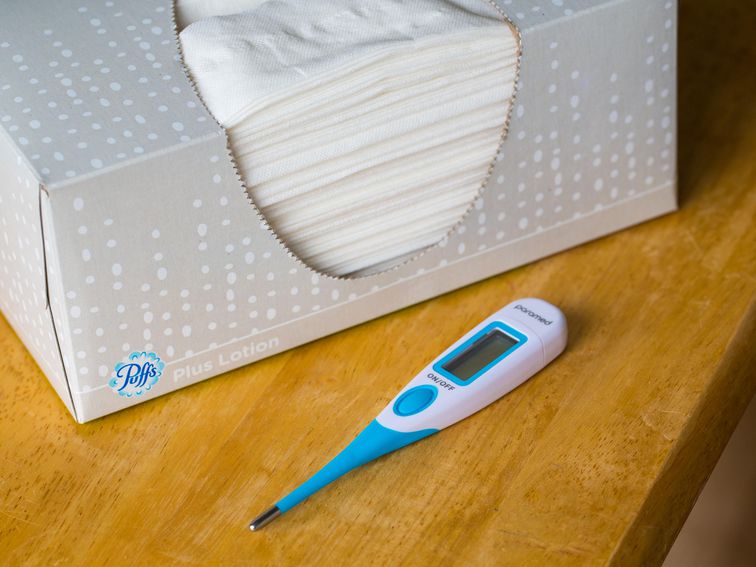
You’ll need to check the infected person’s temperature daily to see if they have a fever.
Angela Lang/CNET
Monitor their symptoms
It’s important to note that many hospitals don’t want you to go to the emergency room or arrive for a COVID-19 test without a doctor’s order, or an advanced state of symptoms, like high fever over 102 degrees. In many places, the number of tests are limited and hospitals must follow protocols to limit the exposure of sick people to the rest of the hospital population.
The CDC and hospitals such as Cedars-Sinai in Los Angeles suggest contacting your primary care provider about symptoms and the next steps you should take.
Symptoms that typically warrant a COVID-19 test include:
Trouble breathing
Persistent pain or pressure in the chest
Confusion or lack of energy
Bluish lips or face
Everyone needs to stay home
If the person you live with has contracted the coronavirus, it’s possible you and other housemates have already been exposed. The World Health Organization states the incubation period for someone with coronavirus is between one to 14 days. This is the time between catching the virus and seeing symptoms. This means you need to quarantine yourself for two weeks to prevent spreading the virus to others.
To avoid going out, have your food and groceries delivered to your door. The CDC says once everyone is symptom-free for at least 72 hours and testing negative for coronavirus, you can leave the house for necessities again.
Disinfect surfaces often
Make sure you’re cleaning and disinfecting high traffic surfaces in your home daily. This includes doorknobs, remote controls, bathroom surfaces, kitchen counters, appliances and your phone. Use products from the EPA’s approved list of disinfectants to help kill coronavirus.
The American Red Cross says to avoid sharing household items, such as glasses, utensils, towels and bedding. If an ill person uses any of these items, they should be washed thoroughly.
Disinfect the surfaces in your home daily.
James Martin/CNET
When is it OK to stop self-isolating?
If the infected person doesn’t have access to testing, the CDC states they can leave their home if they’ve had no fever for at least 72 hours (without medicine), symptoms like coughing have improved and at least seven days have passed since their symptoms first appeared.
To help better prepare you for a coronavirus case in your home, here’s what you need to know about making a face mask or covering at home, where you can buy a face mask if you don’t have the right tools and how to disinfect your car and home to help kill coronavirus.
Now playing: Watch this:
Keep in touch with loved ones while keeping your distance
1: 32
The information contained in this article is for educational and informational purposes only and is not intended as health or medical advice. Always consult a physician or other qualified health provider regarding any questions you may have about a medical condition or health objectives.
Is the U.S. getting close to being able to reopen, after weeks of social distancing? Experts say more work needs to be done ramping up systems including things like drive-through COVID-19 testing centers.
Matias J. Ocner/Miami Herald/Tribune News Service via Getty Images
hide caption
toggle caption
Matias J. Ocner/Miami Herald/Tribune News Service via Getty Images
Is the U.S. getting close to being able to reopen, after weeks of social distancing? Experts say more work needs to be done ramping up systems including things like drive-through COVID-19 testing centers.
Matias J. Ocner/Miami Herald/Tribune News Service via Getty Images
First things first: It’s not yet time to end social distancing and go back to work and church and concerts and handshakes.
Public health experts say social distancing appears to be working, and letting up these measures too soon could be disastrous. Until there is a sustained reduction in new cases — and the coronavirus’ spread is clearly slowing — we need to stay the course.
Still, society can’t stay shut down forever. Public health and state leaders are starting to talk about how and when to relax social distancing guidelines, and President Trump is expected to soon announce finalized guidelines to help states make those decisions. Even then, it’s clear that life won’t go back to normal all at once. The decisions will be staggered, and a lot of it will come down to local and regional circumstances.
“We have to do it strategically and safely,” said Dr. Monica Bharel, commissioner of the Massachusetts Department of Public Health at a briefing by Association of State and Territory Health Officials Wednesday. “The worst possible outcome of reopening public life would be a second wave of this pandemic.”
Public health leaders agree that in order to safely lift social distancing restrictions we must create and sustain systems that can rapidly stamp out any new coronavirus flare ups so they don’t spiral out of control. Here are five key things health experts say must be addressed as we begin to start businesses and community life up again.
1. Improve rapid testing
Medical personnel take patient samples at a drive-thru coronavirus testing site in West Palm Beach, Florida, Monday, March 16, 2020.
Chandan Khanna/AFP via Getty Images
hide caption
toggle caption
Chandan Khanna/AFP via Getty Images
Among public health leaders, the mantra for stopping coronavirus from surging is “test, trace and isolate.” Widespread testing with fast results is the first step — if we don’t have enough tests, we don’t know where the virus is spreading. This has been a major sticking point in the U.S. response to the coronavirus, though progress has been made.
A test that provides results in less than 15 minutes is now available in some hospitals and doctor’s offices. The company that produces it, Abbott, says it is able to provide about 50,000 tests per day. It runs on the same platform that doctors use to do a quick, in-office strep or flu test.
Dr. Rachel Levine, Pennsylvania’s secretary of health, said these types of quick tests will be “really critical,” to broaden access to testing but so far her state has had trouble getting them. “We have to make sure that [there is] access in vulnerable communities,” particularly for members of Hispanic and African American communities, she said.
Nationally, there are more than 120,000 COVID-19 tests being done every day, but experts say we need to continue to ramp this up. “You want to be doing [tests] at mass scale,” says Dr. Scott Gottlieb, former head of the Food and Drug Administration, who has developed a road map to reopening at the American Enterprise Institute. He says that could mean doing several million tests every week.
One big challenge labs have had in scaling up testing has been shortages of supplies, such as swabs to collect the samples, special fluids needed to safely transport them, and reagent chemicals to extract and analyze the genetic material from the virus. Labs around the U.S. and around the world are competing for these same supplies as demand surges globally.
Reliable serological tests — also known as antibody tests — are also key to get a handle on how much of a community’s population has already been exposed to the virus. Once someone has been exposed to the virus, their blood contains antibodies made by their immune system to fend off the infection. Serological blood tests, which can be performed quickly with a prick blood-draw, can detect these.
Several of these tests have been developed, but it’s not yet clear how reliable they are and it’s a big effort to scale up availability. “This is really a late summer, early fall kind of endeavor — these tools probably aren’t going to all be fully deployed in time to help us get out of the current epidemic,” Gottlieb says.
2. Massively upgrade contact tracing capacity
The next step in “test, trace, isolate” is “trace” — a shorthand for contact tracing. By tracking and communicating with the contacts of a confirmed COVID-19 case who are themselves at risk for infection, health workers can dramatically slow the chain of transmission.
It’s a labor-intensive process and the U.S. currently lacks the workforce to do this nationally. The head of the CDC told NPR last week that the agency is working on a big plan to scale up the workforce, though the details have yet to be released. An analysis by the Johns Hopkins Center for Health Security found the country may need 100,000 contact tracers, which would cost an estimated $3.6 billion. Tom Frieden, a former director of the Centers for Disease Control and Prevention, estimates the country may need even more, on the order of 300,000.
States are scrambling to ramp up contact tracing now. “We will need to beef up our workforce,” said Levine, the Pennsylvania health secretary. She said her state will hire more people and may use volunteers, too.
Health officials from other states agreed about the urgent need to expand contact investigations. “The capacity has been essentially overwhelmed,” says John Wiesman, the secretary of health for Washington state. “We need to redouble and triple efforts here around the pieces of case and contact investigation.”
The push to expand contract tracing quickly may go high-tech. Google and Apple are collaborating on a new system to develop apps for contact tracing, similar to those used in places like Singapore. There are privacy concerns with using smartphones to track people’s movements and contacts, and these apps are still in development, so even this shortcut will still take some time.
3. Create systems to isolate the sick and protect the vulnerable
Once the contacts of COVID-19 patients are traced, many will need to separate themselves from society for two weeks to be sure they are not infectious. There needs to be a support structure in place to make that possible, says Dr. Harvey Fineberg, a health policy researcher at the Harvard T.H. Chan School of Public Health.
“Part of a complete strategy for quarantine is that you provide places apart from the home and community where those who’ve been exposed can — in a comfortable setting — spend the time of their quarantine where they are not going to infect others,” he says.
This approach has been used in countries like China and South Korea where the coronavirus appears to be largely under control. Fineberg says it could be important for those who don’t have the space or resources to separate themselves safely from their household. “We have empty hotels all over America,” he adds.
Hotels have started to be offered as housing for health care workers concerned about infecting their family members but, Fineberg says, there is not currently a national plan to roll out quarantine centers more broadly.
Tom Frieden, the former CDC director agrees that places like hotels and dorm rooms may need to be part of America’s effort to get a handle on the coronavirus. “We need to think of this as an all of society response,” he says. “The countries that have had the best results, they’ve tested huge numbers of patients, and they’ve isolated patients not just in their own home, but in special facilities for people who don’t need hospitalization but don’t want to spread it to their family members.”
This kind of approach could be especially important for anyone who lives in close quarters with a lot of people — for instance, those in long-term care facilities, prisons, or nursing homes.
“Ground zero for COVID-19 in this country is nursing homes,” says Frieden. “When COVID gets into a nursing home, it can really cause devastation. We need to do everything possible to stop spread in congregate facilities like nursing homes.”
Homeless shelters are a concern as well. Officials in Washington State, California, and New York City have already started to use hotels and motels to house homeless residents who live in coronavirus hotspots.
4. Build up hospital capacity and the PPE supply chain
Hospitals in many places still struggle to get enough PPE and are getting creative about solving this. A non-profit fashion design incubator in Tempe, Arizona, F.A.B.R.I.C., converted its warehouse to make isolation gowns for health care workers.
Ross D. Franklin/AP
hide caption
toggle caption
Ross D. Franklin/AP
Hospitals have been scrambling to be able to handle more and more COVID-19 patients, but there’s still work to be done to make sure they’re ready for possible new waves of infections.
“It’s a certainty that cases will increase when you relax social distancing,” says Dr. Amesh Adalja of the Johns Hopkins Center for Health Security. “It’s just: Will it be at a slow enough clip that hospital capacity will not be compromised?”
Hospitals are still struggling to source many essential supplies to allow them to serve a surge of patients. There’s regional variation, but the AEI road map suggests that, on average, hospitals need to double their intensive care unit and ventilator capacity to care for critically ill COVID-19 patients, and that the supply of personal protective equipment should be stable so health care workers can protect themselves from infection.
Adalja is encouraged by efforts for hospitals and communities to share resources with each other, so that limited equipment can be targeted to the right place. He said that progress has already been made in “being able to rapidly move ventilators from one part of a country to another part of the country as the need arises.” A public-private partnership called the “Dynamic Ventilator Reserve” announced on Tuesday, aims to facilitate this kind of coordination between hospitals across the country.
5. Zero in on effective treatments
At the moment there’s no clear evidence on an effective therapy for COVID-19. Right now, it’s a waiting game as data on various treatments starts to roll in.
The Milken Institute is tracking dozens of different clinical trials underway to test treatments. Researchers are testing everything from antibody-based therapies, to antiviral medicines, as well as existing drugs including hydroxychloroquine that could be repurposed to help treat COVID-19. It’s too soon to say if drugs such as the antiviral remdesivir, are effective, but the company behind this drug says it will have some preliminary results from a study at the end of April.
After weeks of social distancing, streets in Washington D.C., and many other towns and cities are often empty. The pressure is growing to get society moving again.
Eric Baradat/AFP via Getty Images
hide caption
toggle caption
Eric Baradat/AFP via Getty Images
“Maybe in weeks or months, we may start to get some data from some of the experimental drugs to see how well they work,” says Adalja. “But truly, unequivocally effective antiviral treatment may take some time to develop.” A simple pill to treat coronavirus outside of a hospital, like Tamiflu for influenza, is even further out, he says.
Gottlieb says the combination of effective treatments as well as expanded testing and surveillance would put us in a situation where we can live with the virus, instead of being paralyzed by it.
“I think that [would be] a robust enough set of tools that this could become a liveable threat, that we can get back to a fairly normal way of life and be able to mitigate the risk from coronavirus even before we have a vaccine in place,” he says. “Now, life will never be perfectly the same until we have a vaccine that can fully vanquish it.”
There are dozens of compounds being evaluated for the development of a vaccine, but that’s at least a year off.
Rob Stein and Nurith Aizenman contributed reporting
Get all the latest news on coronavirus and more delivered daily to your inbox. Sign up here.
Several Southern California nurses were suspended after they refused to enter coronavirus patient’s rooms without N95 respirator masks, the National Nurses Union said this week.
Mike Gulick, who is one of the suspended nurses, told the Associated Press he’s been extremely careful about not bringing the virus home to his wife and 2-year-old daughter, but said the administrators at Providence Saint John’s Health Center in Santa Monica told nurses N95 masks weren’t necessary and didn’t provide them.
Michigan ER nurses stage sit-in over ‘unsafe patient load,’ told to leave amid coronavirus outbreak
In this image provided by Lizabeth Baker Wade, nurses at Providence Saint John’s Health Center in Santa Monica, Calif.(Lizabeth Baker Wade via AP)
Gulick said the breaking point for him was when a nurse on his ward tested positive for the virus last week and the next day doctors doing rounds asked them why they weren’t wearing N95 masks and said they should have better protection.
The 10 nurses will remain on paid leave pending an investigation from human resources, the union said.
N95 masks filter out about 95 percent of airborne particles, including those too small to be stopped by regular masks.
Gulick’s wife, who is a nurse at Cedars-Sinai Medical Center on the other side of town, not only wears an N95 mask while doing her job but also layers it with another respirator.
Health care workers across the country have been forced to improvise due to widespread shortages of personal protective equipment amid the pandemic.
The virus is especially dangerous for medical professionals since it spreads through respiratory droplets in the air and from bodily fluids transmitted by a cough or sneeze, for example.
Although CDC guidelines don’t require N95 masks for health care professionals treating coronavirus patients, many hospitals are opting to use them because of the highly contagious nature of the virus.
At least 9,200 health care workers have been infected so far, the Centers for Disease Control and Prevention said Wednesday.
‘We are so grateful to the heroic work our nurses perform each day and will not let the actions of a few diminish the appreciation we have for all our nurses and their commitment to our community,” Providence Saint John’s told FOX 11 in a statement. “Saint John’s cherishes its nurses and is taking precautions sanctioned by leading world, national, state and local health agencies to ensure their safety — the same protocols followed by most hospitals around the country. We have been working for weeks to increase access to PPE and also activate our own local reprocessing centers.”
St. John’s said it is expanding usage of N95 masks for employees caring for coronavirus patients.
“It’s no secret there is a national shortage, and depleting our supply is not an option knowing COVID-19 will remain in our community for weeks and months to come,” the statement said.
On Wednesday, nurse unions in New York, Massachusetts, Michigan, Illinois, California, and Pennsylvania scheduled actions at their hospitals over the lack of protective equipment and posted on social media using hashtag “PPEoverProfit.”
This website is currently unavailable to visitors from the European Economic Location while we work to guarantee your data is secured in accordance with relevant EU laws.
Iceland’s strategy to track the spread of the coronavirus can be used in the U.S., deCODE Genetics CEO Kári Stefánsson informed CNBC on Wednesday.
Stefánsson, whose Reykjavík-based business is known for its work analyzing the human genome, kept in mind the obvious size differences in between the U.S. and Iceland.
For beginners, the U.S. has about 330 million people while Iceland has almost 347,000, according to the U.S. Census Bureau.
However Iceland’s ability to test around 10%of its population and release robust contact tracing when someone is diagnosed with Covid-19 must not be seen as something only little countries can do, Stefánsson argued in an interview with CNBC’s Meg Tirrell.
” It ought to be even easier in a nation of your size with your resources, with this incredible amount of talent you have,” Stefánsson said of the U.S. “If you were to bring this all to bare, you would quickly be able to do the same thing as we.”
Iceland has 1,727 validated cases of Covid-19 and 8 deaths, according to Johns Hopkins University data.
In the U.S., where about 3.2 million individuals have been checked for the illness, there are more than 634,000 verified cases of Covid-19, per JHU data. Nearly 28,000 have passed away.
Stefánsson, a neurologist who was formerly a professor at Harvard University, stated that in addition to an early commitment to widespread screening, Iceland’s government likewise deployed “an extraordinarily energetic” system of contact tracing.
This includes putting everybody who checked positive in seclusion and after that figuring out all the people who have actually touched with individuals who have the disease, he discussed. Those who came into contact with an infected individual are put in quarantine, he said.
” By doing this, we appeared to have actually brought this epidemic under some sort of control,” he argued.
Residential properties base on the city skyline in Reykjavik, Iceland.
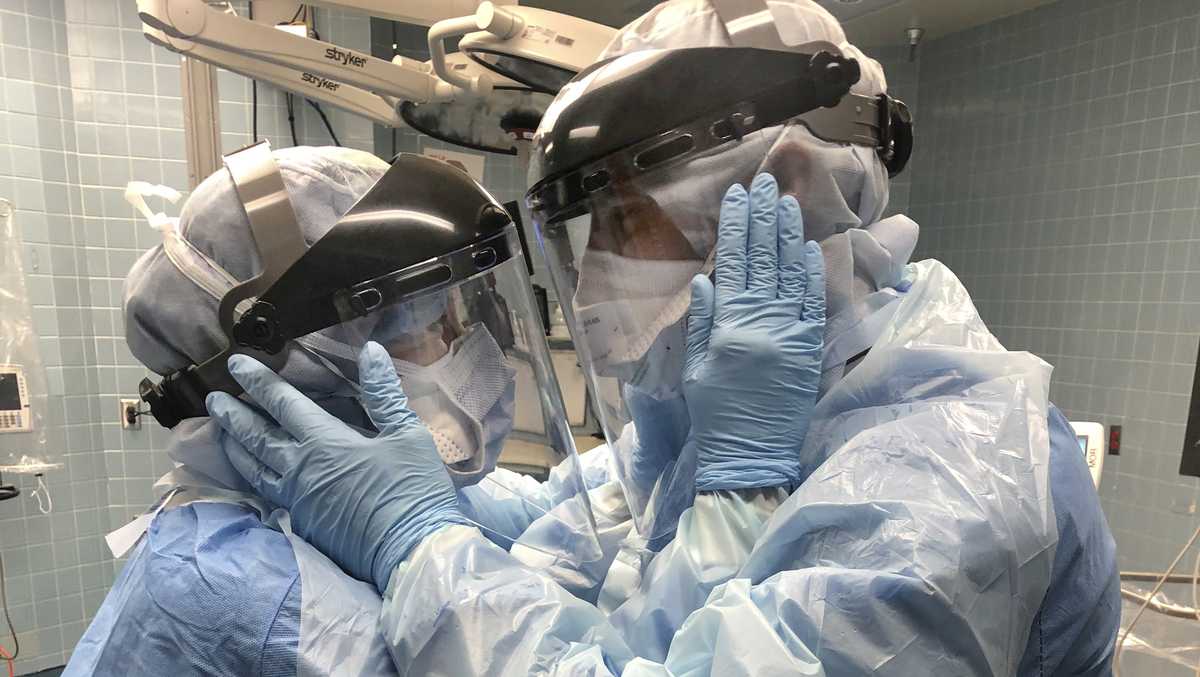
Between surgical treatments one stressful early morning, Ben Cayer and Mindy Brock– couple, and fellow nurse anesthetists– peered through layers of protective equipment, and locked eyes.It was a fans’ gaze in the most unlikely situation. A coworker was there to snap a picture.Now the image, shared on social networks, is motivating individuals around the world.” Everyone’s talking about the photo,” states Cayer,46 It strikes a chord “since we’re all going through the exact same thing right now and it’s a sign of hope and love.” Brock, 38, includes: “What’s important is that we stick, we work together, and we always support each other. And not simply Ben and I, however the human race right now.” The Florida pair share a house, an occupation and, now, a mission– taking on the high-risk duty of positioning breathing tubes in surgical treatment clients, any of whom might have COVID-19 They didn’t reconsider offering for Tampa General Healthcare facility’s brand-new “respiratory tract group,” Cayer says.Placing a tube into a patient’s mouth and down into their airway requires close contact– and since the infection spreads out in beads, the highest level of protective gear. To save gear and expose fewer health care workers, the hospital pared down staff to a minimum for intubations before surgery.Their patients have been in auto accident, or required brain surgical treatment since of a burst blood vessel. As holds true at numerous U.S. medical facilities, just emergency situation surgical treatments continue at the Tampa health center, to make room as the pandemic continues to crest.They fulfilled in nurse anesthesia school in2007 In classes, they beinged in alphabetical order. Brock beside Cayer, she says, “and it simply took off from there.” They married 5 years back and now work for TeamHealth, a medical staffing firm. However on the morning of the photo, they quarrelled during the drive to work. They disagreed about what to play on the cars and truck radio, and who was doing the dishes at home.The new COVID-19 treatments– it was Brock’s very first day on the new group– were making them both tense.” We were arguing,” she says. Later on, they found each other between surgeries. The stress melted. “All those insignificant things that we were arguing about that early morning, in the grand scheme of things, aren’t that important.” The picture records that moment.He states they don’t worry much about getting ill, although the infection has actually come close. Brock’s mom has recuperated from it. Colleagues fear capturing it. Clients feel alone since visitors have actually been strictly restricted.” We have grown guys bawling due to the fact that none of their household can be there with them,” Brock says.It assists to be wed to another nurse, due to the fact that “unless you’re here doing this, there’s no way to explain it,” she says. “He gets it.”.
Between surgeries one demanding morning, Ben Cayer and Mindy Brock– couple, and fellow nurse anesthetists– peered through layers of protective gear, and locked eyes.
They didn’t think two times about volunteering for Tampa General Healthcare facility’s brand-new “air passage group,” Cayer says.
” We have grown males bawling due to the fact that none of their household can be there with them,” Brock states.
It helps to be married to another nurse, since “unless you’re here doing this, there’s no way to describe it,” she says.
This website is currently not available to visitors from the European Economic Location while we work to guarantee your information is safeguarded in accordance with appropriate EU laws.
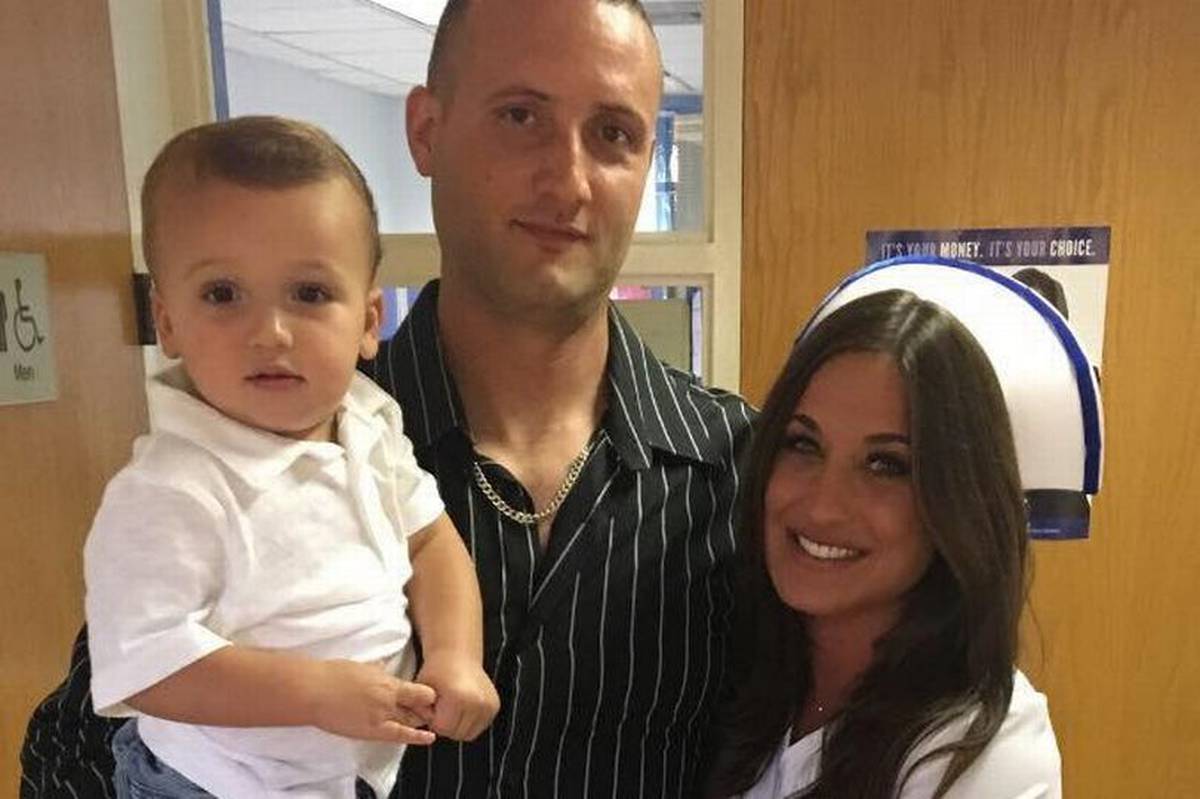
A 33-year-old Florida nurse who treated patients infected with Covid-19 has died after not being given a mask to wear, according to her husband. Danielle DiCenso, a travelling nurse, worked her last shift two weeks ago at Palmetto General Hospital after she started experiencing coronavirus symptoms, her husband David told Local 10 News. “She showed up for work one day and they didn’t have a mask for her,” he explained.
After her Covid-19 test results came back inconclusive she began self-isolating in her family’s living room where she quickly deteriorated, news station NBC 6 reported. “It was a rough four- or five-day struggle between that,” her husband said. “Her fever spiked, it came on in waves.” On Thursday, he discovered his wife, who has no underlying health conditions, dead in her living room. READ MORE: • Covid 19 coronavirus: Concerns that hospital nurses have no access to masks • Premium – Covid 19 coronavirus: Dr Gary Payinda – Surgical-type face mask should be safe enough to use on frontline • Covid 19 coronavirus: Expert says it’s better to wear a mask • Do surgical masks help stop the spread of viruses? “Unfortunately I found her dead body in my living room on Thursday … lack of oxygen; she looked like she died a peaceful death in her sleep,” he said. Their 4-year-old son never got to say goodbye to his mum. David blamed the death on the hospital who he claims didn’t provide her with proper protective equipment and was angered that their son will grow up with no mother. • Covid19.govt.nz: The Government’s official Covid-19 advisory website “The people on the front lines, these are our modern-day infantry,” he said. “The nurses and doctors, they are the ones on the front lines and we’re not giving them ammunition … People who are supposed to be taking care of the people getting sick are the people that are dying now.”
Palmetto General Hospital told NBC 6 in a statement: “Nurses are provided appropriate personal protective equipment (PPE) in compliance with Centers for Disease Control (CDC) guidelines. We are very focused on minimising staff exposures in our hospitals. All employees at our hospital are temperature checked upon arrival, wear a mask during patient care and are required to notify employee health if they become symptomatic.”
Local 10 News reported that a medical examiner is going to test her remains for Covid-19. “Her passing was sudden and very tragic due what we believed to be Covid-19,” her sister Ashley Kuchciak wrote on a GoFundMe page established for funeral expenses. “Danielle was working as an ICU nurse on the front lines risking her life for the lives of others.”
We have actually spotted uncommon activity from your computer network
To continue, please click package below to let us understand you’re not a robot.
Why did this take place?
Please ensure your browser supports JavaScript and cookies which you are not obstructing them from loading. For additional information you can review our Regards to Service and Cookie Policy.
Required Assistance?
For queries related to this message please contact our assistance group and provide the referral ID below.