Deprecated: Optional parameter $output declared before required parameter $atts is implicitly treated as a required parameter in /var/www/clients/client0/web46/web/wp-content/plugins/td-composer/legacy/common/wp_booster/td_wp_booster_functions.php on line 1740

Deprecated: Optional parameter $depth declared before required parameter $output is implicitly treated as a required parameter in /var/www/clients/client0/web46/web/wp-content/plugins/td-cloud-library/includes/tdb_menu.php on line 251

Deprecated: Optional parameter $caller_id declared before required parameter $channel_that_passed is implicitly treated as a required parameter in /var/www/clients/client0/web46/web/wp-content/themes/Newspaper/includes/wp-booster/tagdiv-remote-http.php on line 124

Deprecated: Optional parameter $caller_id declared before required parameter $channel is implicitly treated as a required parameter in /var/www/clients/client0/web46/web/wp-content/themes/Newspaper/includes/wp-booster/tagdiv-remote-http.php on line 146
Blog - Page 1777 of 2782 - Virus Reports London Escorts sunderland escorts asyabahis.org dumanbet.live pinbahiscasino.com sekabet.net www.olabahisgir.com maltcasino.net faffbet-giris.com asyabahisgo1.com www.dumanbetyenigiris.com pinbahisgo1.com sekabet-giris2.com www.olabahisgo.com maltcasino-giris.com faffbet.net betforward1.org www.betforward.mobi 1xbet-adres.com 1xbet4iran.com romabet1.com www.yasbet2.net www.1xirani.com www.romabet.top www.3btforward1.com 1xbet https://1xbet-farsi4.com بهترین سایت شرط بندی betforward

Global Statistics

All countries
695,781,740
Confirmed
Updated on September 26, 2023 9:06 pm
All countries
627,110,498
Recovered
Updated on September 26, 2023 9:06 pm
All countries
6,919,573
Deaths
Updated on September 26, 2023 9:06 pm

Global Statistics

All countries
695,781,740
Confirmed
Updated on September 26, 2023 9:06 pm
All countries
627,110,498
Recovered
Updated on September 26, 2023 9:06 pm
All countries
6,919,573
Deaths
Updated on September 26, 2023 9:06 pm
Home Blog Page 1777

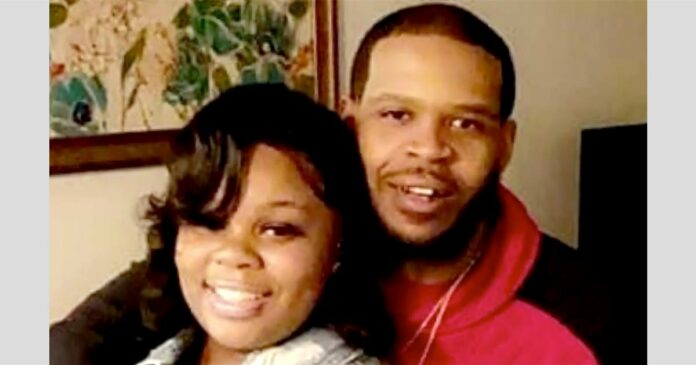
Charges against Breonna Taylor’s boyfriend dropped for now

0
Charges against Breonna Taylor’s boyfriend dropped for now

The top prosecutor in Jefferson County, Kentucky, on Friday said he asked a court to dismiss attempted murder and assault charges against the boyfriend of Breonna Taylor, a woman killed by police during the execution of a search warrant.

Kenneth Walker, 27, opened fire, striking and injuring a Louisville Metro Police Department sergeant during the March 13 drug raid that was part of an investigation that included Taylor, 26.

Commonwealth’s Attorney Tom Wine said he’s asking a court to dismiss the pending grand jury indictment against Walker until investigations by the FBI, the U.S. Attorney’s office and the state attorney general’s office could be completed.

“If after those reviews we believe there is sufficient evidence to present this matter to the grand jury, we will do so,” Wine said at a news conference.

Let our news meet your inbox. The news and stories that matters, delivered weekday mornings.

The grand jury in the case was not informed by police that Taylor was killed, the Louisville Courier-Journal reported Thursday.

Civil rights attorney Benjamin Crump is one of the lawyers representing Taylor’s family.

On Friday he said in a statement, “Charges should never have been filed.”

Wine on Friday railed against what he called “false information” about the officers’ actions while continuing to present arguments against Walker, including audio of investigators’ interview with the man and audio of an officer’s account of what happened as the couple was awoken early that day.

He said multiple officers testified their presence was announced, and he questioned the credibility of Walker. The audio didn’t seem to contradict the claim that police knocked multiple times without identifying themselves.

The officers wore plainclothes during the raid, which was approved by a judge as a “no-knock” warrant. Such a warrant allows police to burst into a location without warning. Kentucky is a stand-your-ground state, which allows deadly force when someone is violently attacked.

The injured officer, Jon Mattingly, described the beginning of the operation: “Banged on the door. No response. Banged on it again. No response. At that point, we started announcing ourselves, ‘Police please come to the door. Police, we have a search warrant.'”

Walker said that he was scared and believed an ex-boyfriend who was unwelcome at the home had returned and that whoever was at the door gave “no response.” He said he had called 911, fired one shot as the door opened and aimed for the ground.

“I didn’t mean to,” Walker said. “Clearly, I was scared.”

Taylor’s family has filed a wrongful death lawsuit against three officers in the raid. The suit claims that Taylor was a secondary target in a drug investigation that already resulted in an arrest.

Image: Dennis RomeroDennis Romero

Dennis Romero writes for NBC News and is based in Los Angeles.

Read More

Dropping Growth Target, China Acknowledges Severity of Its Economic Challenges

0
Dropping Growth Target, China  Acknowledges Severity of Its Economic Challenges

BEIJING—Under leader Xi Jinping, China has established itself as an increasingly assertive global player, pushing back forcefully against challenges at home and abroad.

But even as Beijing tightens its grip on Hong Kong and steps up its rhetoric against the U.S., senior leaders bowed to the inevitable on Friday, acknowledging the scope of the challenges facing the economy—the bedrock of much of the country’s recent strength.

On…

Read More

Memorial Day Beckons, but the Coronavirus Pandemic Looms

0
Memorial Day Beckons, but the Coronavirus Pandemic Looms

BOSTON — A sailboat race from Cape Cod to the island of Nantucket has marked the unofficial beginning of summer for the last 49 years. But the Figawi regatta, which raises money for veterans over Memorial Day weekend, will not involve any actual boats this year. Instead, organizers will host a virtual cocktail party from a boathouse, among other online events.

At first, regulars vowed to sail from Hyannis to Nantucket anyway, said Shelley Hill, executive director of Figawi Charities. “But as time went on and everybody learned more,” she said, “that idea has gone away.”

Crowded parades. Mobbed beaches. Congested public ceremonies. Jam-packed backyard barbecues. Memorial Day, which has come to mark the beginning of hot weather across much of the United States, typically brings millions of Americans shoulder to shoulder, towel to towel.

But this year these first rites of summer are taking place as the country grapples with the coronavirus pandemic and cautiously emerges from two months of quarantine. Cooped-up Americans are eager for social interaction and fun. Yet public health officials warn that those impulses could result in an uptick in coronavirus cases.

Many traditional Memorial Day events have been canceled or replaced with socially distant formats. Elected officials and event organizers are struggling to bring back as much normalcy as possible without jeopardizing public health. The results have been hopeful, maddening and bewildering. But many Americans are pressing on, and trying to preserve what is important while letting go of what is not.

A Memorial Day parade from Vidalia, La., to the Natchez National Cemetery in Mississippi has roots going back to 1867. But instead of marching this time, people will motorcade in masks and gloves to let veterans know “that they have not been forgotten,” said Laura Ann Jackson, co-chair of the parade.

“It’s going be different this year,” she said.

Image

Credit…Bryan Anselm for The New York Times

Image

Credit…Bryan Anselm for The New York Times

Image

Credit…Bryan Anselm for The New York Times

Image

Credit…Bryan Anselm for The New York Times

Although the Memorial Day ceremony in Fort Walton Beach, Fla., is still on, organizers are begging the public not to come. Instead of filling 500 chairs, the solemn event honoring fallen veterans will be livestreamed into residents’ homes.

“It’s been really difficult for us to say, ‘We really don’t want you there,’” said Tom Rice, chairman of the committee that sponsors the event, which will feature the national anthem and a benediction from a priest. “So far, there’s been no blowback.”

The iconic boardwalk in Ocean City, Md., opened on May 9 to throngs of people, but signs reminded beachgoers that contagion is still afoot, and that groups of 10 or more were discouraged.

In Massachusetts, beaches will be allowed to reopen for swimming on Memorial Day, but volleyball is banned and sunbathers must place their towels 12 feet apart. In New York City, Mayor Bill de Blasio opted to keep the city’s beaches closed over the weekend and even threatened to cordon them off with fencing, prompting elected officials on Long Island to try to ward off a flood of would-be beachgoers from the city by restricting access to local residents.

In California, where tens of thousands have flocked to beaches in recent weeks, Gov. Gavin Newsom had announced that he was shutting beaches down to protect public health, but then backtracked and allowed them to open for “active use,” which does not include lounging on beach towels.

Mayor Will O’Neill of Newport Beach, Calif., said the city was unlikely to fine or arrest sunbathers on his city’s seven-mile stretch of beach.

“At a time when tens of thousands of people have been released from jails, why are we being told to arrest moms on beach blankets and seniors under umbrellas?” he asked. “There was no data or science supporting the decision.”

He estimated that about 40,000 people showed up in late April on the first warm weekend of the year, but he said that beachgoers have generally followed social-distancing rules and that neighborhood complaints have gone down since the beaches have been open.

At this stage of the pandemic, people are beginning to feel the negative health effects of social isolation, which Steve Cole, a social genomics researcher at the University of California, Los Angeles, argued can increase the chances of chronic disease and other types of illnesses the longer it goes on. Over the summer, he is planning to take his children to the Grand Canyon as soon as logistically possible, and socialize in small groups with trusted friends.

“We should be able to find some equilibrium between those two extremes,” he said. “We don’t want to be packed like sardines in a crowd, but at the same time, a lone human being is a recipe for death.”

But across the country, many of the normal opportunities for fellowship and summer fun have been canceled or transformed beyond recognition.

On Lake Champlain in upstate New York, the cabins at Camp Dudley will be empty this summer for the first time since 1885. In neighboring Vermont, campgrounds will be allowed to open, but only at 25 percent capacity.

Both the Yarmouth Clam Festival and the Rockland Lobster Festival have been canceled in Maine, which relies heavily on tourism. But officials in Portland, the state’s largest city, are preparing to block off streets in June to give restaurants more space for outdoor dining, which is considered less risky than dining indoors.

“People who are looking to get out and about more are excited,” Mayor Kate Snyder of Portland said.

To protect the health of Mainers, state guidelines require out-of-state visitors to quarantine for two weeks before going out to eat.

“It’s confusing,” said Steve Hewins, president and chief executive of HospitalityMaine, which represents 1,300 hotels and restaurants. “Who is going to possibly come to Maine and quarantine for 14 days?”

Image

Credit…Sarah Rice for The New York Times

Image

Credit…Sarah Rice for The New York Times

Image

Credit…Sarah Rice for The New York Times

Nonetheless, he said, his group is developing a special training program for front-line restaurant and hotel workers to handle the new coronavirus-related health requirements, as hope for some semblance of a summer season builds.

Perhaps nowhere has the decision about how to handle Memorial Day weekend caused more angst and heartbreak than in Ironton, Ohio, an Appalachian town of 11,000 people that holds the holiday parade at the core of its identity.

  • Updated May 20, 2020

    • What are the symptoms of coronavirus?

      Common symptoms include fever, a dry cough, fatigue and difficulty breathing or shortness of breath. Some of these symptoms overlap with those of the flu, making detection difficult, but runny noses and stuffy sinuses are less common. The C.D.C. has also added chills, muscle pain, sore throat, headache and a new loss of the sense of taste or smell as symptoms to look out for. Most people fall ill five to seven days after exposure, but symptoms may appear in as few as two days or as many as 14 days.

    • How many people have lost their jobs due to coronavirus in the U.S.?

      Over 38 million people have filed for unemployment since March. One in five who were working in February reported losing a job or being furloughed in March or the beginning of April, data from a Federal Reserve survey released on May 14 showed, and that pain was highly concentrated among low earners. Fully 39 percent of former workers living in a household earning $40,000 or less lost work, compared with 13 percent in those making more than $100,000, a Fed official said.

    • How can I protect myself while flying?

      If air travel is unavoidable, there are some steps you can take to protect yourself. Most important: Wash your hands often, and stop touching your face. If possible, choose a window seat. A study from Emory University found that during flu season, the safest place to sit on a plane is by a window, as people sitting in window seats had less contact with potentially sick people. Disinfect hard surfaces. When you get to your seat and your hands are clean, use disinfecting wipes to clean the hard surfaces at your seat like the head and arm rest, the seatbelt buckle, the remote, screen, seat back pocket and the tray table. If the seat is hard and nonporous or leather or pleather, you can wipe that down, too. (Using wipes on upholstered seats could lead to a wet seat and spreading of germs rather than killing them.)

    • Is ‘Covid toe’ a symptom of the disease?

      There is an uptick in people reporting symptoms of chilblains, which are painful red or purple lesions that typically appear in the winter on fingers or toes. The lesions are emerging as yet another symptom of infection with the new coronavirus. Chilblains are caused by inflammation in small blood vessels in reaction to cold or damp conditions, but they are usually common in the coldest winter months. Federal health officials do not include toe lesions in the list of coronavirus symptoms, but some dermatologists are pushing for a change, saying so-called Covid toe should be sufficient grounds for testing.

    • Should I wear a mask?

      The C.D.C. has recommended that all Americans wear cloth masks if they go out in public. This is a shift in federal guidance reflecting new concerns that the coronavirus is being spread by infected people who have no symptoms. Until now, the C.D.C., like the W.H.O., has advised that ordinary people don’t need to wear masks unless they are sick and coughing. Part of the reason was to preserve medical-grade masks for health care workers who desperately need them at a time when they are in continuously short supply. Masks don’t replace hand washing and social distancing.

    • What should I do if I feel sick?

      If you’ve been exposed to the coronavirus or think you have, and have a fever or symptoms like a cough or difficulty breathing, call a doctor. They should give you advice on whether you should be tested, how to get tested, and how to seek medical treatment without potentially infecting or exposing others.

    • How can I help?

      Charity Navigator, which evaluates charities using a numbers-based system, has a running list of nonprofits working in communities affected by the outbreak. You can give blood through the American Red Cross, and World Central Kitchen has stepped in to distribute meals in major cities.


The town has hosted a parade every year since 1868, and lays claim to being the site of the nation’s oldest continuous Memorial Day observance. Tens of thousands of people flock there every year, forming crowds that can get 10 people deep.

But this year, Gov. Mike DeWine asked local officials to adhere to social-distancing guidelines that make hosting a normal parade impossible. Members of the parade committee in Ironton agonized. They did not want to be the first in 152 years to cancel.

The parade will go on, they decided, but the number of vehicles on the route will be cut back drastically. Instead of marching, participants will stay inside their vehicles. The crowd has been asked to stay on porches or watch online.

The changes have sparked outrage among some who want to honor their military dead by marching, as well as parents who have waited for years to watch their children in the high school band.

“Some of them just can’t take it,” said David Lucas, a volunteer on the parade committee who serves as its spokesman. “Everybody’s tired of being quarantined. They are stunned that they couldn’t watch their children graduate from high school. They are afraid that the whole world is going to get canceled.”

He chalked up the anger about the parade to the general frustration of a population that is tired of being cooped up at home. In quarantine, people yearned for summer, but now that stay-at-home orders are being lifted, they are realizing it still will not be like summers past.

Little League in Ironton is starting up in June, but baseball players will have to stand six feet away from one another when they are waiting to bat, and they will not be allowed to give high-fives. The fate of the county fair has not yet been decided.

Mr. Lucas predicted that a few renegades might come to town on Memorial Day anyway but that most observers “will quietly watch the parade on the internet and wonder what the world has come to.”

Jennifer Medina contributed reporting from Los Angeles.

Read More

Cuomo attempts to deflect blame of deadly nursing home coronavirus debacle on to Trump

0
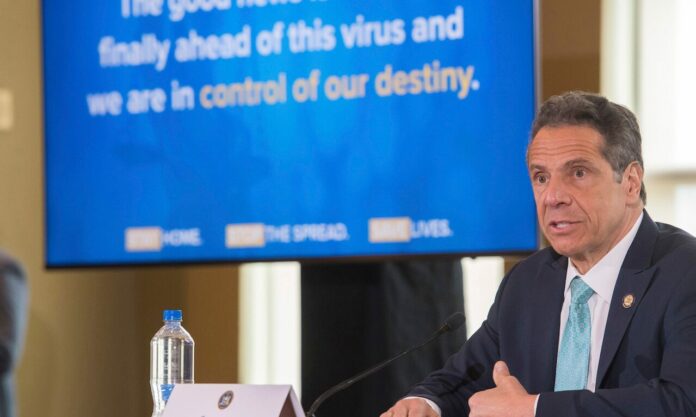
Cuomo attempts to deflect blame of deadly nursing home coronavirus debacle on to Trump

Get all the latest news on coronavirus and more delivered daily to your inbox.  Sign up here.

New York Gov. Andrew Cuomo Saturday doubled down on his state’s now-scrapped nursing home policy that critics say contributed to thousands of coronavirus deaths and instead blamed the problem on President Trump and his administration.

“New York followed the president’s agency guidance,” Cuomo said Saturday at his press conference. “…. What New York did was follow what the Republican Administration said to do. That’s not my attempt to politicize it. It’s my attempt to depoliticize it. So don’t criticize the state for following the president’s policy.”

Cuomo has been under scrutiny from GOP politicians who say the governor should have never allowed recovering coronavirus patients to leave hospitals and go back to their residential nursing homes to spread the contagious virus.

CUOMO DOWNPLAYS CALLS FOR FEDERAL PROBE INTO NURSING HOME CORONAVIRUS DEATHS: ‘ASK PRESIDENT TRUMP’

Nursing care facilities, home to some of the most vulnerable citizens, have been coronavirus hotspots around the country. New York leads the nation with the most reported coronavirus nursing home deaths at more than 5,000 — though the state changed how it counts deaths so the numbers of nursing home patient deaths could be even higher.

Cuomo’s response Saturday echoed his past answers, that he was only following guidelines from the Trump administration and Centers for Disease Control and Prevention.

CLICK HERE FOR FULL CORONAVIRUS COVERAGE

“This is a political season, I get it,” Cuomo said Wednesday. “I’m not going to get into the political back-and-forth, but anyone who wants to ask why did the state do that with COVID patients in nursing homes, it’s because the state followed President Trump’s CDC guidance.”

Cuomo added: “They should ask President Trump. I think that will stop the conversation.”

scathing Associated Press report out Friday was highly critical of the way in which Cuomo had handled the state’s nursing home coronavirus crisis. It found more than 4,300 coronavirus-infected elderly patients were sent to vulnerable nursing homes under a controversial state directive that was ultimately scrapped amid criticisms it was accelerating the nation’s deadliest outbreaks.

BOMBSHELL REPORT ON NY NURSING HOME POLICY OVERLOOKED IN GOV. CUOMO’S DAILY PRESS CONFERENCE

CDC guidelines require any newly admitted and readmitted resident with a COVID-19 case to be placed in a designated COVID-19 care unit, while those who have met the criteria to have recovered can return to a regular unit in the nursing home. New York – along with California and New Jersey –  at the time had specific guidelines saying that nursing homes cannot refuse to take patients from hospitals solely because they have the coronavirus.

After mounting criticism that the policy put the most vulnerable people at risk and contributed to a high number of fatalities, New York reversed course May 10. Now hospitals can only send patients who have tested negative for COVID-19 to nursing homes.

ELISE STEFANIK ASKS FEDS TO INVESTIGATE CUOMO’S ‘FAILED’ NURSING HOME POLICY

Cuomo (pictured earlier this month) has been under scrutiny from GOP politicians who say the governor should have never allowed recovering coronavirus patients to leave hospitals and go back to their residential nursing homes to spread the contagious virus. <br data-cke-eol=” src=”https://a57.foxnews.com/static.foxnews.com/foxnews.com/content/uploads/2020/05/640/320/AP20129773805701.jpg?ve=1&tl=1″>

Cuomo (pictured earlier this month) has been under scrutiny from GOP politicians who say the governor should have never allowed recovering coronavirus patients to leave hospitals and go back to their residential nursing homes to spread the contagious virus. 

(Office of Governor Andrew M. Cuomo via AP)

GOP lawmakers have requested a federal probe into Cuomo’s policy to send recovering coronavirus patients back to nursing homes and related concerns that deaths at the facilities are being knowingly under-counted.

The state estimates that more than 5,000 nursing home and longterm-care facility patients have died from coronavirus, but a new report says New York could be drastically under-reporting the deaths — prompting Rep. Elise Stefanik, R-N.Y., and fellow GOP lawmakers to call on an investigation.

CLICK HERE FOR THE FOX NEWS APP

Fox News’ Andrew O’Reilly and Brian Flood contributed to this report. 

Read More

Fox News Poll: Biden widens national lead over Trump

0
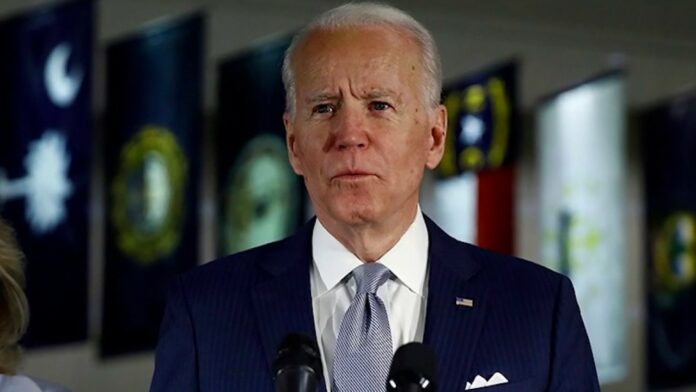
Fox News Poll: Biden widens national lead over Trump

©2020 FOX News Network, LLC. All rights reserved. This material may not be published, broadcast, rewritten, or redistributed. All market data delayed 20 minutes. New Privacy PolicyNew Terms of Use (What’s New)FAQ

Read More

Rep. Debbie Dingell on rural communities vulnerable to coronavirus

0
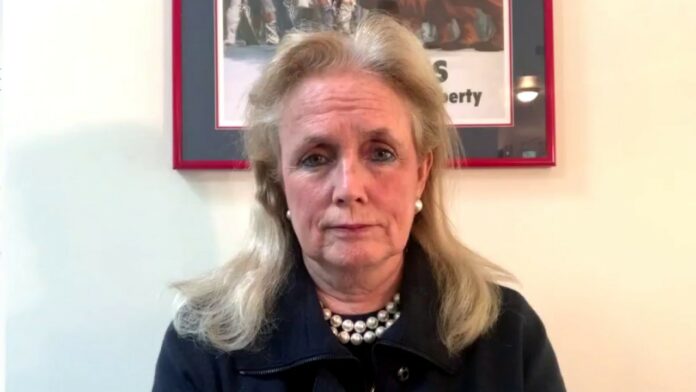
Rep. Debbie Dingell on rural communities vulnerable to coronavirus

©2020 FOX News Network, LLC. All rights reserved. This material may not be published, broadcast, rewritten, or redistributed. All market data delayed 20 minutes. New Privacy PolicyNew Terms of Use (What’s New)FAQ

Read More

UK government defends aide who defied lockdown

0
UK government defends aide who defied lockdown

©2020 FOX News Network, LLC. All rights reserved. This material may not be published, broadcast, rewritten, or redistributed. All market data delayed 20 minutes. New Privacy PolicyNew Terms of Use (What’s New)FAQ

Read More

Missing Ohio woman, 18, found safe: Left to ‘start a new life’

0
Missing Ohio woman, 18, found safe: Left to ‘start a new life’
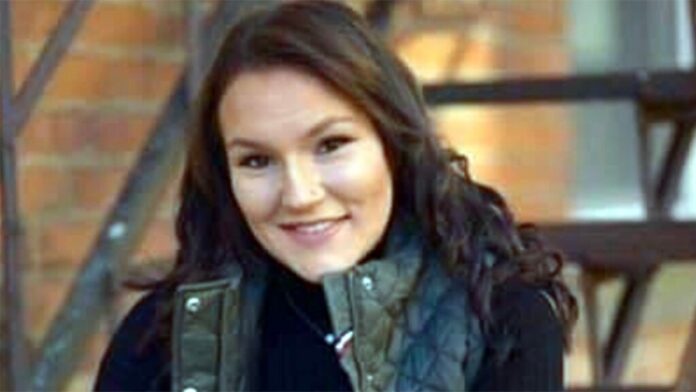
An Ohio sheriff said missing Madion Bell, 18, was found safe Saturday.

An Ohio sheriff said missing Madion Bell, 18, was found safe Saturday.
(Highland County Sheriff’s Office )

An 18-year-old Ohio woman was found safe Saturday six days after her mother reported her missing.

Madison Bell, of Greenfield, disappeared after telling her mother she was going to a tanning salon that had reopened after Ohio coronavirus lockdown measures were lifted for some businesses.

Her car was found abandoned in a church parking lot that deputies cordoned off as a crime scene.

The announcement that she had been located and was safe was made around 6:30 a.m. Saturday by Highland County Sheriff Donnie Barrera.

MAN SOUGHT FOR QUESTIONING IN 18-YEAR-OLD OHIO WOMAN’S DISAPPEARANCE

Bell was a graduating senior.

Barerra said she left home “to start a new life,” the Cincinnati Enquirer reported.

He said law enforcement tracked her down at a location that was not local, according to the paper.

Barerra said Bell was not considered a runaway because she is an adult.

MISSING OHIO TEEN’S CAR, CELL PHONE FOUND AFTER DISAPPEARANCE

On Thursday, Barerra’s office released a photo of a man with a scruffy beard who they said was wanted for questioning in the disappearance.

Bell’s family asked for privacy “during this difficult time while we are emotionally raw,” Fox 19 Cincinnati reported.

Read More

Can kids get COVID-19?: What we know about this Kawasaki-like disease affecting children

0
Can kids get COVID-19?: What we know about this Kawasaki-like disease affecting children
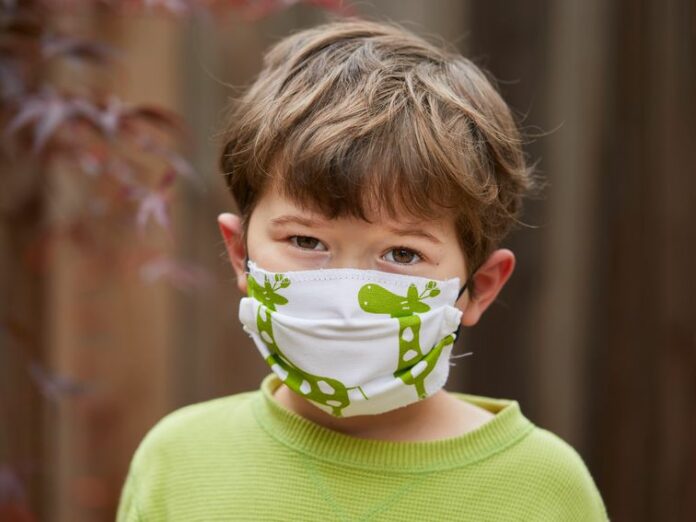
A boy wears a handmade mask to try to reduce transmission of COVID-19, the disease caused by the coronavirus.

A boy wears a handmade mask to try to reduce transmission of COVID-19, the disease caused by the coronavirus.


Stephen Shankland/CNET

For the most up-to-date news and information about the coronavirus pandemic, visit the WHO website.

At first, news that COVID-19 doesn’t always affect children as severely as it strikes adults was a welcome relief. At least that was the initial understanding clinicians had of the disease caused by the coronavirus. Now, doctors and scientists are rethinking that assumption, after identifying clusters of cases that point to a potentially dangerous syndrome they say is related to COVID-19 in kids, but with a different pathology and sometimes fatal outcomes.

Many of these affected children have been admitted into intensive care and placed on life support. Some have reportedly suffered heart damage and other organ failure. The Centers for Disease Control and Prevention has confirmed at least three children have died, but doctors speculate there are probably more. With clinical symptoms more closely mirroring Kawasaki disease and toxic shock syndrome than the COVID-19 symptoms doctors have come to expect, there’s still much the medical community doesn’t know about this newly observed disease.

Keep track of the coronavirus pandemic.

This brings up some tough questions. What’s the disease called and how is it affecting kids? How deadly is it? How is it being treated, and will it delay the reopening of schools? This story draws on available information from sources like the CDC and World Health Organization, and will continue to be updated as new details come to light. It is not intended to serve as medical advice. 

If you’re seeking more information about coronavirus testing, here’s how to find a testing site near you (you can also use Apple Maps). Here’s how to know if you qualify for a test and how to get a hold of an at-home test kit

http://www.cnet.com/


Now playing:
Watch this:

Microsoft aids Johns Hopkins University with COVID-19…


7:06

What’s the disease called and how is it linked to the coronavirus?

The CDC and the WHO have dubbed this condition “multisystem inflammatory syndrome in children,” (PDF) or MIS-C. It’s also been called both “pediatric multisystem inflammatory syndrome” and “pediatric hyperinflammatory syndrome.”

In the early stages of the pandemic, doctors noted that it seemed like fewer children than adults had bad enough COVID-19 symptoms to require a hospital stay. A series of studies soon supported those suspicions. They showed how some kids did get sick, but far less frequently than adults. And it seemed children could definitely spread the disease, but adults spread it faster. Word got around that kids were relatively safe from the worst effects of the virus, and parents breathed a sigh of relief.

Closed Parks due to Coronavirus

Playgrounds across the country closed in an effort to cut down on transmission of the coronavirus.


Jessica Dolcourt/CNET

In time, however, clusters of unusually dire pediatric cases started to pop up. Most of these kids were testing positive, if not for coronavirus itself then for antibodies that suggested they had been infected at some prior point. But these kids weren’t arriving at the hospital with typical COVID-19 complaints. Notably, reports say, although they had fewer respiratory problems than expected, these kids were actually a lot sicker than many adult patients. They were among the first pediatric patients identified (PDF) with this new syndrome.

http://www.cnet.com/


Now playing:
Watch this:

Testing the accuracy of coronavirus antibody tests


5:19

The reason experts believe the illness affecting these kids is related to the novel coronavirus and COVID-19, the disease it causes, is because of how many of them tested positive for it. It’s true that tests for some of the children with these symptoms came back negative, but doctors pointed to concerns about the accuracy of some COVID-19 tests as a possible explanation for those exceptions. 

Because many of these patients tested positive for antibodies — meaning they’d contracted the coronavirus possibly several weeks prior — doctors began to suspect that what was happening wasn’t a direct result of the virus itself, but rather some kind of reaction their bodies were having to an infection that had otherwise already cleared up.

What’s been happening to kids who are presumed to get COVID-19?

The symptoms reported by patients and doctors vary. Doctors have observed persistent fever, red eyes and skin rash, as well as low blood pressure, inflammation, pale and sometimes blue lips and skin, trouble breathing and lethargy.

Coronavirus reopenings: How it looks as lockdowns ease around the world


See all photos

The most severe reports describe blood clots, chest pain, elevated heart rate and organ failure, including, in extreme cases, cardiac arrest. Children with MIS-C don’t always complain of respiratory problems the way doctors have come to expect from COVID-19 patients. But beyond these and a few other symptoms, doctors concede little else is known for sure about this illness. All they say is certain is that it requires immediate medical attention.

What are Kawasaki disease and toxic shock? How are they related to MIS-C?

Kawasaki disease is an inflammatory illness of unknown cause that primarily affects children 5 and younger. Toxic shock syndrome is a complication that arises from a bacterial infection and also causes inflammation. It is deadlier than Kawasaki disease, but both conditions share a number of symptoms with MIS-C, including fever, red eyes, skin rash and body pains. MIS-C is considered distinct, however.

http://www.cnet.com/


Now playing:
Watch this:

Wearable EKG machine can tell if coronavirus is harming…


21:26

This is what survivors say it felt like

Knowledge about multisystem inflammatory syndrome remains limited, but some children who have recovered have talked to the media about their experiences.

One teenage boy, speaking to the New York Times, described the feeling as “like someone injected you with straight-up fire” during his hospitalization for heart failure. 

A 12-year-old girl told the Washington Post she remembered having “weird” bluish lips and feeling “super tired” before doctors say she went into cardiac arrest. 

Doctors say another 12-year-old girl developed a blood clot that stopped her heart. “It felt like someone was stabbing my leg,” she told NBC, who reported that it took 45 minutes of CPR to get it started again.

How does coronavirus cause all of those symptoms?

So far no one knows for sure, but some doctors believe it may be some kind of delayed reaction of the child’s immune system that is abnormal and unusually aggressive. Doctors speculate that while trying to fight off the virus, their immune systems overreact and start damaging normal, healthy cells, like those in their organs. They suggest this also could be what leads to the dangerous drop in blood pressure often observed.

Is MIS-C common? How many kids have had it?

recent survey counted over 200 instances of the disease, but with total coronavirus infections surpassing 5 million confirmed cases worldwide, experts say this illness is still quite rare and that the vast majority of patients have so far responded well to treatment. Most have fully recovered.

When was MIS-C and the link to COVID-19 discovered?

In early April, a prepublication article in the journal Hospital Pediatrics reported an infant admitted and diagnosed with both Kawasaki disease and COVID-19. Since then, doctors have reported clusters of pediatric COVID-19 cases that presented with Kawasaki disease (PDF) and related symptoms, such as persistent fever, reddened eyes, skin rash and joint and abdominal pain.

http://www.cnet.com/


Now playing:
Watch this:

Vaccines, antibody tests, treatments: The science of…


6:02

Are there any treatments?

There are no official courses of treatment nor any known cures for MIS-C or the coronavirus at this time (although there are several promising coronavirus vaccine candidates already in clinical trials). Doctors have reported positive outcomes, however, with the treatments they’ve prescribed.

New research published in the American Heart Association journal Circulation reports that children suffering from heart failure as a result of this syndrome who were then treated with a combination of steroids and antibodies acquired from donated blood — a treatment called immune globulin therapy — overwhelmingly recovered. Heart function was reportedly restored within a matter of days in most cases using this standard anti-inflammatory therapy. 

Fighting coronavirus: COVID-19 tests, vaccine research, masks, ventilators and more


See all photos

The information contained in this article is for educational and informational purposes only and is not intended as health or medical advice. Always consult a physician or other qualified health provider regarding any questions you may have about a medical condition or health objectives.

Read More

Poll: Minnesotans support stay-at-home restrictions as fear of the virus persists

0
Poll: Minnesotans support stay-at-home restrictions as fear of the virus persists

More than two-thirds of Minnesotans say they won’t return to normal rhythms of daily life even though some social distancing restrictions have been relaxed, and many believe the worst of the corona­virus pandemic is yet to come, according to a new Star Tribune/MPR News/KARE 11 poll.

As anxiety about the virus persists, the poll also found a majority of people support the stay-at-home restrictions and business closures they lived under for nearly two months and say they were necessary to limit the spread of the virus in their communities.

In the poll of 800 registered voters — conducted May 18 through May 20 — 57% of respondents said the restrictions are the right approach to prevent the coronavirus from spreading, while 32% said they have gone too far. Only 9% said the restrictions did not go far enough. Despite partisan divisions, a majority of independents also support the restrictions.

“The rest of them can do whatever they want, but I try and protect myself,” said Gary Lenius, who lives in Two Harbors and supports the restrictions because he’s 78 and at a higher risk of severe illness if he catches the virus. Plus, he said, staying at home fits his lifestyle already. “I’m not going to go out and run around, I’m going to play it cautious and wait and see and take my time. That rocking chair fits quite well by this time.”

The Mason-Dixon poll, which has a 3.5% margin of error, comes as DFL Gov. Tim Walz begins to slowly turn the dial on a stay-at-home order that, for 51 days, shuttered noncritical businesses and asked Minnesotans to stay inside except for essential needs and services. That order was lifted on Monday and replaced with a new measure that allows Main Street businesses and retailers to open their doors, while still limiting group gatherings to no more than 10 people.

Under a separate order, bars and restaurants in the state have been closed for dine-in services since March 17, as have movie theaters, gyms, hair salons, concert venues and other public spaces that put people in close contact. Starting June 1, Walz said restaurants and bars can start serving up to 50 patrons outdoors and hair salons and barbershops can reopen at 25% capacity, as long as employees and customers wear masks.

Support for Walz’s restrictions is higher among women, people living in Hennepin and Ramsey counties and those who identify as Democrats. But strong support for the restrictions was found statewide, not only in urban areas. A majority of independents also back the restrictions, with 60% saying they’re about right or don’t go far enough, compared with 37% who said they’ve gone too far.

Statewide, 65% of Republicans say the restrictions have gone too far. Walz’s orders also have come under sharp attack from conservative groups and GOP lawmakers in the Minnesota Legislature, who argue they’ve been applied unevenly and will lead to a devastating economic downturn. Since March, about 700,000 Minnesotans have filed for unemployment benefits.

Mark Peterson, who has owned an auto repair businesses for more than 30 years, said he’s taken a hit as people have been driving less and staying close to home during the crisis. He said Walz’s restrictions have gone “way too far.”

“I just find it difficult to think that the government can tell a small business not to be open, and that’s their livelihood,” said Peterson. “If somebody told me I couldn’t open my door or couldn’t do what I put my whole life into, I’d really be upset about it and fight it.”

He was one of the 36% of Minnesotans who say they have had someone in their household lose a job or income due to the pandemic. The economic toll appeared to be spread fairly evenly across the state, with just about 50% of people in all regions saying no one in their home had lost income. The rest did not have any workers in the house.

Peterson, who splits his time between Cohasset and Owatonna, said store closures are what keep him from going out right now, not health concerns. However, given the recent COVID-19 outbreak at the Viracon glass factory in Owatonna, he said he would be more cautious in that area. But when he is in rural Cohasset, near Grand Rapids, he hasn’t felt a need to change his lifestyle much.

“I’m from a smaller community where I don’t feel like I have to worry quite as bad. Maybe if I was in the middle of a big city, I would have a different thought,” Peterson said. He also said he might be more cautious if he were frequently around the elderly or people with health complications.

Peterson is part of 29% of respondents who said they will resume their normal activities as restrictions are lifted. But a third of those polled said they will continue to limit how much they go out. Another 27% said their movements will be “very limited” and 11% said they will continue to shelter inside until there’s a vaccine or the risk of the virus fades.

A plurality of people polled — 42% — believe the worst of the pandemic is yet to come, as the number of lab-confirmed cases continues to rise and Minnesota has seen new highs for the total number of deaths in one day. Thirty percent of respondents said the virus is not a problem in their community, while 16% said the state is experiencing the worst of the pandemic now.

COVID-19 has popped up in almost all Minnesota counties, but according to Minnesota Department of Health data, some counties have a higher concentration of cases. State officials have warned they expect the state to hit a COVID-19 peak sometime in July, with a possible second wave of cases later this year.

“I get concerned when I hear all of these scientists talk about how bad the fall and winter will be,” said Elaina Buzzell, who lives in Minneapolis. “I would love for this to be over, I would love to get a cure and we can be done with this. I don’t know anybody who doesn’t want that and I hope it works out,” she said. “Knowing how much a regular seasonal flu can wreak havoc on people, having that and [coronavirus] at the same time is something I’m personally pretty nervous about.”

However, only 10% of respondents said they are very worried about getting seriously ill with COVID-19, with more than half saying they are not too worried or not worried at all. Among those living in greater Minnesota, just 5% or fewer are very worried about getting seriously sick.

A little more than a third of those surveyed said they know someone who has tested positive for the virus, with people living in Hennepin and Ramsey counties slightly more likely to know someone who has been infected.

As with support for Walz’s restrictions, women were more likely to be concerned about getting sick. And fears about the illness appear starkly split along partisan lines.

While 22% of Democrats said they are very worried about getting a serious case of COVID-19, less than 1% of Republicans expressed that same level of worry. Among Republicans, 82% said they were not too worried about getting seriously sick or not worried at all.

While health experts say the elderly are most vulnerable to COVID-19, statewide nearly two-thirds of poll respondents ages 18 to 34 supported stay-at-home restrictions.

Sergio Salgado, a 26-year-old from Mankato who works at a private college, said he’s not worried about getting sick from the virus. But even with relaxed rules, he said he plans to stay in to protect those around him who are more vulnerable.

“I’m a young millennial. I’m not susceptible to it,” he said. “But it would be incredibly selfish for me to at least not protect those around me who could be autoimmune compromised and could be susceptible to the disease.”

Briana Bierschbach • 651-925-5042

Jessie Van Berkel • 651-925-5044

Read More