Warning: getimagesize(https://s3.us-west-1.wasabisys.com/virusreports/2020/02/vr-logo-white.png): Failed to open stream: HTTP request failed! HTTP/1.1 404 Not Found
in /var/www/clients/client0/web46/web/wp-content/plugins/td-cloud-library/shortcodes/header/tdb_header_logo.php on line 792
Global Statistics
All countries
695,781,740
Confirmed
Updated on September 26, 2023 9:06 pm
All countries
627,110,498
Recovered
Updated on September 26, 2023 9:06 pm
All countries
6,919,573
Deaths
Updated on September 26, 2023 9:06 pm
Warning: getimagesize(https://s3.us-west-1.wasabisys.com/virusreports/2020/02/vr-logo-white.png): Failed to open stream: HTTP request failed! HTTP/1.1 404 Not Found
in /var/www/clients/client0/web46/web/wp-content/plugins/td-cloud-library/shortcodes/header/tdb_header_logo.php on line 792
Warning: getimagesize(https://s3.us-west-1.wasabisys.com/virusreports/2020/05/virus-reports-colored.png): Failed to open stream: HTTP request failed! HTTP/1.1 404 Not Found
in /var/www/clients/client0/web46/web/wp-content/plugins/td-cloud-library/shortcodes/header/tdb_header_logo.php on line 792
Warning: getimagesize(https://s3.us-west-1.wasabisys.com/virusreports/2020/05/virus-reports-white.png): Failed to open stream: HTTP request failed! HTTP/1.1 404 Not Found
in /var/www/clients/client0/web46/web/wp-content/plugins/td-cloud-library/shortcodes/header/tdb_header_logo.php on line 792
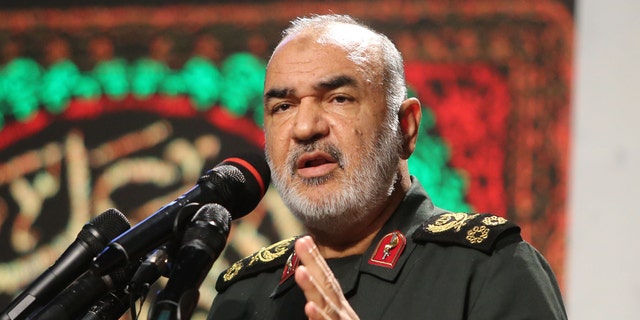
The leader of Iran’s Revolutionary Guard Corps vowed Thursday that his troops will “destroy any American terrorist force” that threatens the country’s ships in the Persian Gulf.
The inflammatory comments from Major General Hossein Salami on Iranian state TV come a day after President Trump warned the Islamic Republic in a tweet that he has “instructed the United States Navy to shoot down and destroy any and all Iranian gunboats if they harass our ships at sea.”
Trump was speaking in response to an incident last week in the Persian Gulf’s international waters, in which Iranian ships repeatedly crossed in front and behind U.S. vessels at extremely close range and high speeds.
GAETZ WARNS WOULD-BE IRANIAN TERRORISTS: ‘GET YOUR ACT TOGETHER OR GET PREPARED TO MEET GENERAL SOLEIMANI’
Iranian Revolutionary Guards commander Major General Hossein Salami is threatening to destroy American ships in the Persian Gulf. (AFP via Getty)
“I have ordered our naval forces to destroy any American terrorist force in the Persian Gulf that threatens security of Iran’s military or non-military ships,” Salami declared Thursday, according to Reuters. “Security of the Persian Gulf is part of Iran’s strategic priorities.”
Salami’s sentiment was echoed Thursday by Iranian Foreign Minister Javad Zarif, who tweeted himself that Trump should focus on treating positive coronavirus cases in the U.S. military rather than Iran’s naval actions.
“The US military is hit by over 5000 #covid19 infections. @realdonaldtrump should attend to their needs, not engage in threats cheered on by Saddam’s terrorists,” Zarif tweeted. “Also, US forces have no business 7,000 miles away from home, provoking our sailors off our OWN Persian Gulf shores.”
Zarif was referring to Saddam Hussein, the former Iraqi president who before being overthrown by the United States had gone to war with Iran. The tweet was accompanied by a map that noted the U.S. is thousands of miles away from the Persian Gulf, whereas the Persian Gulf makes up most of Iran’s shoreline.
CLICK HERE TO GET THE FOX NEWS APP
But the Persian Gulf also includes large amounts of international waters and is an important trade route that the United States has made an effort to protect — particularly the Strait of Hormuz, which is the gateway to the Persian Gulf. Iran last summer seized a foreign oil tanker in the strait and engaged in other actions that led the U.S. to attempt to form an international coalition to protect the waterway from Iranian aggression.
In the recent encounter that angered Trump, 11 Iranian Islamic Revolutionary Guard Navy vessels made aggressive maneuvers near American ships, including multiple crossings of one ship, the Puller, with a 50-yard closest point of approach and within 10 yards of another ship, the Maui’s, bow, a 5th Fleet statement said.
Fox News’ Tyler Olson and the Associated Press contributed to this report.
Secretary of State Mike Pompeo says the U.S. may “never return” to funding the World Health Organization because of the way it operates, including the COVID-19 crisis.
And, in a second demand, Mr. Pompeo told Fox News’ Laura Ingraham Wednesday night that WHO Director-General Tedros Adhanom may have to step down before Washington restarts suspended contributions of nearly $1 billion of WHO’s 2.4 billion annual budget.
Asked about such a demand, Mr. Pompeo said, “I think that’s right, Laura. Even more than that, it may be the case that the United States can never return to underwriting, having U.S. taxpayer dollars go to the WHO. We may need to have even bolder change than that.”
President Trump cut off funds after what the administration believes were a series of WHO actions that dovetailed with communist China misleading the world on the spread of coronavirus in the city of Wuhan and elsewhere in the country.
The Chinese Communist Party asserted in January the virus was not contagious, a claim the U.S. views as a lie. Yet, the WHO endorsed the claim before the world. WHO also declared as late as Jan. 23 that what became the COVID-19 disease was not a global health emergency.
After China condemned Mr. Trump decisions to restrict Chinese travel into this country, Mr. Tedros also criticized the ban.
Mr. Tedros, a microbiologist, is a former cabinet member in Ethiopia’s leftist regime who sought a “strategic partnership” with China shortly after taking control of WHO in 2017.
Meanwhile, Mr. Pompeo said the Chinese communists still will not let American experts into China to exam a laboratory in Wuhan researching bat-carried viruses. The U.S. suspects the virus in its natural state may have been carried outside by a lab worker who infected the city. Mr. Pompeo also said American scientists need to inspect the wild meat market in Wuhan which the Chinese government initially said was the source of coronavirus carried by horseshoe bats.
“We’re still trying to get that information,” he said.
Ms. Ingraham played a clip of former Secretary of State John Kerry saying the Trump administration needs to cooperate with China on issues such as cyber warfare.
As a matter of state policy, the Chinese government repeatedly hacks innocent Americans to steal their personal data, including a massive attack in 2015 on the Office of Personal Management that netted 24 million personnel files.
Government officials also say China military hackers steal Americans’ intellectual property. The Justice Department has indicted China’s giant telecommunications firm, Huawei, for such criminal acts.
Mr. Pompeo said that Mr. Trump abandoned President’s Obama’s soft approach to China.
He said, “President Trump has taken a fundamentally different view with China than President Obama did and Secretary Kerry did, whether it was the unfair trade relationship the President is attempting to untangle, whether it’s being serious with China that says when you conduct cyber attacks against us we’re not going to tolerate that. And here, even in this, we’d love to find a way to cooperate with the Chinese, frankly, on all of those things. But it takes a partner who is willing to do that. And as you described, the biggest threat isn’t our ability to work with China on cyber; it’s to make sure that we have the resources available to protect ourselves from Chinese cyber attacks.”
5G does not spread Covid-19, steam inhalation is not a cure and skin colour can’t protect from catching the virus. Reality Check’s Chris Morris tackles the latest false claims about coronavirus circulating online.
In the wake of CDC director Dr. Robert Redfield’s comments that a second wave of the coronavirus in the fall and winter could be even more challenging than the first, President Trump downplayed the possibility. But Dr. Anthony Fauci said “We will have coronavirus in the fall: I am convinced of that.” NBC White House correspondent Peter Alexander reports for TODAY from Washington, D.C.April 23, 2020
Police in Westport, Connecticut, announced this week that they’re testing a so-called “pandemic drone” that can detect when people on the ground have fevers. The new drone platform will also be used to determine when people are closer than six feet to each other. Police will be able to deliver a verbal warning through the drone’s speaker to anyone not practicing social distancing.
The new drone technology was developed by a company called Draganfly Inc., which has been around since the late 1990s, and uses Westport PD’s existing quadcopter drones with Draganfly’s software. Draganfly worked with a deep-learning company called Vital Intelligence Inc. and researchers from the University of South Australia to develop the new tech, according to a press release.
One of the features of the drone platform is being able to tell when people get closer than six feet apart, something that almost looks like Terminator-vision in practice. Social distancing guidelines developed by the Centers for Disease Control and Prevention stress that six feet is a safe distance because it’s the theoretical distance that tiny droplets from sneezes or other facial excretions can travel in the air.
Drone operators using Draganfly tech can see citizens with a green circle surrounding them when they’re six feet away from another person. But as soon as they get within six feet of someone else, their circle turns red.
NBC’s local TV affiliate in Connecticut followed police to a local grocery store and watched as social distancing guidelines were apparently violated, according to the drone’s detection software.
“The ‘Flatten the Curve Pilot Program’ and associated technology may prove to be an innovative tool in helping the community practice safe social distancing, while identifying possible coronavirus and other life-threatening symptoms,” Westport PD said in a Facebook post.
The drones can detect everything from heart rate to respiratory abnormalities in people on the ground, according to Draganfly, which also supplies drone technology for the Australian military, according to its website. The drones are equipped with standard 4K cameras, according to Draganfly, and the secret sauce appears to be whatever software they’re employing.
The Westport Police Department stressed that the drones would be used to monitor “at-risk” populations, and won’t be used in “private yards,” but it still looks like something out of a sci-fi dystopia when you watch Draganfly’s own promotional videos.
“The drone software uses biometric readings to understand population patterns and allows quicker reaction time to ongoing events or potential health threats,” Westport Police said on Facebook. “The goal is to provide better health monitoring support for potential at-risk groups, including seniors, as well as for gathering crowds at beaches, train stations, parks and recreation areas, and shopping centers. It will not be used in individual private yards, nor does it employ facial recognition technology.”
Connecticut currently has identified 22,469 cases of covid-19 and 1,544 deaths, according to the latest numbers compiled by Johns Hopkins University’s coronavirus tracker. The U.S. more broadly has over 842,000 cases and at least 46,785 deaths, as of Thursday morning, the highest number in the world.
The police force in Westport believes that using drones not only will keep the public safe, but will allow police officers to stay out of harm’s way. At least 4,435 members of the New York Police Department have contracted covid-19, according to the New York Post, and 30 NYPD employees have died from the disease. There are no reports of any police officers in Connecticut dying from the new coronavirus.
“The Westport Police Department along with first responders around the world are looking for effective ways to ease the spread of COVID-19 and keep their communities safe,” Westport Chief of Police, Foti Koskinas, said in a press release.
“This technology not only enhances the safety of our officers and the public, but the concept of using drones remains a go-to technology for reaching the most remote areas with little to no manpower needed. It also helps our officers acquire decision quality data they need to make the best choices in any given situation.”
Draganfly did not immediately respond to an inquiry from Gizmodo on Thursday morning about how many other police departments in the U.S. may be experimenting with the company’s new drone platform. We’ll update this article if we hear back.
By the time New York City confirmed its first case of the coronavirus on March 1, thousands of infections were already silently spreading through the city, a hidden explosion of a disease that many still viewed as a remote threat as the city awaited the first signs of spring.
Hidden outbreaks were also spreading almost completely undetected in Boston, San Francisco, Chicago and Seattle, long before testing showed that each city had a major problem, according to a model of the spread of the disease by researchers at Northeastern University who shared their results with The New York Times.
Even in early February — while the world focused on China — the virus was not only likely to be spreading in multiple U.S. cities, but also seeding blooms of infection elsewhere in the United States, the researchers found.
As political leaders grappled in February with the question of whether the outbreak would become serious enough to order measures like school closures and remote work, little or no systematic testing for the virus was taking place.
“Meanwhile, in the background, you have this silent chain of transmission of thousands of people,” said Alessandro Vespignani, director of the Network Science Institute at Northeastern University in Boston, who led the research team.
Modeling the spread of a disease is inherently inexact, involving estimates of how often people come in contact and transmit the virus as they travel, work and socialize. The model estimates all infections, including those in people who may experience mild or no symptoms and those that are never detected in testing.
Other disease researchers said the findings of Vespignani’s team were broadly in line with their own analyses. The research offers the first clear accounting of how far behind the United States was in detecting the virus. And the findings provide a warning of what can recur, the researchers say, if social distancing restrictions are lifted too quickly.
CDC Director Robert Redfield speaks during the daily briefing on the novel coronavirus at he White House on April 22, 2020.(Mandel Ngan / Getty-AFP)
Dr. Robert R. Redfield, the director of the Centers for Disease Control and Prevention, said last week that American health officials had been successful in tracking the first known cases and their contacts in the United States before the outbreak got out of control.
“Through February 27, this country only had 14 cases,” he said during a briefing. “We did that isolation and that contact tracing, and it was very successful. But then, when the virus more exploded, it got beyond the public health capacity.”
But the new estimates of coronavirus infections are vastly higher than those official counts.
By late February, as the world’s attention shifted to a dire outbreak in Italy, those 14 known U.S. cases were a tiny fraction of the thousands of undetected infections that the researchers estimated were spreading from person to person across this country.
And more cases may have been arriving in the United States by the day.
“Knowing the number of flights coming into New York from Italy, it was like watching a horrible train wreck in slow motion,” said Adriana Heguy, director of the Genome Technology Center at New York University’s Grossman School of Medicine.
Heguy’s team and another at the Ichan School of Medicine at Mount Sinai have found through genetic analysis that the seeds of most infections in New York came from multiple locations in Europe, rather than directly from China.
“We weren’t testing, and if you’re not testing you don’t know,” Heguy said. The new estimates suggesting that thousands of infections were spreading silently in the first months of the year “don’t seem surprising at all,” she said.
There are other signs that the outbreak was worse at an earlier point than previously known. This week, health officials in Santa Clara County, California, announced a newly discovered coronavirus-linked death on Feb. 6, weeks earlier than what had been previously thought to be the first death caused by the virus in the United States.
Some scientists cautioned that the new report’s estimates of an enormous, unseen wave of infections could be too high — even though testing surveillance lagged at the time.
“Even with these corrections, it’s still on the high side — this is higher than I would have expected,” said Dr. Donald Burke, a professor of epidemiology at the University of Pittsburgh Graduate School of Public Health.
Others said that the findings were in line with the fragmentary evidence that has been available until now. Lauren Ancel Meyers, a professor of biology and statistics at the University of Texas at Austin, said that her own risk estimates and most recent projections reveal a grim stealthiness of early coronavirus spread.
“By the time you see a few cases, it’s pretty certain that you already have an outbreak underway,” Meyers said.
Vespignani’s approach models the outbreak over time based on what is known about the virus and where it has been detected. It estimates the spread of the disease by simulating the movements of individual people based on where people fly, how they move around, when they go to school and other data. By running the model under various conditions — when schools are closed, say — his team estimates where the virus may have spread undetected.
Unseen carriers of the disease, many of them with mild symptoms or none at all, can still spread the virus. For that reason, by the time leaders in many cities and states took action, it was already too late to slow the initial spread.
A few cities with early outbreaks, notably Seattle, are believed to have avoided enormous growth later by heeding the models available at the time and taking action well ahead of the rest of the country.
“We knew the numbers we saw were just the tip of iceberg, and that there were much greater numbers below the surface,” said Jenny A. Durkan, the mayor of Seattle, in an interview. “We had to act.”
City and state officials in New York acted more slowly, waiting until known cases were at a higher level to shut down schools and issue a stay-at-home order. Mayor Bill de Blasio was reluctant to embrace shutdowns until mid-March, citing the impact they would have on vulnerable New Yorkers.
“Even while we learn new things about this virus almost daily, one thing remains consistent: New Yorkers were put at risk by the federal government’s total failure to provide us with adequate testing capability,” said the mayor’s press secretary, Freddi Goldstein.
In mid-February, a month before New York City schools were closed, New York City and San Francisco already had more than 600 people with unidentified infections, and Seattle, Chicago and Boston already had more than 100 people, the findings estimate. By March 1, as New York confirmed its first case, the numbers there may already have surpassed 10,000.
From these primary travel hubs and a few other cities, the model shows, the disease was then spread to other locations in the United States.
Vespignani said he and his research team warned officials of the silent spread, posting some of their early projections in mid-February. “We were talking to officials here, and it was the same reaction we got in Italy, in the U.K., in Spain,” Vespignani said. “They told me, ‘OK, that’s happening on your computer, not in reality.’
“Look,” he added, “No one’s going to shut down a country based on a model.”
Breaking News Newsletter
As it happens
Get updates on the coronavirus pandemic and other news as it happens with our breaking email alerts
The virus moved under the radar swiftly in February and March, doctors and researchers said, because few cities or states had adequate surveillance systems in place. And testing, if it was being done at all, was haphazard. Emergency rooms were busy preparing for the predicted onslaught and likely missed some of early virus-related deaths, and didn’t have time or tools to verify infections on the fly, experts said.
It was mid-March before teams at NYU and Mount Sinai began taking samples for testing in New York.
The new findings from the model produces a range of possible outcomes for when the virus may have infected 10 people in each city. In New York, for example, the model shows that the first 10 infected people could have been walking the streets of the city as early as the last week in January, or as late as the middle of February. From there, the infections in the centers of the outbreak grew exponentially.
Trevor Bedford, an associate professor at the Fred Hutchinson Cancer Research Center and the University of Washington in Seattle, said it became clear in late February that “community transmission” — an infectious outbreak — was probably silently underway in Washington after a single test result came back positive for someone who had no symptoms.
Whatever the precise scale of the initial outbreak, that same dynamic will accelerate once measures to mitigate the spread are relaxed without other public health measures in place, Burke said. “When you take away social distancing, everything will go right through the roof,” he said.
Get all the latest news on coronavirus and more delivered daily to your inbox. Sign up here.
COVID-19, the disease causing the coronavirus pandemic, has largely been associated with symptoms such as fatigue, a persistent cough, fevers and, recently, lesions. However, it may also cause strokes in patients under 50.
In an interview with CNN, Mount Sinai Health System neurosurgeon Dr. Thomas Oxley said the virus is causing clots in arteries, resulting in “severe strokes.”
“Our report shows a seven-fold increase in incidence of sudden stroke in young patients during the past two weeks,” Dr. Oxley added. “Most of these patients have no past medical history and were at home with either mild symptoms (or in two cases, no symptoms) of COVID.”
RESEARCHERS DISCOVER NEW CORONAVIRUS SYMPTOMS: FEET LESIONS
Fox News has reached out to Mount Sinai with a request for comment.
It’s possible the patients, who are in their 30s and 40s and have mild symptoms associated with the disease, are less likely to seek urgent medical care and call 911 because of the influx of COVID-19 patients.
Dr. Oxley and colleagues tested five patients at the hospital, all with mild symptoms, and noted that they all tested positive for the virus, with two delaying in calling an ambulance.
Strokes are caused by a loss of blood to the brain and can result in severe damage, even death, if not treated right away, either by surgery or medication. Dr. Oxley said urgency is of the utmost importance if a stroke is suspected.
“The most effective treatment for large vessel stroke is clot retrieval, but this must be performed within six hours, and sometimes within 24 hours,” Dr. Oxley told the news outlet.
The results of their findings are set to be published in the New England Journal of Medicine.
New York state is the most affected state in the U.S., accounting for 263,754 out of a total 842,754 cases in the country. New York City comprises 147,297 of those cases.
Neurological impairments in COVID-19 patients have been spotted elsewhere.
In an April 15 letter to the New England Journal of Medicine, researchers in France spotted a small acute ischemic stroke in two asymptomatic patients. One other patient was diagnosed with a subacute ischemic stroke.
CLICK HERE FOR COMPLETE CORONAVIRUS COVERAGE
As of Thursday morning, more than 2.64 million coronavirus cases have been diagnosed worldwide, resulting in more than 184,000 deaths, including 46,785 in the U.S., the most impacted country on the planet.
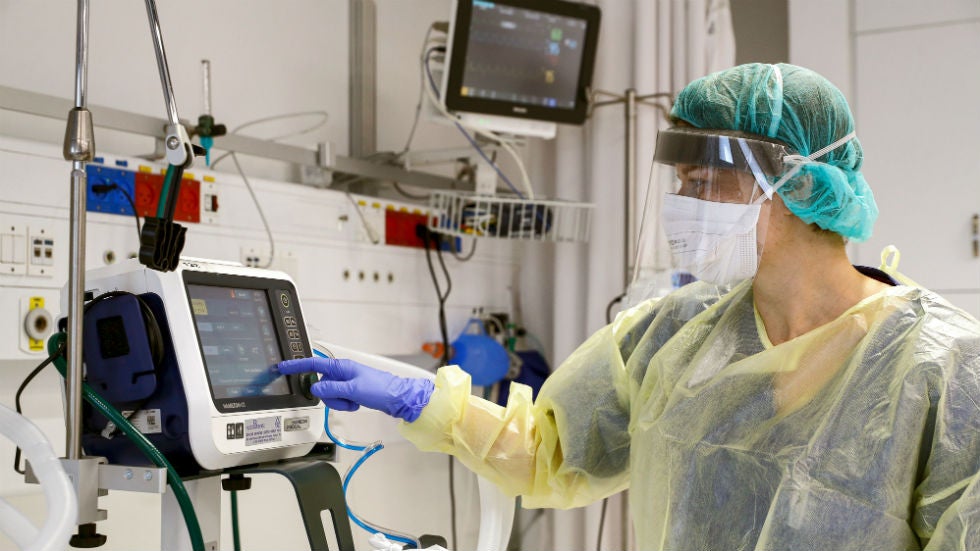
More than 85 percent of those placed on ventilators in New York’s largest hospital system due to coronavirus symptoms later died from the disease, a study has found.
CNN reported Thursday that a study from researchers at the Feinstein Institutes for Medical Research and Northwell Health, which employs more than 68,000 people in the state, found that the overall death rate among COVID-19 patients in the health system was about 20 percent.
Among those who had to be placed on ventilators, 12 percent of the overall population of COVID-19 patients, that death rate jumped to 88 percent, according to the study.
The study’s authors cautioned that those percentages could change since of the 5,700 patients they examined, final outcomes were known for just 2,634 as many remained hospitalized at the time of publication.
“This study reported mortality rates only for patients with definite outcomes (discharge or death), and a longer-term study may find different mortality rates as different segments of the population are infected,” the authors wrote, according to CNN.
The dire numbers come as states across the country have sought out ventilators from the federal government and private suppliers in the face of a nationwide shortage amid the coronavirus outbreak, with the overall hospitalization rate in the U.S. thought to be about 20 per 100,000 cases, according to the Centers for Disease Control and Prevention.
New York has registered more than 257,000 cases of the coronavirus and more than 15,000 deaths from the virus as of Thursday.
(Reuters) – Scientists are baffled by how the coronavirus attacks the body – killing many patients while barely affecting others.
FILE PHOTO: A member of the French Civil Protection service measures blood pressure of a man suspected of being infected with the coronavirus disease (COVID-19), as its spread continues, in Paris, France, April 5, 2020. REUTERS/Benoit Tessier/File Photo
But some are tantalized by a clue: A disproportionate number of patients hospitalized by COVID-19, the disease caused by the virus, have high blood pressure. Theories about why the condition makes them more vulnerable – and what patients should do about it – have sparked a fierce debate among scientists over the impact of widely prescribed blood-pressure drugs.
Researchers agree that the life-saving drugs affect the same pathways that the novel coronavirus takes to enter the lungs and heart. They differ on whether those drugs open the door to the virus or protect against it. Resolving that question has taken on new urgency after an April 8 report by the U.S. Centers for Disease Control and Prevention showed that 72% of hospitalized COVID-19 patients 65 or older had hypertension.
The drugs are known as ACE inhibitors and ARBs, broad categories that include Vasotec, Valsartan, Irbesartan, as well as their generic versions. In a recent interview with a medical journal, Anthony Fauci – the U.S. government’s top infectious disease expert – cited a report showing similarly high rates of hypertension among COVID-19 patients who died in Italy and suggested the medicines, rather than the underlying condition, may act as an accelerant for the virus.
Efforts to understand how the virus uses the pathway to the heart and lungs, and the role of the medicines, are complicated by a lack of rigorous studies.
“There are millions of Americans that take an ACE inhibitor or AR daily,” said Dr Caleb Alexander, co-director of the Johns Hopkins Center for Drug Safety and Effectiveness in Baltimore. “This is one of the most important clinical questions.”
An estimated 100 million U.S. residents suffer from high blood pressure, which increases the risk of heart disease, stroke and kidney failure. About four-fifths of them need to take prescription drugs to control it, according to the CDC. ACE inhibitors and ARBs are widely prescribed to patients with congestive heart failure, diabetes or kidney disease. The drugs account for billions of dollars in prescription sales worldwide.
The absence of clear answers on how the drugs impact COVID-19 patients has sparked rampant speculation in correspondence and editorials posted on medical journal websites and those where scientists share unreviewed, pre-publication study drafts.
Many patients are agonizing over whether their medicines will help or hurt them. Doris Kertzner, 88, of Redding, Conn., said she has carefully followed experts’ guidelines for preventing infection and keeps her distance from others in her retirement community. Now she has a new worry: She takes losartan, an ARB, and can’t decide whether to stop.
Dropping the medicine “presents its own problems” in dealing with her high blood pressure.
“It’s gotten very complicated,” she said.
Dr Carlos M. Ferrario – a researcher at the Wake Forest University School of Medicine and co-author of widely cited studies on ACE inhibitors – understands patients’ plight.
“There is a lot of paranoia and a lot of speculation with very little fundamental, convincing information,” he said.
The National Institutes of Health in the United States has put out a call seeking proposals for studies into the issue. An independent consortium of researchers has launched a global study to analyze health records for thousands of COVID-19 patients in the United States, Europe and Asia. That project is part of the Observational Health Data Sciences and Informatics program, an open-source research platform that enables large-scale studies.
Dr Marc Suchard – a biostatistician at the University of California, Los Angeles who is leading the study – said that it aims to determine whether the medicines make infections more likely or more severe – or, by contrast, whether they help protect against the virus. Suchard said he expects a preliminary report within two weeks.
MORE TARGETS FOR THE VIRUS
There is evidence that the drugs may increase the presence of an enzyme – ACE2 – that produces hormones that lower blood pressure by widening blood vessels. That’s normally a good thing. But the coronavirus also targets ACE2 and has developed spikes that can latch on to the enzyme and penetrate cells, researchers have found. So more enzymes provide more targets for the virus, potentially increasing the chance of infection or making it more severe.
Other evidence, however, suggests the infection’s interference with ACE2 may lead to higher levels of a hormone that causes inflammation, which can result in acute respiratory distress syndrome, a dangerous build-up of fluid in the lungs. In that case, ARBs may be beneficial because they block some of the hormone’s damaging effects.
Novartis International AG and Sanofi SA are among the major drugmakers selling ACE inhibitors and ARBs.
Sanofi spokesman Nicolas Kressmann said that patients should consult their doctors on whether to continue taking the drugs but that the company has found insufficient evidence that they worsen COVID-19 through its own assessment of available scientific data.
The company reviewed several recent studies from China that came to conflicting conclusions about whether COVID-19 patients with hypertension fare worse than other patients, he said.
Novartis has not issued any guidance to clinicians or patients and defers to scientists studying the issue, said spokesman Eric Althoff.
Researchers and doctors generally agree that people with severe hypertension or heart failure should keep taking the drugs because of the high risks of stopping. The debate centers on how to advise the many patients with milder conditions who take the drugs. Two camps have emerged – one calling for no action unless the drugs are proven dangerous, the other for some limits on their use until they are proven safe.
The Centre for Evidence-Based Medicine at University of Oxford in England has recommended that clinicians consider withdrawing the medicines in patients with mild hypertension if they are in a high risk group, such as medical workers – and replacing them with alternative blood pressure-lowering drugs.
The New England Journal of Medicine (NEJM) took the opposite tack, highlighting the drugs’ potential in fighting coronavirus and recommending patients continue taking the drugs until more about the risks is known. Several of the scientists who co-authored it had done extensive, industry-supported research on antihypertensive drugs.
CONFLICTS OF INTEREST
Dr Kevin Kavanagh, founder of Health Watch USA, a patient advocacy organization, questioned whether scientists who are funded by the drug industry should be advising clinicians, given the high stakes.
“You need to consider stepping back, and let others without a conflict of interest try to make a call,” Kavanagh said.
His organization recommends that doctors temporarily avoid putting new patients on the drugs and warn those currently on them to take extreme precautions to avoid virus exposure.
Dr Scott David Solomon, a co-author of the NEJM article, conducts industry-financed research but said it has no influence on his position.
Slideshow (3 Images)
“Not only is there no compelling evidence that we should be discontinuing those medications, but there’s reason to think that doing so might actually cause harm,” said Solomon, who is the director of noninvasive cardiology at Brigham and Women’s Hospital in Boston.
The lack of consensus leaves doctors to navigate the issue patient by patient. Alexander, of Johns Hopkins, is trying to strike a balance in his own practice. Patients with more severe blood-pressure problems may need to keep taking the medicines, he said, while patients with milder or newly diagnosed cases could instead take one of the “literally dozens” of alternative hypertension treatments.
“Rest assured,” he said, “there are dozens of scientific teams working feverishly to put this question to bed.”
Reporting by Deborah Nelson; Editing by Brian Thevenot
Dr. Sean T. O’Leary, a member of the American Academy of Pediatrics’ committee on infectious diseases.
In the last few years, early childhood immunization rates have been slipping in some hot spots around the country, and in 2019, the United States very nearly lost its measles elimination status. While current nationwide vaccine figures are not available, anecdotal evidence and subsets of data are alarming.
PCC, a pediatric electronic health records company, gathered vaccine information from 1,000 independent pediatricians nationwide. Using the week of February 16 as a pre-coronavirus baseline, PCC found that during the week of April 5,the administration of measles, mumps and rubella shots dropped by 50 percent; diphtheria and whooping cough shots by 42 percent; and HPV vaccines by 73 percent.
The doses that states distribute in a federally funded program for uninsured patients called Vaccines for Children have also dropped significantly since the beginning of March. The Massachusetts health department said its doses were down 68 percent in the first two weeks of April, compared with the previous year. Minnesota reported that its doses of measles, mumps and rubella vaccine dropped by 71 percent toward the end of March.
In Washington State, dozens of practices and clinics have had to reduce hours or even temporarily close. The state already had its biggest measles outbreak in nearly 30 years last year.
“We know our vaccine rates were already tenuous, so any additional hit to that is a great worry,” said Dr. Elizabeth Meade, president of the state’s chapter of the American Academy of Pediatrics. Dr. Meade leads calls twice a week with physicians throughout the state about how to maintain immunizations and stay solvent.
The problem is global. National immunization programs in more than two dozen countries have been suspended, which could also leave more than 100 million children vulnerable, a consortium of international organizations, including UNICEF and the World Health Organization, recently reported.
“Internationally, measles and diphtheria will pop up around the world. Even with limited travel, they can make it into the United States,” Dr. O’Leary, an immunization expert at Children’s Hospital in Denver, said.
According to immunization experts, the optimum rate of coverage for many vaccines, known as herd immunity, is about 90 to 95 percent.
Though many doctors note that vaccine-preventable diseases can be more deadly to children than Covid-19 seems to be, parents are understandably focused on the threat at hand. Over the last six weeks, the loud, consistent public message has been to keep children at home, and to take them to the doctor only if necessary.
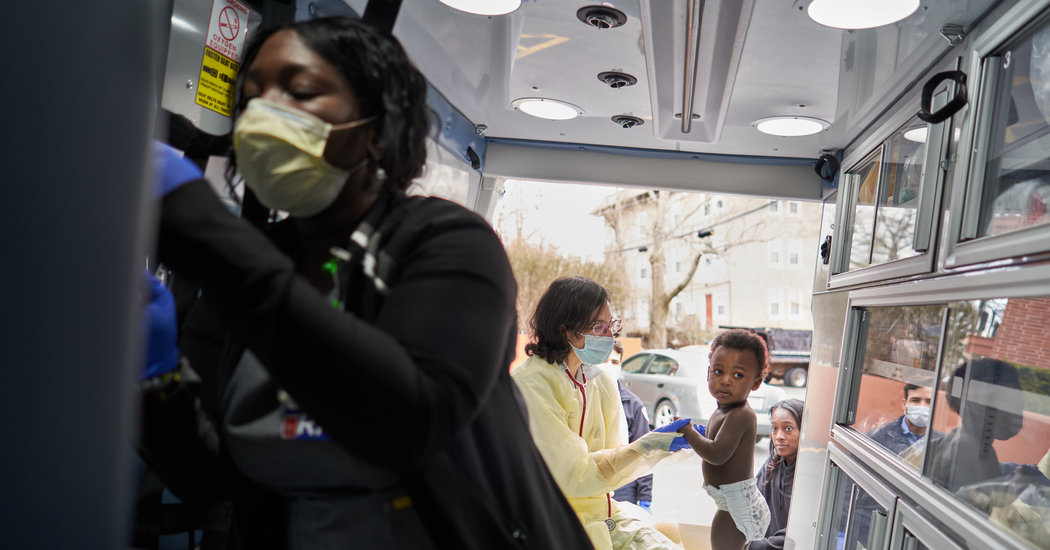
Initially, medical practices were apprehensive too. In early March, the health clinic in Barre, Mass., called Emily Hoag to say it had postponed her baby’s vaccine appointment for a month to prevent the spread of coronavirus infection. Ms. Hoag felt conflicted: If her baby, Karson, missed his two-month immunization, she feared, he would be susceptible to any number of diseases. But if she took him to the clinic for his shots, they both might be exposed to Covid-19.
That afternoon, Dr. Gracey showed up at Ms. Hoag’s doorstep. After removing her shoes, meticulously washing her hands and wiping her stethoscope and baby scale, Dr. Gracey gave Karson his shots. Both mother and baby immediately burst into tears.
“Karson cried for a minute and then calmed down, and I was just so grateful that Dr. Gracey was there and able to give him the vaccinations he needed,” Ms. Hoag said.
Dr. Gracey, who has a degree in public health and has practiced in Uganda, has no qualms about home visits, which she and her colleagues are making several times a week.
“We have so many women who are struggling with what it feels like to have a child in the setting of Covid-19,” she said. “And especially for a new mom who has concerns about the risks of coming into the office, it can feel comfortable to receive care within the home.”
Dr. Gracey’s colleagues and other medical practices are experimenting with other ways to boost vaccine rates during the outbreak, including setting up a vaccination tent in a field.
Many practices now schedule well-child visits exclusively in the morning and sick visits in the afternoon, so that an office can be decontaminated at the end of the day. Some have families wait in the car and, when an exam room is ready, a gowned nurse escorts parent and child in for the vaccine.
Dr. Jeanne M. Marconi’s practice in Norwalk, Conn., which had been doing flu clinics in parking lots for years, has adapted that procedure for vaccines generally: Parents pull up, briefly roll down a car window, the child extends an arm, and a masked, gowned healthcare worker does a quick jab. Over and out.
“We’re trying to alleviate all of the fears they have and keep up with the care,” Dr. Marconi said.
Last week, the pediatric ambulatory department at Boston Medical Center, which treats nearly 15,000 children, began sending vaccination mobile units into city neighborhoods. It also stationed a dedicated van for vaccines and well-baby checkups in front of the hospital.
In the early weeks of the shelter-in-place orders, doctors concentrated efforts on vaccinating infants up to 2 years old, and waved off the disruption to the schedule for older children as temporary, saying it could readily be addressed once the restrictions lifted. But the longer that the orders continue, the more worried doctors have also become about vaccine protection for older children.
One concern is that if booster shots are missed — for diseases like measles, mumps and rubella for 4- and 5-year-olds, and tetanus and whooping cough, for 11-year-olds — immunity will begin to wane.
At 11, children should also receive their first meningitis vaccine. Preteens are recommended to get the HPV vaccine series, which protects against certain types of cancer.
Beginning next month, Dr. Eleanor Menzin, managing partner of Longwood Pediatrics in Boston, will try to vaccinate older children, when the practice’s waiting rooms will still be relatively empty. “Looking ahead, I think it’s unwise to get behind even on older kids, because of the logistics of catching them up, given what I predict will be a long period of avoiding crowds,” she said.
Many doctors already report that the backlog from canceled appointments for younger children is staggering. But summer appointment calendars are typically filled by older children, who need vaccine documentation for school and college. Pediatricians, who report that visits have dropped by 50 to 70 percent, are laying off staff; they do not know whether they will be able to handle the rush of last-minute visits in a few months.
Some health officials are wondering whether school registration policies will need to be adjusted: Because of these extreme circumstances, will states temporarily ease school vaccination requirements?
Health experts are also worried about day care centers. Licensed centers require proof of vaccination. Even assuming that parents returning to work could swiftly get immunization appointments for their young children, most vaccines take between two and four weeks before providing full protection.
A common retort to fears about outbreaks of vaccine-preventable illnesses is that transmission will have also dropped because of social distancing. But that assertion leaves many pediatricians shaking their heads.
“They’re at less risk right now, but that risk isn’t zero,” said Dr. Menzin. While sick visits are down, they have not disappeared: Viruses of all sorts are still making plenty of children miserable.
Despite parents’ reluctance to bring in their children to be vaccinated now, several doctors remarked on a noticeable positive shift in attitude toward immunizations, after years of a vocal anti-vaccine movement raising questions in parents’ minds.
“If anything, I’ve noticed a change in families becoming more interested in vaccines,” said Dr. Meade, who practices in Washington, which has large pockets of vaccine-hesitant families. “They’re recognizing how devastating infectious diseases can be.”
Updated April 11, 2020
When will this end?
This is a difficult question, because a lot depends on how well the virus is contained. A better question might be: “How will we know when to reopen the country?” In an American Enterprise Institute report, Scott Gottlieb, Caitlin Rivers, Mark B. McClellan, Lauren Silvis and Crystal Watson staked out four goal posts for recovery: Hospitals in the state must be able to safely treat all patients requiring hospitalization, without resorting to crisis standards of care; the state needs to be able to at least test everyone who has symptoms; the state is able to conduct monitoring of confirmed cases and contacts; and there must be a sustained reduction in cases for at least 14 days.
How can I help?
The Times Neediest Cases Fund has started a special campaign to help those who have been affected, which accepts donations here. Charity Navigator, which evaluates charities using a numbers-based system, has a running list of nonprofits working in communities affected by the outbreak. You can give blood through the American Red Cross, and World Central Kitchen has stepped in to distribute meals in major cities. More than 30,000 coronavirus-related GoFundMe fund-raisers have started in the past few weeks. (The sheer number of fund-raisers means more of them are likely to fail to meet their goal, though.)
What should I do if I feel sick?
If you’ve been exposed to the coronavirus or think you have, and have a fever or symptoms like a cough or difficulty breathing, call a doctor. They should give you advice on whether you should be tested, how to get tested, and how to seek medical treatment without potentially infecting or exposing others.
Should I wear a mask?
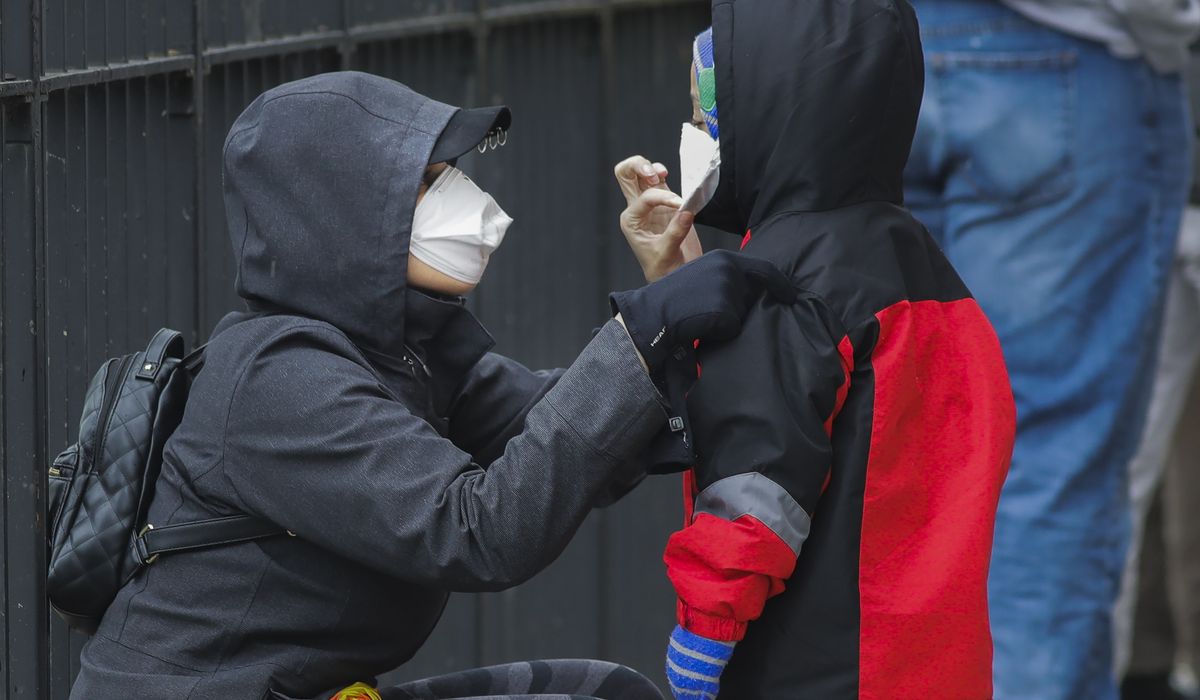
The C.D.C. has recommended that all Americans wear cloth masks if they go out in public. This is a shift in federal guidance reflecting new concerns that the coronavirus is being spread by infected people who have no symptoms. Until now, the C.D.C., like the W.H.O., has advised that ordinary people don’t need to wear masks unless they are sick and coughing. Part of the reason was to preserve medical-grade masks for health care workers who desperately need them at a time when they are in continuously short supply. Masks don’t replace hand washing and social distancing.
How do I get tested?
If you’re sick and you think you’ve been exposed to the new coronavirus, the C.D.C. recommends that you call your healthcare provider and explain your symptoms and fears. They will decide if you need to be tested. Keep in mind that there’s a chance — because of a lack of testing kits or because you’re asymptomatic, for instance — you won’t be able to get tested.
How does coronavirus spread?
It seems to spread very easily from person to person, especially in homes, hospitals and other confined spaces. The pathogen can be carried on tiny respiratory droplets that fall as they are coughed or sneezed out. It may also be transmitted when we touch a contaminated surface and then touch our face.
Is there a vaccine yet?
No. Clinical trials are underway in the United States, China and Europe. But American officials and pharmaceutical executives have said that a vaccine remains at least 12 to 18 months away.
What makes this outbreak so different?
Unlike the flu, there is no known treatment or vaccine, and little is known about this particular virus so far. It seems to be more lethal than the flu, but the numbers are still uncertain. And it hits the elderly and those with underlying conditions — not just those with respiratory diseases — particularly hard.
What if somebody in my family gets sick?
If the family member doesn’t need hospitalization and can be cared for at home, you should help him or her with basic needs and monitor the symptoms, while also keeping as much distance as possible, according to guidelines issued by the C.D.C. If there’s space, the sick family member should stay in a separate room and use a separate bathroom. If masks are available, both the sick person and the caregiver should wear them when the caregiver enters the room. Make sure not to share any dishes or other household items and to regularly clean surfaces like counters, doorknobs, toilets and tables. Don’t forget to wash your hands frequently.
Should I stock up on groceries?
Plan two weeks of meals if possible. But people should not hoard food or supplies. Despite the empty shelves, the supply chain remains strong. And remember to wipe the handle of the grocery cart with a disinfecting wipe and wash your hands as soon as you get home.
Can I go to the park?
Yes, but make sure you keep six feet of distance between you and people who don’t live in your home. Even if you just hang out in a park, rather than go for a jog or a walk, getting some fresh air, and hopefully sunshine, is a good idea.
Should I pull my money from the markets?
That’s not a good idea. Even if you’re retired, having a balanced portfolio of stocks and bonds so that your money keeps up with inflation, or even grows, makes sense. But retirees may want to think about having enough cash set aside for a year’s worth of living expenses and big payments needed over the next five years.
What should I do with my 401(k)?
Watching your balance go up and down can be scary. You may be wondering if you should decrease your contributions — don’t! If your employer matches any part of your contributions, make sure you’re at least saving as much as you can to get that “free money.”