


Deprecated: Optional parameter $output declared before required parameter $atts is implicitly treated as a required parameter in /var/www/clients/client0/web46/web/wp-content/plugins/td-composer/legacy/common/wp_booster/td_wp_booster_functions.php on line 1740

Deprecated: Optional parameter $depth declared before required parameter $output is implicitly treated as a required parameter in /var/www/clients/client0/web46/web/wp-content/plugins/td-cloud-library/includes/tdb_menu.php on line 251

Deprecated: Optional parameter $caller_id declared before required parameter $channel_that_passed is implicitly treated as a required parameter in /var/www/clients/client0/web46/web/wp-content/themes/Newspaper/includes/wp-booster/tagdiv-remote-http.php on line 124

Deprecated: Optional parameter $caller_id declared before required parameter $channel is implicitly treated as a required parameter in /var/www/clients/client0/web46/web/wp-content/themes/Newspaper/includes/wp-booster/tagdiv-remote-http.php on line 146
Blog - Page 49 of 2782 - Virus Reports London Escorts sunderland escorts asyabahis.org dumanbet.live pinbahiscasino.com sekabet.net www.olabahisgir.com maltcasino.net faffbet-giris.com asyabahisgo1.com www.dumanbetyenigiris.com pinbahisgo1.com sekabet-giris2.com www.olabahisgo.com maltcasino-giris.com faffbet.net betforward1.org www.betforward.mobi 1xbet-adres.com 1xbet4iran.com romabet1.com www.yasbet2.net www.1xirani.com www.romabet.top www.3btforward1.com 1xbet https://1xbet-farsi4.com بهترین سایت شرط بندی betforward

Global Statistics

All countries
695,781,740
Confirmed
Updated on September 26, 2023 9:06 pm
All countries
627,110,498
Recovered
Updated on September 26, 2023 9:06 pm
All countries
6,919,573
Deaths
Updated on September 26, 2023 9:06 pm

Global Statistics

All countries
695,781,740
Confirmed
Updated on September 26, 2023 9:06 pm
All countries
627,110,498
Recovered
Updated on September 26, 2023 9:06 pm
All countries
6,919,573
Deaths
Updated on September 26, 2023 9:06 pm
Home Blog Page 49

Trump wants $5 billion from TikTok deal to teach people ‘the real history’ of US

0
Trump wants $5 billion from TikTok deal to teach people ‘the real history’ of US

The back-and-forth of the TikTok deal has been rocky, but President Donald Trump is certain that he wants to use the deal to create a $5 billion fund to “educate people” about the “real history of ou…
Read More

Greg Gutfeld: Press, politicians are far-removed from problems they cause

0
Greg Gutfeld: Press, politicians are far-removed from problems they cause

©2020 FOX News Network, LLC. All rights reserved. This material may not be published, broadcast, rewritten, or redistributed. All market data delayed 20 minutes. New Privacy PolicyNew Terms of Use (What’s New)FAQ

Read More

Supreme Court Live Updates and Tracker: Ruth Bader Ginsburg Vacancy

0
Supreme Court Live Updates and Tracker: Ruth Bader Ginsburg Vacancy

Lisa Murkowski of Alaska became the second Republican senator to say the Senate should not consider a nominee before the presidential election.

Right Now

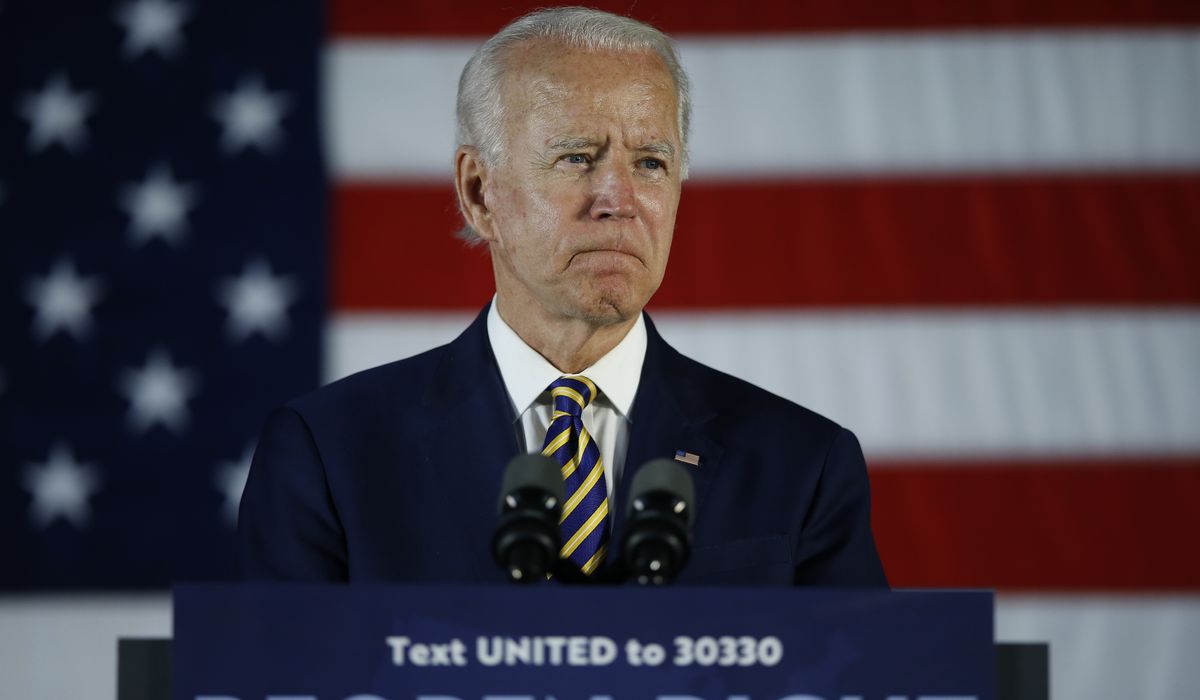
Joe Biden is linking the Supreme Court vacancy to the coronavirus crisis and protection of Americans with pre-existing conditions, during a speech in Philadelphia.

Video

transcript

transcript

Vigils for Justice Ginsburg Held Across the Country

Mourners gathered around courthouses across the nation on Saturday to remember the late Justice Ruth Bader Ginsburg.

[singing] [singing]

Video player loading

Mourners gathered around courthouses across the nation on Saturday to remember the late Justice Ruth Bader Ginsburg.CreditCredit…Michael A. McCoy for The New York Times

Joe Biden says the election winner should appoint a new justice, calling on G.O.P. senators to defy their leadership.

Joe Biden on Sunday urged Republicans not to “jam” a Supreme Court nominee through the Senate before the presidential election, suggesting that such a move would amount to an “abuse of power,” in his first extensive remarks on the battle to fill the vacancy left by the death of Justice Ruth Bader Ginsburg.

In a speech delivered at the National Constitution Center in Philadelphia, Mr. Biden, a former vice president and the current Democratic presidential nominee, appealed directly to the “handful” of pivotal Senate Republicans “who really will decide what happens” to “follow your conscience,” wading head-on into a matter that many political observers believe has the power to define the final weeks of the presidential race.

“If Donald Trump wins the election, then the Senate should move on his selection, and weigh the nominee he chooses fairly,” he said. “But if I win this election, President Trump’s nominee should be withdrawn. And as a new president, I should be the one who nominates Justice Ginsburg’s successor, a nominee who should get a fair hearing in the Senate.”

Video

Cinemagraph

Joseph R. Biden Jr., the Democratic nominee for president, said the Senate should wait until after the presidential election to vote on a Supreme Court nominee to succeed Justice Ruth Bader Ginsburg.CreditCredit…By Reuters

President Trump has vowed to nominate a woman for the position next week, seizing on an issue that has the potential to electrify the bases of both political parties and to inject a new measure of uncertainty into the presidential race. The election is little more than six weeks away.

Justice Ginsburg was “a righteous soul,” Mr. Biden said. “She was proof that courage and conviction and moral clarity can change not only our law, can change our culture, can change the world.”

His remarks come as he and other Democrats seek to frame the Supreme Court vacancy battle as one defined, above all else, by the issue of health care amid a global pandemic.

They are casting their arguments in particular around protecting the Affordable Care Act, which Justice Ginsburg had voted to uphold, and its guarantee of coverage for people with pre-existing conditions. The Supreme Court is set to hear arguments a week after Election Day in a case that could determine the future of the health law .

Even before Justice Ginsburg’s death, Mr. Biden and other Democratic candidates had been emphasizing health care, hoping for a repeat of the success that Democratic House candidates found in the 2018 midterm elections when the party won control of the chamber.

For months, Mr. Biden had sought to make the election a referendum on Mr. Trump’s management of the pandemic and its economic fallout. Over the weekend, Democrats began to link that message to the courts, arguing that the coronavirus crisis makes the issue of health care protections all the more urgent.

Lisa Murkowski becomes the second Republican Senator to oppose taking up the nomination before the election.

Image

Credit…Anna Moneymaker for The New York Times

A second Republican senator came out against taking up a Supreme Court nomination before the election, potentially complicating Republican efforts to let President Trump swiftly fill the vacancy left by the death of Justice Ruth Bader Ginsburg.

Senator Lisa Murkowski, Republican of Alaska, said in a statement on Sunday that she would not support confirming a Supreme Court nominee before Election Day. Having objected to filling the vacancy left by the death of Justice Antonin Scalia in 2016, she said she believed “the same standard must apply” less than two months before the presidential election.

“For weeks, I have stated that I would not support taking up a potential Supreme Court vacancy this close to the election,” Ms. Murkowski said in a statement. “Sadly, what was then a hypothetical is now our reality, but my position has not changed.”

“I did not support taking up a nomination eight months before the 2016 election to fill the vacancy created by the passing of Justice Scalia,” she said in the statement. “We are now even closer to the 2020 election — less than two months out — and I believe the same standard must apply.”

Ms. Murkowski’s remarks did not address how she felt about a vote on a justice in the weeks after the November election, when Congress will be in a so-called lame duck session and still able to vote on both legislation and nominations. Senator Susan Collins, Republican of Maine, on Saturday said not only that the Senate should not vote on a nominee before the election, but that the victor in the presidential election on Nov. 3 should fill the vacancy.

Ms. Murkowski’s stance against a vote ahead of the November election was striking, particularly given signals from the White House that the administration hopes to nominate someone for the position in the coming days. Ms. Murkowski took care to hold to her position from 2016, but several other Republicans who resisted confirming Merrick B. Garland, President Obama’s choice for the Scalia vacancy, are now arguing that the Senate should vote to confirm President Trump’s nominee. Several sought Sunday to deflect charges of hypocrisy.

“What we’re proposing is completely consistent, completely consistent with the precedent,” Senator John Barrasso, Republican of Wyoming and a member of the Senate leadership, claimed speaking on “Meet the Press.” Senator Tom Cotton, Republican of Arkansas and one of the names on Mr. Trump’s short list for the open seat, said on Fox News Sunday that “the Senate majority is performing our constitutional duty and fulfilling the mandate that voters gave us in 2016 and 2018.”

It remains unclear, however, whether Senator Mitch McConnell of Kentucky, the majority leader, will hold a vote on a Supreme Court nominee before November, though on Friday he vowed that the Senate would vote on Mr. Trump’s nominee.

With Ms. Murkowski and Ms. Collins both publicly voicing their objections to such a timeline, Mr. McConnell can only afford to lose the support of two more Republican senators. And Mr. McConnell, who is up for re-election, is cognizant of the tough races a number of his members are facing and how such a political fight could further galvanize voters. He had gone so far as to encourage his members to “keep their powder dry” when asked about a vacancy.

There were continuing signs that the looming confirmation fight was motivating Democratic donors: ActBlue, the donation-processing site, announced Sunday that small-dollar donors had contributed $100 million since Friday night.

Ms. Collins is embroiled in the toughest race of her political career, but Ms. Murkowski is not up for re-election until 2022. She has shown few qualms about breaking with her party in the past, even if it means incurring the wrath of the president. On Sunday morning, Mr. Trump again focused on her, derisively tweeting “No thanks!” after the Alaska Chamber invited people to join an upcoming forum featuring Ms. Murkowski.

Democrats link the coming battle over the Supreme Court to health care and the pandemic.

Image

Credit…Michael A. McCoy for The New York Times

As the battle got underway over how the Supreme Court vacancy left by the death of Justice Ruth Bader Ginsburg should be filled, Democrats argued Sunday that the stakes for the pandemic-battered nation were as much about health care as about the usual hot-button divides over guns and abortion that typically define court confirmations.

Democrats called for the winner of the presidential election to fill the vacancy, and charged that President Trump was rushing the process in order to have a conservative justice seated in time to hear a case seeking to invalidate the Affordable Care Act.

Eliminating the act could wipe out coverage for as many as 23 million Americans. Arguments in the case are set for a week after Election Day.

Republicans sought to defend themselves from charges of hypocrisy for trying to speed through a nominee from President Trump in the final days of a presidential campaign, after Senate Republicans had adamantly refused in 2016 to act on the nomination President Obama made in March of that year, on the grounds that it was too close to the election.

But in another sign of how the pandemic has upended traditional politics, Democrats linked the battle over the Supreme Court to health care.

The Trump administration is supporting a Republican effort to overturn the Affordable Care Act, popularly known as Obamacare, which guarantees coverage for people with pre-existing health conditions who often struggled to get insurance in the past.

“He doesn’t want to crush the virus, he wants to crush the Affordable Care Act,” Speaker Nancy Pelosi of California said Sunday on ABC’s “This Week with George Stephanopoulos.”

For months Democrats have sought to make the election a referendum on Mr. Trump’s mishandling of the coronavirus pandemic. Now they see the coming battle over the court as a chance to remind voters that the fate of the Affordable Care Act could hang in the balance.

Former Vice President Joseph R. Biden Jr. has called for the choice of a nominee to be left to the winner of the presidential election. Aides to Mr. Biden said that he planned to accuse the president of trying to eliminate protections for pre-existing conditions during a pandemic, while noting that the stakes had been heightened now that the Supreme Court was short one of the liberal justices who had previously voted to keep the law in place. Mr. Biden was expected to discuss the court on Sunday afternoon at an appearance in Philadelphia.

For Democrats, the focus on health care — overlaid by the pandemic — is a rerun of the successful playbook that helped power the party’s takeover of the House of Representatives in 2018 and a fidelity to Mr. Biden’s steadfast promise to defend Obamacare, a pledge that helped him navigate through the 2020 primary.

The next justice “will be a woman,” Trump declares.

Video

transcript

transcript

‘It Will Be a Woman,’ Trump Says of Supreme Court Pick

President Trump said he would nominate a woman next week to replace the late Justice Ruth Bader Ginsburg during a campaign rally in Fayetteville, N.C., where the crowd chanted “fill that seat.”

“I will be putting forth a nominee next week. It will be a woman. [cheers] It will be a woman. Both the White House and the Senate majority have a moral duty to fulfill the promises they made to the voters. And that is exactly what we’re going to do. We said that if, for any reason, we have a vacancy on the United States Supreme Court, we will fill that vacancy. We’re not going to say — and by the way, we have plenty of time. There’s a lot of time. You know, you’re talking about — you’re talking about Jan. 20, right?” [audience chanting] “Fill that seat!”

Video player loading

President Trump said he would nominate a woman next week to replace the late Justice Ruth Bader Ginsburg during a campaign rally in Fayetteville, N.C., where the crowd chanted “fill that seat.”CreditCredit…Doug Mills/The New York Times

President Trump has vowed to fill the vacant Supreme Court created by the death of Justice Ruth Bader Ginsburg “without delay,” and said that he would choose a woman. But Justice Ginsburg had said that her “most fervent wish” was that she not be replaced before a new president took office.

“I will be putting forth the nominee next week; it will be a woman,” Mr. Trump told supporters at an outdoor rally on Saturday, at an airport in Fayetteville, N.C. “I actually like women much more than I like men.”

Mr. Trump’s push to move quickly has already received pledges of support from Senator Mitch McConnell of Kentucky, the majority leader, and Senator Lindsey Graham of South Carolina, who directly contradicted remarks he made in 2016 when he said he would oppose any effort to fill a Supreme Court vacancy during a presidential election year.

Democrats have few tools at their disposal to block a simple majority vote on a Supreme Court nomination given the Republican control of the Senate, but Senator Chuck Schumer of New York, the Democratic leader, indicated that they would instead look to retaliate with further institutional changes if Senate control flipped in the November elections.

Mr. Trump has yet to name his choice, but he identified two women as candidates in a telephone conversation on Friday night with Mr. McConnell, according to two people familiar with the call.

Judges Amy Coney Barrett of the U.S. Court of Appeals for the Seventh Circuit in Chicago and Barbara Lagoa of the U.S. Court of Appeals for the 11th Circuit in Atlanta were the women Mr. Trump mentioned. Here is what we know about them.

Judge Amy Coney Barrett

Image

Credit…Samuel Corum for The New York Times

Judge Amy Coney Barrett, a self-described “faithful Catholic” and a former clerk for the conservative Supreme Court Justice Antonin Scalia, joined the appellate court for the Seventh Circuit in 2017 after being nominated by President Trump.

“She’s very highly respected. I can say that,” Mr. Trump said on Saturday.

She was confirmed by the Senate along largely partisan lines, after she was grilled at her nomination hearing by Democrats on how her religious beliefs might influence her judicial thinking. The moment made her something of a hero to religious conservatives, and Ms. Barrett told the senators that her religious beliefs would not affect her decisions as an appellate judge.

In that hearing, she would “have no interest in” challenging the Supreme Court precedent in Roe v. Wade, which legalized abortion. But in a 2016 panel discussion, Judge Barrett, who is a favorite of anti-abortion conservatives, said she could envision the scope of abortion rights changing.

A native of New Orleans, Judge Barrett, 48, graduated magna cum laude from Rhodes College in Memphis with a degree in English literature, and was selected by the faculty as the most outstanding graduate in the college’s English department.

She collected a string of accolades at Notre Dame Law School, where she served as executive editor of the Notre Dame Law Review before graduating in 1997.

After her law school graduation, she clerked for Judge Laurence H. Silberman of the U.S. Court of Appeals for the D.C. Circuit and for Justice Scalia. In 2002, she joined the Notre Dame faculty as a professor of law.

When Justice Scalia died, Judge Barrett said that “all jobs have been downhill” since her time clerking for him. She admired Justice Scalia’s friendship with Justice Ginsburg, formed in spite of their philosophical and political differences, adding, “he had great respect for those whose principles were different from his own.”

She shares the originalist views of Justice Scalia, contending that judges should conserve the meaning of the Constitution as it was written. She wrote in a 2013 Texas Law Review article that a justice’s duty is to “enforce her best understanding of the Constitution rather than a precedent she thinks is clearly in conflict with it.”

Judge Barbara Lagoa

Image

Credit…Wilfredo Lee/Associated Press

Judge Barbara Lagoa, a Cuban-American, was the first Hispanic woman to serve on the Florida Supreme Court and left on her appointment to the federal appellate court in 2019, after being nominated by President Trump.

Judge Lagoa is from Hialeah, Fla., and attended Florida International University, where she majored in English and graduated cum laude. She then went to law school at Columbia University and became an associate editor of Columbia Law Review.

Judge Lagoa, 52, practiced both civil and criminal law before joining the bench and worked on commercial litigation, including employment discrimination, at law firms in Miami including Greenberg Traurig. She was also a member of the Florida Association for Women Lawyers.

She became a federal prosecutor in 2003, joining the United States Attorney’s Office for the Southern District of Florida, where she worked in the civil, major crimes and appellate sections.

She began her judicial career in 2006, when Gov. Jeb Bush appointed her to Florida’s Court of Appeals for the Third District. She heard more than 11,000 cases and issued more than 470 written opinions, before she was picked by Gov. Ron DeSantis to join the state’s Supreme Court, where she served for 11 months.

“She has been the essence of what a judge should be” Mr. DeSantis said in 2019 when he chose Judge Lagoa for the state’s high court. “She understands the rule of law, how important that is to a society.”

Earlier this month, she joined a majority opinion ruling that people with felony criminal records in Florida were ineligible to vote unless they had paid all their outstanding court fines and fees. Critics say the decision disenfranchised hundreds of thousands of people.

Lindsey Graham invited people “to use my words against me” if he changed positions. He did, and they are.

Image

Credit…Anna Moneymaker for The New York Times

“I want you to use my words against me,” Senator Lindsey Graham, Republican of South Carolina, said bluntly in 2016. “If there’s a Republican president in 2016 and a vacancy occurs in the last year of the first term, you can say Lindsey Graham said let’s let the next president, whoever it might be, make that nomination.”

His scenario came true: A Republican did win the 2016 presidential election, and a vacancy did just occur in the last year of his first term.

But Mr. Graham, who oversees the Senate Judiciary Committee and would preside over any confirmation hearing, now says he sees no reason to wait for the next president.

And that has led others — including the challenger for Mr. Graham’s Senate seat and the Lincoln Project, a super PAC supported by Republicans critical of Mr. Trump — to take Mr. Graham up on his call to use his words against him. The Lincoln Project shared a new ad on Twitter, adding: “Lindsey said he wants us to use his words against him. Ok, done.”

The ad includes video of Mr. Graham making his statements.

Mr. Graham, a loyal Trump ally who is locked in a tight race against Jaime Harrison in South Carolina, cited the Democrats’ decision to eliminate the 60-vote threshold for most judicial nominees as a reason he had changed his position — though they made that change in 2013, long before he spoke out against a president filling a vacancy in the last year of a term.

He also argued that “Chuck Schumer and his friends in the liberal media conspired to destroy the life of Brett Kavanaugh and hold that Supreme Court seat open.”

It was a stark departure from his previous assertions, which began in 2016 and continued into 2018, even after most of the hearings to confirm Justice Kavanaugh to the nation’s highest court had taken place.

In 2018, days before Justice Kavanaugh was confirmed by the Senate and sworn in, Mr. Graham said again, “If an opening comes in the last year of President Trump’s term and the primary process has started, we will wait to the next election.”

His opponent, Mr. Harrison, wrote on Twitter on Saturday that Mr. Graham had proved his “word is worthless.”

“When people show you who they are, believe them,” he said. “Lindsey Graham has shown us that he’s running for political power.”

Bill Clinton seems to raise the idea of a Democratic boycott of confirmation hearings.

Image

Credit…Pool photo by Alyssa Pointer

Former President Bill Clinton appeared to suggest on Sunday that Senate Democrats should refuse to participate in the confirmation hearings for the person President Trump is expected to nominate to the Supreme Court to replace Justice Ruth Bader Ginsburg.

In an interview on “Face the Nation” on CBS, Mr. Clinton stressed the enormous power that a conservative justice replacing a liberal one would have to reshape the law on a wide array of policies, including health insurance coverage and voting rights. With barely six weeks until the presidential election, he said, voters need to understand the potential consequences.

“I think that maybe the Democrats should leave,” Mr. Clinton said. “There are no rules on this. There’s no law. So we’ll just have to see what happens.”

He did not elaborate on what he meant when he suggested that Democrats might “leave.” But he was highly critical of Mr. Trump and Senate Republican leaders for trying what he characterized as a power grab.

“You can’t be possibly be surprised,” he said of Mr. Trump and Senator Mitch McConnell of Kentucky, the majority leader. “They’re for whatever maximizes their power.”

The Trump and Biden campaigns both seize on the fight over the future of the court.

Image

Credit…Doug Mills/The New York Times

Since spring, the White House has been working on a plan to replace Justice Ginsburg if the opportunity arose. Now, President Trump’s advisers see a fight over the federal courts as an opportunity to jump-start a stumbling campaign.

Those are just a few of the insights into how the Trump team is approaching the momentous struggle to fill the vacancy left by Justice Ginsburg, Peter Baker and Maggie Haberman write.

Mr. Trump, who rolled out a new list of possible Supreme Court picks last week before there was a vacancy, seized the political initiative early Saturday, issuing a thinly veiled warning to any Republicans thinking about delaying a vote until after the November election.

The president rejected suggestions that he should wait to let the winner of the Nov. 3 contest fill the vacancy, much as Mr. McConnell insisted four years ago in blocking President Barack Obama from filling an election-year vacancy on the court.

“We won and we have an obligation as the winners to pick who we want,” Mr. Trump said. “That’s not the next president. Hopefully, I’ll be the next president. But we’re here now, right now, we’re here, and we have an obligation to the voters, all of the people, the millions of people who put us here.”

For the Biden team, the death of Justice Ginsburg represents a challenge of a different sort.

As Shane Goldmacher, Katie Glueck and Thomas Kaplan report, Joseph R. Biden Jr. has spent months condemning President Trump as a failed steward of the nation’s well-being, relentlessly framing the 2020 election as a referendum on the president’s handling of the coronavirus pandemic.

Now, confronted with a moment that many believe will upend the 2020 election, the Biden campaign is sticking to what it believes is a winning strategy. Campaign aides said on Saturday they would seek to link the Supreme Court vacancy to the health emergency gripping the country and the future of health care in the United States.

Confirmation fights have long centered on hot-button cultural divides like guns and especially abortion, but the Biden campaign, at least at the start, plans to focus chiefly on protecting the Affordable Care Act and its popular guarantee of coverage for people with pre-existing conditions.

The meaning in Ruth Bader Ginsburg’s collars.

Image

Credit…Jonathan Ernst/Reuters

As much as the nickname “The Notorious R.B.G.” came to symbolize Justice Ruth Bader Ginsburg’s status as a pop culture hero in her later years, the collars she wore with her judicial robes served as both semiology and semaphore.

Vanessa Friedman, the chief fashion critic of The New York Times, writes:

They signaled her positions before she even opened her mouth, and they represented her unique role as the second woman on the country’s highest court. Shining like a beacon amid the dark sea of denaturing judicial robes, Justice Ginsburg’s collars were unmistakable in photographs and from the court floor.

Though obviously Justice Ginsburg’s legacy of jurisprudence is her most important gift to history, her understanding of her own significance as a role model was undeniable. As the rare female law student (and student in the rarefied air at the top of the class) — not to mention the rare female lawyer — she was used to being the only one. She knew that every statement she made, every gesture, every image, would be noted, picked over and parsed. All her choices mattered. So she might as well imbue them with meaning.

Reporting was contributed by Vanessa Friedman, Michael Cooper, Emily Cochrane, Reid J. Epstein, Carl Hulse, Annie Karni, Aishvarya Kavi, Adam Liptak, Jeremy W. Peters, Marc Santora, Anna Schaverien and Matt Stevens.

Read More

Ohio high school students awarded college scholarships for carrying flags onto football field

0
Ohio high school students awarded college scholarships for carrying flags onto football field

Two Ohio high school students have been awarded scholarships after being briefly suspended from their football team for carrying flags onto the field during a game on September 11.

The Little Miami students, Brady Williams and Jarad Bentley, had been told by the school district to not bring flags on the field. But they did it anyway.

Williams, who is the son of a sheriff’s deputy, carried a “Thin Blue Line flag” and Bentley, who is the son of a fireman, carried a “Thin Red Line Flag” onto the field. The school later suspended Williams and Bentley from the team.

On Tuesday, the Little Miami Board of Education said it understood the students’ desire to “show their support of our first responders on the anniversary of 9/11” but because they did not obtain permission from school officials to bring flags onto the field, they had been suspended.

Despite the students’ “insubordination,” the board concluded that their actions had not been politically motivated and overturned their suspension.

OHIO POLICE, COMMUNITY OPPOSE BAN ON ‘BLUE LINE’ FLAG IN WAKE OF OFFICER’S DEATH

“Moving forward, Little Miami is returning the players to active status and this matter will be addressed as an Athletic Department Code of Conduct issue, with any potential consequences to be handled by coaching staff,” the board said in a statement.

On Friday, a local non-profit group called “Holiday for Heroes” said it is awarding Williams and Bentley a scholarship for their statement, WJAC-TV reported.

“Brady and Jarad are true PATRIOTS, they did something last Friday that showed they are far beyond their years,” the group said. “These men stood up for a cause they believe in. As they took the field with flags in hand it reminded us how we felt 19 years ago, heartbroken yet strong and united.”

CLICK HERE TO GET THE FOX NEWS APP

The group has not disclosed how much the scholarships will be worth.

Read More

Live Supreme Court and Ruth Bader Ginsburg News Updates

0
Live Supreme Court and Ruth Bader Ginsburg News Updates

Lisa Murkowski of Alaska became the second Republican senator to say the Senate should not consider a nominee before the presidential election.

Right Now

Joe Biden is linking the Supreme Court vacancy to the coronavirus crisis and protection of Americans with pre-existing conditions, during a speech in Philadelphia.

Video

transcript

transcript

Vigils for Justice Ginsburg Held Across the Country

Mourners gathered around courthouses across the nation on Saturday to remember the late Justice Ruth Bader Ginsburg.

[singing] [singing]

Video player loading

Mourners gathered around courthouses across the nation on Saturday to remember the late Justice Ruth Bader Ginsburg.CreditCredit…Michael A. McCoy for The New York Times

Democrats link the coming battle over the Supreme Court to health care and the pandemic.

As the battle got underway over how the Supreme Court vacancy left by the death of Justice Ruth Bader Ginsburg should be filled, Democrats argued Sunday that the stakes for the pandemic-battered nation were as much about health care as about the usual hot-button divides over guns and abortion that typically define court confirmations.

Democrats called for the winner of the presidential election to fill the vacancy, and charged that President Trump was rushing the process in order to have a conservative justice seated in time to hear a case seeking to invalidate the Affordable Care Act.

Eliminating the act could wipe out coverage for as many as 23 million Americans. Arguments in the case are set for a week after Election Day.

Republicans sought to defend themselves from charges of hypocrisy for trying to speed through a nominee from President Trump in the final days of a presidential campaign, after Senate Republicans had adamantly refused in 2016 to act on the nomination President Obama made in March of that year, on the grounds that it was too close to the election.

But in another sign of how the pandemic has upended traditional politics, Democrats linked the battle over the Supreme Court to health care.

The Trump administration is supporting a Republican effort to overturn the Affordable Care Act, popularly known as Obamacare, which guarantees coverage for people with pre-existing health conditions who often struggled to get insurance in the past.

“He doesn’t want to crush the virus, he wants to crush the Affordable Care Act,” Speaker Nancy Pelosi of California said Sunday on ABC’s “This Week with George Stephanopoulos.”

For months Democrats have sought to make the election a referendum on Mr. Trump’s mishandling of the coronavirus pandemic. Now they see the coming battle over the court as a chance to remind voters that the fate of the Affordable Care Act could hang in the balance.

Former Vice President Joseph R. Biden Jr. has called for the choice of a nominee to be left to the winner of the presidential election. Aides to Mr. Biden said that he planned to accuse the president of trying to eliminate protections for pre-existing conditions during a pandemic, while noting that the stakes had been heightened now that the Supreme Court was short one of the liberal justices who had previously voted to keep the law in place. Mr. Biden was expected to discuss the court on Sunday afternoon at an appearance in Philadelphia.

For Democrats, the focus on health care — overlaid by the pandemic — is a rerun of the successful playbook that helped power the party’s takeover of the House of Representatives in 2018 and a fidelity to Mr. Biden’s steadfast promise to defend Obamacare, a pledge that helped him navigate through the 2020 primary.

Lisa Murkowski becomes the second Republican Senator to oppose taking up the nomination before the election.

Image

Credit…Anna Moneymaker for The New York Times

A second Republican senator came out against taking up a Supreme Court nomination before the election, potentially complicating Republican efforts to let President Trump swiftly fill the vacancy left by the death of Justice Ruth Bader Ginsburg.

Senator Lisa Murkowski, Republican of Alaska, said in a statement on Sunday that she would not support confirming a Supreme Court nominee before Election Day. Having objected to filling the vacancy left by the death of Justice Antonin Scalia in 2016, she said she believed “the same standard must apply” less than two months before the presidential election.

“For weeks, I have stated that I would not support taking up a potential Supreme Court vacancy this close to the election,” Ms. Murkowski said in a statement. “Sadly, what was then a hypothetical is now our reality, but my position has not changed.”

“I did not support taking up a nomination eight months before the 2016 election to fill the vacancy created by the passing of Justice Scalia,” she said in the statement. “We are now even closer to the 2020 election — less than two months out — and I believe the same standard must apply.”

Ms. Murkowski’s remarks did not address how she felt about a vote on a justice in the weeks after the November election, when Congress will be in a so-called lame duck session and still able to vote on both legislation and nominations. Senator Susan Collins, Republican of Maine, on Saturday said not only that the Senate should not vote on a nominee before the election, but that the victor in the presidential election on Nov. 3 should fill the vacancy.

Ms. Murkowski’s stance against a vote ahead of the November election was striking, particularly given signals from the White House that the administration hopes to nominate someone for the position in the coming days. Ms. Murkowski took care to hold to her position from 2016, but several other Republicans who resisted confirming Merrick B. Garland, President Obama’s choice for the Scalia vacancy, are now arguing that the Senate should vote to confirm President Trump’s nominee. Several sought Sunday to deflect charges of hypocrisy.

“What we’re proposing is completely consistent, completely consistent with the precedent,” Senator John Barrasso, Republican of Wyoming and a member of the Senate leadership, claimed speaking on “Meet the Press.” Senator Tom Cotton, Republican of Arkansas and one of the names on Mr. Trump’s short list for the open seat, said on Fox News Sunday that “the Senate majority is performing our constitutional duty and fulfilling the mandate that voters gave us in 2016 and 2018.”

It remains unclear, however, whether Senator Mitch McConnell of Kentucky, the majority leader, will hold a vote on a Supreme Court nominee before November, though on Friday he vowed that the Senate would vote on Mr. Trump’s nominee.

With Ms. Murkowski and Ms. Collins both publicly voicing their objections to such a timeline, Mr. McConnell can only afford to lose the support of two more Republican senators. And Mr. McConnell, who is up for re-election, is cognizant of the tough races a number of his members are facing and how such a political fight could further galvanize voters. He had gone so far as to encourage his members to “keep their powder dry” when asked about a vacancy.

There were continuing signs that the looming confirmation fight was motivating Democratic donors: ActBlue, the donation-processing site, announced Sunday that small-dollar donors had contributed $100 million since Friday night.

Ms. Collins is embroiled in the toughest race of her political career, but Ms. Murkowski is not up for re-election until 2022. She has shown few qualms about breaking with her party in the past, even if it means incurring the wrath of the president. On Sunday morning, Mr. Trump again focused on her, derisively tweeting “No thanks!” after the Alaska Chamber invited people to join an upcoming forum featuring Ms. Murkowski.

The next justice “will be a woman,” Trump declares, as stage is set for titanic political fight.

Video

transcript

transcript

‘It Will Be a Woman,’ Trump Says of Supreme Court Pick

President Trump said he would nominate a woman next week to replace the late Justice Ruth Bader Ginsburg during a campaign rally in Fayetteville, N.C., where the crowd chanted “fill that seat.”

“I will be putting forth a nominee next week. It will be a woman. [cheers] It will be a woman. Both the White House and the Senate majority have a moral duty to fulfill the promises they made to the voters. And that is exactly what we’re going to do. We said that if, for any reason, we have a vacancy on the United States Supreme Court, we will fill that vacancy. We’re not going to say — and by the way, we have plenty of time. There’s a lot of time. You know, you’re talking about — you’re talking about Jan. 20, right?” [audience chanting] “Fill that seat!”

Video player loading

President Trump said he would nominate a woman next week to replace the late Justice Ruth Bader Ginsburg during a campaign rally in Fayetteville, N.C., where the crowd chanted “fill that seat.”CreditCredit…Doug Mills/The New York Times

President Trump has vowed to fill the vacant Supreme Court created by the death of Justice Ruth Bader Ginsburg “without delay,” and said that he would choose a woman. But Justice Ginsburg had said that her “most fervent wish” was that she not be replaced before a new president took office.

“I will be putting forth the nominee next week; it will be a woman,” Mr. Trump told supporters at an outdoor rally on Saturday, at an airport in Fayetteville, N.C. “I actually like women much more than I like men.”

Mr. Trump’s push to move quickly has already received pledges of support from Senator Mitch McConnell of Kentucky, the majority leader, and Senator Lindsey Graham of South Carolina, who directly contradicted remarks he made in 2016 when he said he would oppose any effort to fill a Supreme Court vacancy during a presidential election year.

Democrats have few tools at their disposal to block a simple majority vote on a Supreme Court nomination given the Republican control of the Senate, but Senator Chuck Schumer of New York, the Democratic leader, indicated that they would instead look to retaliate with further institutional changes if Senate control flipped in the November elections.

Mr. Trump has yet to name his choice, but he identified two women as candidates in a telephone conversation on Friday night with Mr. McConnell, according to two people familiar with the call.

Judges Amy Coney Barrett of the U.S. Court of Appeals for the Seventh Circuit in Chicago and Barbara Lagoa of the U.S. Court of Appeals for the 11th Circuit in Atlanta were the women Mr. Trump mentioned. Here is what we know about them.

Image

Credit…Samuel Corum for The New York Times

Judge Amy Coney Barrett, a self-described “faithful Catholic” and a former clerk for the conservative Supreme Court Justice Antonin Scalia, joined the appellate court for the Seventh Circuit in 2017 after being nominated by President Trump.

“She’s very highly respected. I can say that,” Mr. Trump said on Saturday.

She was confirmed by the Senate along largely partisan lines, after she was grilled at her nomination hearing by Democrats on how her religious beliefs might influence her judicial thinking. The moment made her something of a hero to religious conservatives, and Ms. Barrett told the senators that her religious beliefs would not affect her decisions as an appellate judge.

In that hearing, she would “have no interest in” challenging the Supreme Court precedent in Roe v. Wade, which legalized abortion. But in a 2016 panel discussion, Judge Barrett, who is a favorite of anti-abortion conservatives, said she could envision the scope of abortion rights changing.

A native of New Orleans, Judge Barrett, 48, graduated magna cum laude from Rhodes College in Memphis with a degree in English literature, and was selected by the faculty as the most outstanding graduate in the college’s English department.

She collected a string of accolades at Notre Dame Law School, where she served as executive editor of the Notre Dame Law Review before graduating in 1997.

After her law school graduation, she clerked for Judge Laurence H. Silberman of the U.S. Court of Appeals for the D.C. Circuit and for Justice Scalia. In 2002, she joined the Notre Dame faculty as a professor of law.

When Justice Scalia died, Judge Barrett said that “all jobs have been downhill” since her time clerking for him. She admired Justice Scalia’s friendship with Justice Ginsburg, formed in spite of their philosophical and political differences, adding, “he had great respect for those whose principles were different from his own.”

She shares the originalist views of Justice Scalia, contending that judges should conserve the meaning of the Constitution as it was written. She wrote in a 2013 Texas Law Review article that a justice’s duty is to “enforce her best understanding of the Constitution rather than a precedent she thinks is clearly in conflict with it.”

Judge Barbara Lagoa

Image

Credit…Wilfredo Lee/Associated Press

Judge Barbara Lagoa, a Cuban-American, was the first Hispanic woman to serve on the Florida Supreme Court and left on her appointment to the federal appellate court in 2019, after being nominated by President Trump.

Judge Lagoa is from Hialeah, Fla., and attended Florida International University, where she majored in English and graduated cum laude. She then went to law school at Columbia University and became an associate editor of Columbia Law Review.

Judge Lagoa, 52, practiced both civil and criminal law before joining the bench and worked on commercial litigation, including employment discrimination, at law firms in Miami including Greenberg Traurig. She was also a member of the Florida Association for Women Lawyers.

She became a federal prosecutor in 2003, joining the United States Attorney’s Office for the Southern District of Florida, where she worked in the civil, major crimes and appellate sections.

She began her judicial career in 2006, when Gov. Jeb Bush appointed her to Florida’s Court of Appeals for the Third District. She heard more than 11,000 cases and issued more than 470 written opinions, before she was picked by Gov. Ron DeSantis to join the state’s Supreme Court, where she served for 11 months.

“She has been the essence of what a judge should be” Mr. DeSantis said in 2019 when he chose Judge Lagoa for the state’s high court. “She understands the rule of law, how important that is to a society.”

Earlier this month, she joined a majority opinion ruling that people with felony criminal records in Florida were ineligible to vote unless they had paid all their outstanding court fines and fees. Critics say the decision disenfranchised hundreds of thousands of people.

Lindsey Graham invited people “to use my words against me” if he changed positions. He did, and they are.

Image

Credit…Anna Moneymaker for The New York Times

“I want you to use my words against me,” Senator Lindsey Graham, Republican of South Carolina, said bluntly in 2016. “If there’s a Republican president in 2016 and a vacancy occurs in the last year of the first term, you can say Lindsey Graham said let’s let the next president, whoever it might be, make that nomination.”

His scenario came true: A Republican did win the 2016 presidential election, and a vacancy did just occur in the last year of his first term.

But Mr. Graham, who oversees the Senate Judiciary Committee and would preside over any confirmation hearing, now says he sees no reason to wait for the next president.

And that has led others — including the challenger for Mr. Graham’s Senate seat and The Lincoln Project, a super PAC supported by Republicans critical of Mr. Trump — to take Mr. Graham up on his call to use his words against him. The Lincoln Project shared a new ad on Twitter, adding: “Lindsey said he wants us to use his words against him. Ok, done.”

The ad includes video of Mr. Graham making his statements.

Mr. Graham, a loyal Trump ally who is locked in a tight race against Jaime Harrison in South Carolina, cited the Democrats’ decision to eliminate the 60-vote threshold for most judicial nominees as a reason he had changed his position — though they made that change in 2013, long before he spoke out against a president filling a vacancy in the last year of a term.

He also argued that “Chuck Schumer and his friends in the liberal media conspired to destroy the life of Brett Kavanaugh and hold that Supreme Court seat open.”

It was a stark departure from his previous assertions, which began in 2016 and continued into 2018, even after most of the hearings to confirm Brett M. Kavanaugh to the nation’s highest court had taken place.

In 2018, days before Justice Kavanaugh was confirmed by the Senate and sworn in, Mr. Graham said again, “If an opening comes in the last year of President Trump’s term and the primary process has started, we will wait to the next election.”

His opponent, Mr. Harrison, wrote on Twitter on Saturday that Mr. Graham had proved his “word is worthless.”

“When people show you who they are, believe them,” he said. “Lindsey Graham has shown us that he’s running for political power.”

The Trump and Biden campaigns both seize on the fight over the future of the court.

Image

Credit…Doug Mills/The New York Times

Since spring, the White House has been working on a plan to replace Justice Ginsburg if the opportunity arose. Now, President Trump’s advisers see a fight over the federal courts as an opportunity to jump-start a stumbling campaign.

Those are just a few of the insights into how the Trump team is approaching the momentous struggle to fill the vacancy left by Justice Ginsburg, Peter Baker and Maggie Haberman write.

Mr. Trump, who rolled out a new list of possible Supreme Court picks last week before there was a vacancy, seized the political initiative early Saturday, issuing a thinly veiled warning to any Republicans thinking about delaying a vote until after the November election.

The president rejected suggestions that he should wait to let the winner of the Nov. 3 contest fill the vacancy, much as Mr. McConnell insisted four years ago in blocking President Barack Obama from filling an election-year vacancy on the court.

“We won and we have an obligation as the winners to pick who we want,” Mr. Trump said. “That’s not the next president. Hopefully, I’ll be the next president. But we’re here now, right now, we’re here, and we have an obligation to the voters, all of the people, the millions of people who put us here.”

For the Biden team, the death of Justice Ginsburg represents a challenge of a different sort.

As Shane Goldmacher, Katie Glueck and Thomas Kaplan report, Joseph R. Biden Jr. has spent months condemning President Trump as a failed steward of the nation’s well-being, relentlessly framing the 2020 election as a referendum on the president’s handling of the coronavirus pandemic.

Now, confronted with a moment that many believe will upend the 2020 election, the Biden campaign is sticking to what it believes is a winning strategy. Campaign aides said on Saturday they would seek to link the Supreme Court vacancy to the health emergency gripping the country and the future of health care in America.

While confirmation fights have long centered on hot-button cultural divides like guns and especially abortion, the Biden campaign, at least at the start, plans to focus chiefly on protecting the Affordable Care Act and its popular guarantee of coverage for people with pre-existing conditions.

Bill Clinton seems to raise the idea of a Democratic boycott of confirmation hearings.

Image

Credit…Pool photo by Alyssa Pointer

Former President Bill Clinton appeared to suggest on Sunday that Senate Democrats should refuse to participate in the confirmation hearings for the person President Trump is expected to nominate to the Supreme Court to replace Justice Ruth Bader Ginsburg.

In an interview on “Face the Nation” on CBS, Mr. Clinton stressed the enormous power that a conservative justice replacing a liberal one would have to reshape the law on a wide array of policies, including health insurance coverage and voting rights. With barely six weeks until the presidential election, he said, voters need to understand the potential consequences.

“I think that maybe the Democrats should leave,” Mr. Clinton said. “There are no rules on this. There’s no law. So we’ll just have to see what happens.”

He did not elaborate on what he meant when he suggested that Democrats might “leave.” But he was highly critical of Mr. Trump and Senate Republican leaders for attempting what he characterized as a power grab.

“You can’t be possibly be surprised,” he said of Mr. Trump and Senator Mitch McConnell of Kentucky, the majority leader. “They’re for whatever maximizes their power.”

The meaning in Ruth Bader Ginsburg’s collars.

As much as the nickname “The Notorious R.B.G.” came to symbolize Justice Ruth Bader Ginsburg’s status as a pop culture hero in her later years, the collars she wore with her judicial robes served as both semiology and semaphore.

Vanessa Friedman, the chief fashion critic of The New York Times, writes:

They signaled her positions before she even opened her mouth, and they represented her unique role as the second woman on the country’s highest court. Shining like a beacon amid the dark sea of denaturing judicial robes, Justice Ginsburg’s collars were unmistakable in photographs and from the court floor.

Though obviously Justice Ginsburg’s legacy of jurisprudence is her most important gift to history, her understanding of her own significance as a role model was undeniable. As the rare female law student (and student in the rarefied air at the top of the class) — not to mention the rare female lawyer — she was used to being the only one. She knew that every statement she made, every gesture, every image, would be noted, picked over and parsed. All her choices mattered. So she might as well imbue them with meaning.

Reporting was contributed by Michael Cooper, Emily Cochrane, Reid J. Epstein, Carl Hulse, Annie Karni, Aishvarya Kavi, Adam Liptak, Jeremy W. Peters, Marc Santora, Anna Schaverien and Matt Stevens.

Read More

Maine CDC reports 44 new cases of coronavirus, no new deaths

0
Maine CDC reports 44 new cases of coronavirus, no new deaths

Maine CDC reports 44 new cases of coronavirus, no new deaths

The Maine Center for Disease Control and Prevention reported 44 new cases and no new deaths on Sunday.The additional 44 cases brings the total since the outbreak began to 5,079.No new deaths since Saturday, when the CDC reported a man in his 80’s from Somerset County had died. The number of Mainers who have died with COVID-19 remains at 139.Active cases rose from 550 to 576 on Sunday.MAINE CORONAVIRUS DATA: Deaths: 139 Total cases: 5,079 Confirmed cases: 4,562 Probable cases: 517 Cumulative positivity rate: 1.59% 14-day positivity rate: 0.5% Patients recovered: 4,364 Active cases: 576 Currently hospitalized: 16 Patients in intensive care unit: 4 Patients on ventilators: 1Get the latest coronavirus information from the Maine CDCOUTBREAKSThe Maine CDC says Saturday’s death was the eighth death that has been linked to a coronavirus outbreak stemming from a wedding and reception in Millinocket. The wedding and reception in the Millinocket area on Aug. 7 is linked to more than 270 cases of COVID-19, including in an outbreak at a nursing home in Madison and a jail.COVID-19 SYMPTOMSSymptoms of coronavirus may include fever, cough, difficulty breathing and sore throat. Symptoms generally appear two to 14 days after exposure.Other symptoms include chills, repeated shaking with chills, muscle pain, headache and new loss of taste and/or smell.Health officials said most patients experience mild symptoms and can recover at home.However, some patients, particularly those with underlying medical conditions, may experience more severe respiratory illness.Coronavirus appears to spread in similar ways to the flu and the common cold, which includes through the air by coughing and sneezing, close personal contact such as touching and shaking hands and touching an object or surface with the virus on it, then touching your mouth, nose or eyes.Anyone experiencing symptoms is urged to call their health care provider and not just show up in person.COVID-19 RESOURCES: Maine Helps: The Maine Helps website offers ways Mainers can directly help nonprofits, health care and businesses during the COVID-19 outbreak. FrontLine WarmLine: Maine Department of Health and Human Services phone line to help Mainers who are working on the frontlines of the coronavirus outbreak. The phone line will be staffed from 8 a.m. to 8 p.m. each day by calling 207-221-8196 or 866-367-4440. The service will eventually include a text option, officials said. 211 Maine: The state’s 211 system can answer general questions about coronavirus from callers. Mainers can also text 898-211 to have their questions answered. NAMI Maine Resources: NAMI Maine is offering several programs to help people with mental health concerns due to the COVID-19 crisis.

AUGUSTA, Maine —

The Maine Center for Disease Control and Prevention reported 44 new cases and no new deaths on Sunday.

The additional 44 cases brings the total since the outbreak began to 5,079.

No new deaths since Saturday, when the CDC reported a man in his 80’s from Somerset County had died. The number of Mainers who have died with COVID-19 remains at 139.

Active cases rose from 550 to 576 on Sunday.

MAINE CORONAVIRUS DATA:

  • Deaths: 139
  • Total cases: 5,079
  • Confirmed cases: 4,562
  • Probable cases: 517
  • Cumulative positivity rate: 1.59%
  • 14-day positivity rate: 0.5%
  • Patients recovered: 4,364
  • Active cases: 576
  • Currently hospitalized: 16
  • Patients in intensive care unit: 4
  • Patients on ventilators: 1

Get the latest coronavirus information from the Maine CDC

OUTBREAKS

The Maine CDC says Saturday’s death was the eighth death that has been linked to a coronavirus outbreak stemming from a wedding and reception in Millinocket. The wedding and reception in the Millinocket area on Aug. 7 is linked to more than 270 cases of COVID-19, including in an outbreak at a nursing home in Madison and a jail.

COVID-19 SYMPTOMS

Symptoms of coronavirus may include fever, cough, difficulty breathing and sore throat. Symptoms generally appear two to 14 days after exposure.

Other symptoms include chills, repeated shaking with chills, muscle pain, headache and new loss of taste and/or smell.

Health officials said most patients experience mild symptoms and can recover at home.

However, some patients, particularly those with underlying medical conditions, may experience more severe respiratory illness.

Coronavirus appears to spread in similar ways to the flu and the common cold, which includes through the air by coughing and sneezing, close personal contact such as touching and shaking hands and touching an object or surface with the virus on it, then touching your mouth, nose or eyes.

Anyone experiencing symptoms is urged to call their health care provider and not just show up in person.

COVID-19 RESOURCES:

  • Maine Helps: The Maine Helps website offers ways Mainers can directly help nonprofits, health care and businesses during the COVID-19 outbreak.
  • FrontLine WarmLine: Maine Department of Health and Human Services phone line to help Mainers who are working on the frontlines of the coronavirus outbreak. The phone line will be staffed from 8 a.m. to 8 p.m. each day by calling 207-221-8196 or 866-367-4440. The service will eventually include a text option, officials said.
  • 211 Maine: The state’s 211 system can answer general questions about coronavirus from callers. Mainers can also text 898-211 to have their questions answered.
  • NAMI Maine Resources: NAMI Maine is offering several programs to help people with mental health concerns due to the COVID-19 crisis.

Read More

Key GOP senator says she opposes taking up a Supreme Court nomination before Election Day

0
Key GOP senator says she opposes taking up a Supreme Court nomination before Election Day

Washington (CNN)Republican Sen. Lisa Murkowski said Sunday that she opposes taking up a Supreme Court nomination prior to Election Day, becoming the second GOP senator this weekend to voice oppositio…
Read More

Tributes for Ruth Bader Ginsburg continue to pour in amid brewing battle over seat replacement

0
Tributes for Ruth Bader Ginsburg continue to pour in amid brewing battle over seat replacement

©2020 FOX News Network, LLC. All rights reserved. This material may not be published, broadcast, rewritten, or redistributed. All market data delayed 20 minutes. New Privacy PolicyNew Terms of Use (What’s New)FAQ

Read More

Murkowski becomes 2nd GOP senator to oppose a vote on Trump Supreme Court nominee before election

0
Murkowski becomes 2nd GOP senator to oppose a vote on Trump Supreme Court nominee before election

U.S. Sen. Lisa Murkowski (R-AK) arrives at a weekly Senate Republican Policy Luncheon at Hart Senate Office Building August 4, 2020 on Capitol Hill in Washington, DC.

Alex Wong | Getty Images News | Getty Images

Alaska Sen. Lisa Murkowski said on Sunday that she will not support President Donald Trump’s nomination of a replacement to fill the vacancy on the Supreme Court left by the passing of Justice Ruth Bader Ginsburg before Election Day.

The announcement makes Murkowski the second Republican in the Senate, after Susan Collins of Maine, to announce her opposition to filling Ginsburg’s seat before Nov. 3.

Murkowski’s position narrows the path for Trump and Senate Majority Leader Mitch McConnell to place Ginsburg’s successor before voters decide whether Trump will hold the White House for a second term. 

“For weeks, I have stated that I would not support taking up a potential Supreme Court vacancy this close to the election. Sadly, what was then a hypothetical is now our reality, but my position has not changed,” Murkowski said in a statement.

Read more: Ginsburg vacancy could tilt Supreme Court to Trump in potential Bush v. Gore repeat

“I did not support taking up a nomination eight months before the 2016 election to fill the vacancy created by the passing of Justice Scalia,” she added. “We are now even closer to the 2020 election – less than two months out – and I believe the same standard must apply.”

The GOP has a 53-seat majority in Congress’s upper chamber, meaning the party will not be able to confirm a justice if more than three senators defect, assuming every Democrat votes against the nominee. 

Ginsburg died on Friday at 87-years-old after suffering from pancreatic cancer. The liberal justice’s death ignited a partisan firestorm in Washington, with just over six weeks to go until Election Day.

Trump has pledged to nominate a new justice without delay, and McConnell has said that the person will receive a vote on the Senate floor. In a letter to his fellow Republicans on Friday evening, McConnell told them to be cautious about publicly staking out a position on the vote.

“Over the coming days, we are all going to come under tremendous pressure from the press to announce how we will handle the coming nomination, ” he wrote in the letter, which was obtained by NBC News. “For those of you who are unsure how to answer, or for those inclined to oppose giving a nominee a vote, I urge you all to keep your powder dry.

On Saturday, Collins said that she believed the winner of the November election should decide who replaces Ginsburg.

“In fairness to the American people, who will either be re-electing the President or selecting a new one, the decision on a lifetime appointment to the Supreme Court should be made by the President who is elected on November 3rd,” Collins said. 

Collins is facing a tough reelection battle of her own, facing off against Democrat Sara Gideon for a chance at a fifth term, and has been dogged by her support for Trump’s second nominee, Justice Neil Gorsuch. Murkowski voted against Kavanaugh and will not face a reelection vote until 2022.

The attention is likely to turn now to Sen. Mitt Romney, the 2012 Republican nominee for president, who has split with Trump in the past and is considered a moderate. Romney was the only Republican in the Senate to vote in favor of Trump’s impeachment earlier this year.

Romney, who was not in office when Kavanaugh was confirmed but said he would have voted in favor of his nomination, has not indicated whether he supports a new Trump nomination before election day. 

The push-and-pull over a potential vote has been shaped by charges that McConnell’s eagerness to seat a new justice is hypocritical. 

McConnell refused to even hold a hearing on former President Barack Obama’s nominee to fill the seat vacated by the late Justice Antonin Scalia in 2016, citing the election calendar.

He has since said that the distinction between 2016 and 2020 is that the same party holds both the Senate and the White House this cycle. 

In a year that already featured unusual amounts of partisan rancor, the fight over the Supreme Court has only turned up the heat.

Both parties see the court as key to their agendas on civil rights, health care, reproductive rights, gun laws and the strength of the government’s ability to regulate big business.

This year, the court is also more likely than usual to resolve election litigation that could prove decisive in the battle between Trump and former Vice President Joe Biden, thanks to an unusually large number of cases spawned by the Covid-19 pandemic. 

While the president has not named a nominee yet, he has said it is likely to be a woman. Amy Coney Barrett, a federal appeals court judge with strong appeal among conservative Christians, is thought to be a front-runner. 

Earlier this month, before Ginsburg’s death, Trump added 20 new names to his Supreme Court shortlist, among them conservative GOP Sens. Ted Cruz of Texas, Tom Cotton of Arkansas and Josh Hawley of Missouri. 

Read More

GOP’s Scott, Baker don’t want Trump to fill Supreme Court vacancy before election

0
GOP’s Scott, Baker don’t want Trump to fill Supreme Court vacancy before election

Moderate Republican Govs. Phil Scott of Vermont and Charlie Baker of Massachusetts separately pushed for the Trump administration to hold off on filling Supreme Court Justice Ruth Bader Ginsburg’s seat until after Election Day.

GINSBURG VACANCY PUTS PRESSURE ON TRUMP-CRITIC REPUBLICANS IN SENATE

“The passing of Justice Ginsburg is not only a loss for the court but for the entire nation, and I urge President Trump and the U.S. Senate to allow the American people to cast their ballots for president before a new justice is nominated or confirmed,” Baker wrote on Twitter.

“The Supreme Court is too important to rush and must be removed from partisan political infighting,” he continued.

Scott expressed a similar sentiment following news of Ginsburg’s death Friday at the age of 87.

“I am saddened to learn of the death of Supreme Court Justice Ruth Bader Ginsburg,” Scott wrote on Twitter. “I send my heartfelt condolences to her family, friends, and colleagues. … While it is important to take the time to mourn her passing, we must also follow precedent, as well as her dying wishes, and delay the appointment process until after Inauguration Day.”

Moderates including Sen. Susan Collins, R-Maine, oppose President Trump’s intention to nominate a new Supreme Court justice before Americans vote in November. Collins, who is in a reelection fight, said on Saturday she wants whoever wins in November to nominate the next justice. She faced backlash in 2018 for supporting Trump nominee Justice Brett Kavanaugh.

In this April 6, 2018, file photo, Supreme Court Justice Ruth Bader Ginsburg applauds after a performance in her honor after she spoke about her life and work during a discussion at Georgetown Law School in Washington. (AP Photo/Alex Brandon, File)

In this April 6, 2018, file photo, Supreme Court Justice Ruth Bader Ginsburg applauds after a performance in her honor after she spoke about her life and work during a discussion at Georgetown Law School in Washington. (AP Photo/Alex Brandon, File)

“In fairness to the American people, who will either be reelecting the president or selecting a new one, the decision on a lifetime appointment to the Supreme Court should be made by the president who is elected on November 3,” she said in a statement.

MURKOWSKI, PRIOR TO GINSBURG PASSING, SAID SHE ‘WOULD NOT VOTE’ TO CONFIRM A NOMINEE TO SUPREME COURT BEFORE ELECTION 

And former Sen. Jeff Flake, R-Ariz., a noted Trump critic, also opposes nominating a justice before the election in November. He compared the situation at hand to that of former President Barack Obama nominating Merrick Garland to succeed the late Justice Antonin Scalia in 2016.

“In 2016, nine months before an election, we Republicans said that the next president should fill a Supreme Court vacancy,” Flake wrote on Twitter on Saturday. “Today, six weeks before an election, we should hold the same position. Preserving the institution of the Senate should be paramount to any political gain.”

Senate Majority Leader Mitch McConnell announced, soon after Ginsburg’s death, that the Senate would vote on a nominee put forward by Trump to replace her.

CLICK HERE TO GET THE FOX NEWS APP

McConnell hopes to avoid any Republican defections as Democrats plan to try to peel off enough GOP senators to defeat a vote before Inauguration Day. (A tie would place the fate of a nominee in the hands of Vice President Pence, in his role as Senate president.)

Fox News’ Sam Dorman and Brie Stimson contributed to this report.

Read More