WordPress database error: [The table 'wp_yoast_indexable' is full]UPDATE `wp_yoast_indexable` SET `object_id` = '2241', `object_type` = 'term', `object_sub_type` = 'post_tag', `permalink` = 'http://virusreports.net/tag/profile/', `blog_id` = '1', `primary_focus_keyword_score` = NULL, `is_robots_noindex` = NULL, `is_public` = NULL, `open_graph_image` = NULL, `open_graph_image_id` = NULL, `open_graph_image_source` = NULL, `open_graph_image_meta` = NULL, `twitter_image` = NULL, `twitter_image_id` = NULL, `twitter_image_source` = NULL, `canonical` = NULL, `primary_focus_keyword` = NULL, `title` = NULL, `description` = NULL, `readability_score` = NULL, `inclusive_language_score` = NULL, `breadcrumb_title` = 'profile', `open_graph_title` = NULL, `open_graph_description` = NULL, `twitter_title` = NULL, `twitter_description` = NULL, `is_cornerstone` = '0', `is_robots_nofollow` = NULL, `is_robots_noarchive` = NULL, `is_robots_noimageindex` = NULL, `is_robots_nosnippet` = NULL, `object_published_at` = '2020-04-25 13:29:50', `object_last_modified` = '2020-07-20 01:21:05', `version` = '2', `permalink_hash` = '36:9a7ca7e3bee5d2b0bdb02949ab59878d', `updated_at` = '2026-09-03 19:44:40' WHERE `id` = '4548'
WordPress database error: [The table 'wp_yoast_indexable' is full]UPDATE `wp_yoast_indexable` SET `object_id` = '2241', `object_type` = 'term', `object_sub_type` = 'post_tag', `permalink` = 'http://virusreports.net/tag/profile/', `blog_id` = '1', `primary_focus_keyword_score` = NULL, `is_robots_noindex` = NULL, `is_public` = NULL, `open_graph_image` = NULL, `open_graph_image_id` = NULL, `open_graph_image_source` = NULL, `open_graph_image_meta` = NULL, `twitter_image` = NULL, `twitter_image_id` = NULL, `twitter_image_source` = NULL, `canonical` = NULL, `primary_focus_keyword` = NULL, `title` = NULL, `description` = NULL, `readability_score` = NULL, `inclusive_language_score` = NULL, `breadcrumb_title` = 'profile', `open_graph_title` = NULL, `open_graph_description` = NULL, `twitter_title` = NULL, `twitter_description` = NULL, `is_cornerstone` = '0', `is_robots_nofollow` = NULL, `is_robots_noarchive` = NULL, `is_robots_noimageindex` = NULL, `is_robots_nosnippet` = NULL, `object_published_at` = '2020-04-25 13:29:50', `object_last_modified` = '2020-07-20 01:21:05', `version` = '2', `permalink_hash` = '36:9a7ca7e3bee5d2b0bdb02949ab59878d', `updated_at` = '2026-09-03 19:44:40' WHERE `id` = '4548'
The post Profile of a killer: Unraveling the deadly new coronavirus appeared first on Virus Reports.
]]>NEW YORK (AP) — What is this enemy?
Seven months after the first patients were hospitalized in China battling an infection doctors had never seen before, the world’s scientists and citizens have reached an unsettling crossroads.
Countless hours of treatment and research, trial and error now make it possible to take much closer measure of the new coronavirus and the lethal disease it has unleashed. But to take advantage of that intelligence, we must confront our persistent vulnerability: The virus leaves no choice.
“It’s like we’re in a battle with something that we can’t see, that we don’t know, and we don’t know where it’s coming from,” said Vivian Castro, a nurse supervisor at St. Joseph’s Medical Center in Yonkers, just north of New York City, which struggled with its caseload this spring.
Castro had treated scores of infected patients before she, too, was hospitalized for the virus in April, then spent two weeks in home quarantine. As soon as she returned to the emergency room for her first shift, she rushed to comfort yet another casualty — a man swallowing the few words he could muster between gasps for air.
“It just came back, that fear,” she said. “I just wanted to tell him not to give up.”
The coronavirus is invisible, but seemingly everywhere. It requires close contact to spread, but it has reached around the globe faster than any pandemic in history.
COVID-19 was not even on the world’s radar in November. But it has caused economic upheaval echoing the Great Depression, while claiming more than 580,000 lives. In the U.S. alone, the virus has already killed more Americans than died fighting in World War I.
Even those figures don’t capture the pandemic’s full sweep. Nine of every 10 students worldwide shut out of their schools at one point. More than 7 million flights grounded. Countless moments of celebration and sorrow — weddings and graduations, baby showers and funerals — put off, reconfigured or abandoned because of worries about safety.
In short, the coronavirus has rescripted nearly every moment of daily life. And fighting it — whether by searching for a vaccine or seeking to protect family — takes knowing the enemy. It’s the essential first step in what could be an extended quest for some version of normalcy.
“There’s light at the end of tunnel, but it’s a very, very long tunnel,” said Dr. Irwin Redlener, director of the National Center for Disaster Preparedness at Columbia University.
“There’s a lot we don’t know. But I think it’s absolutely certain we’re going to be adapting to a new way of life. That’s the reality.”
The new coronavirus is roughly 1,000 times narrower than a human hair. But scrutinized through an electron scope, it is clear this enemy is well-armed.
Coronaviruses, including the newest one, are named for the spikes that cover their outer surface like a crown, or corona in Latin. Using those club-shaped spikes, the virus latches on to the outer wall of a human cell, invades it and replicates, creating viruses to hijack more cells.
Find a way to block or bind the spikes and you can stop the virus.
Once inside a human cell, the virus’ RNA, or genetic code, commandeers its machinery, providing instructions to make thousands of virus copies.
But the coronavirus has a weakness: an outer membrane that can be destroyed by ordinary soap. That neutralizes the virus, which is why health experts emphasize the need to wash hands.
Like organisms, viruses evolve, searching for traits that will ensure survival, said Charles Marshall, a professor of paleontology at the University of California and self-described “deep time evolutionary biologist.”
“Coronaviruses fit into the standard evolutionary paradigm extremely well, which is if you’ve had some innovation, you get into some new environment … you get into a human and you do well, you’re going to proliferate,” Marshall said.
There are hundreds of coronaviruses, but just seven known to infect people. Four are responsible for some common colds. But in 2002, a virus called SARS, for severe acute respiratory syndrome, spread from China to sicken about 8,000 people worldwide, killing more than 700. Another coronavirus called Middle Eastern respiratory syndrome, or MERS — identified in 2012 — spread to humans through camels.
The new coronavirus, though, has captivated scientists’ attention unlike any in decades.
When researcher Thomas Friedrich logged on to his computer at the University of Wisconsin-Madison after a meeting in January, he found colleagues had been frantically posting messages to one another about the new virus.
“People were getting increasingly excited and beginning to brainstorm ideas,” said Friedrich, who has spent years studying other infectious diseases.
Now much of Friedrich’s lab is focused on the coronavirus, studying its spread in Wisconsin, and collaborating with scientists around the world examining the disease’s behavior in monkeys.
Even early on it was clear this virus posed a major threat, he said. Human immune systems had never encountered it. And unlike Zika, whose spread can be controlled by targeting mosquitoes, or AIDS, which most often requires sexual contact, the new virus is readily transmitted through droplets in the air.
“It had all the hallmarks, to me, of a potential pandemic,” Friedrich said. “Basically, everyone in the world is susceptible.”
The new virus has breached borders and claimed victims with stealth and speed that make it difficult to track.
Scientists are fairly certain the disease originated in bats, which harbor many coronaviruses. To get to humans, it may have been passed through another animal, possibly consumed for meat. By late January, when Chinese authorities walled off the city of Wuhan, where the disease was first diagnosed, it was too late to stop the spread.
The most severe pandemic in recent history, the “Spanish flu” of 1918, was spread by infected soldiers dispatched to fight World War I. But aboard ships, it took weeks for the troops and the disease to cross oceans.
Now, with more than 100,000 commercial flights a day ferrying tourists, business travelers and students around the globe, the new virus spread rapidly and virtually invisibly, said medical historian Mark Honigsbaum, author of “The Pandemic Century: One Hundred Years of Panic, Hysteria and Hubris.”
“By the time we woke up to the outbreak in Italy, it had been there for weeks if not months,” he said.
Soon after the first case in Wuhan, Chinese tourists with the virus traveled to France. But doctors there reported recently that a fishmonger contracted the disease even earlier than that, from an unknown source. On January 21, the first confirmed U.S. case was reported in Washington state, in a man who had traveled to Asia.
“It’s one person coming in from China and we have it under control. It’s going to be just fine,” President Donald Trump said at the time. Ten days later, he blocked entry to most travelers from China.
But genetic analysis of samples taken from New York patients showed most of the virus present arrived from Europe instead, and took root in February — well before anyone thought about quarantining after a trip to Madrid, London or Paris.
Since February, when Dr. Daniel Griffin began treating patients suspected of having COVID-19, he’s cared for more than 1,000 people with the disease, first noted for attacking the lungs. But the infection certainly does not stop there.
“I am actually shocked,” said Griffin, a specialist in infectious diseases at New York’s Columbia University Medical Center. “This virus seems to leave nothing untouched.”
Scientists are getting a handle on the many ways the disease affects the body, but it’s a scramble.
The lungs are, indeed, ground zero. Many patients find themselves gasping for breath, unable to say more than a word or two.
Even after five days in the hospital, Vivian Castro, the nurse who became infected, said she returned home struggling for air.
“I climbed two flights of stairs to my room and I felt like I was going to die,” she said.
The reason why becomes clear in autopsies of those who have died, some with lungs that weigh far more than usual. Under a microscope, evidence of the virus’ destruction is even more striking.
When Dr. Sanjay Mukhopadhyay examined autopsy samples from a 77-year-old Oklahoma man, he noted changes to the microscopic sacs in the patient’s lungs. In a healthy lung, oxygen passes through the thin walls of those sacs into the bloodstream. But in the Oklahoma patient, the virus had turned the sac walls so thick with debris that oxygen was blocked.
The thickened walls “were everywhere,” preventing the lungs from sustaining the rest of the body, said Mukhopadhyay, of Ohio’s Cleveland Clinic.
Autopsies reveal “what the virus is actually doing” inside patient’s bodies, said Dr. Desiree Marshall, a pathologist at the University of Washington who recently examined the heart of a Seattle man who died from disease.
“Each autopsy has the chance to tell us something new,” she said. And those insights from the bodies of the dead could lead to more effective treatment of the living.
The coronavirus, though, keeps raising fresh questions. It left the hearts of two men in their 40s, recently treated by Griffin, flaccid and unable to pump enough blood. Some younger people have arrived in emergency rooms suffering strokes caused by blood clotting, another calling card.
Kidneys and livers fail in some patients and blood clots put limbs at risk of amputation. Some patients hallucinate or have trouble maintaining balance. Some get a treatable paralysis in arms or legs. Many have diarrhea, but often don’t mention it until Griffin asks.
Their explanation? “That’s the least of my problems when I can’t breathe.”
Initially, doctors often put patients on ventilators if their blood oxygen levels dropped. But death rates were so high they now try other strategies first, like turning patients on their stomachs, which can help them breathe. The truth is that hospital workers are learning as they go, sometimes painfully.
“Every patient that I see, I think that could’ve been me,” said Dr. Stuart Moser, a cardiologist hospitalized in New York in March after he was infected. He recalls fearing that he might be put on a ventilator and wondering if he’d ever see his family again. Now, back at work, he said much of what he and his colleagues have learned about the virus’ myriad effects enables them only to treat patients’ symptoms.
“It’s difficult because they have so many problems and there are so many patients,” Moser said, “and you just want to do the right thing — give people the best chance to get better.”
In recent weeks, researchers have recruited 3,000 patients from around the world in a bid to solve a puzzling anomaly. Why does the coronavirus ravage some previously healthy patients, while leaving others relatively unscathed?
The project, called the COVID Human Genetic Effort, focuses on each person’s unique genetic makeup to seek explanations for why some got sick while others stay healthy. It’s one of several projects looking for genetic causes of susceptibility, including recent work by other labs suggesting a link between blood type and risk of serious illness.
“Step one is understanding and step two is fixing. There is no other way,” said one of the project’s leaders, Jean-Laurent Casanova, of The Rockefeller University in New York. He is paid by the Howard Hughes Medical Institute, which also helps fund The Associated Press Health and Science Department.
His project focuses on people 50 or younger who had no health problems before the coronavirus put them in intensive care. But the question of why the disease affects people so differently has broader implications.
It’s not clear, for example, why the disease has had such a limited impact on children, compared to other age groups. People older than 65 are well over 100 times more likely to be hospitalized for the virus than people under 18. But so far, there’s no explanation why.
Do children resist infection for some reason? Or is it that, even when infected, they are less likely to develop symptoms? If so, what does that mean about their chances for passing the infection along to others, like their grandparents?
These aren’t just academic questions. Answers will help in assessing the risks of reopening schools. And they could eventually lead to ways to help make older people resistant to the disease.
In largely sparing children, the pandemic virus echoes the bugs that caused SARS and MERS, said Dr. Sonja Rasmussen, a professor of pediatrics and epidemiology at the University of Florida.
Scientists wonder if children might have some key difference in their cells, such as fewer of the specialized proteins that the coronavirus latch onto. Or maybe their immune systems react differently than in adults.
While the virus has mostly bypassed children, researchers have recently been troubled by a serious, albeit uncommon, condition in some young patients, that can cause inflammation in hearts, kidneys, lungs and other organs. Most patients recovered, but the potential for long-term damage remains uncertain.
“This is what happens with a new virus,” Rasmussen said. “There’s a lot we don’t know about it. We’re on that steep learning curve.”
With states and countries reopening in the face of an ongoing pandemic, it’s even more crucial to find solutions. At least the last few months have spotlighted the most critical questions.
Can people who have been infected with the disease get it again?
Dr. Anthony Fauci, the U.S. government’s top infectious disease expert, has said that having the disease once should confer some degree of immunity. But it’s not clear how much or for how long, or what levels or types of antibodies people must have to protect them against future illness.
If some people harbor the virus without symptoms, how can we block transmission?
The reality is that many infected people will never feel symptoms or get sick. That means temperature checks and other strategies based on symptoms won’t be enough to stop it. Instead, many experts believe, widespread testing is needed to find silent carriers, isolate them until they are no longer contagious, and track down those they may have infected. Masks and distancing can help prevent infection and slow the spread of the virus.
Will researchers find medicines that can be used to treat the disease?
Hundreds of studies are under way, testing existing medicines and experimental ones. So far, only one — a common steroid called dexamethasone — has been shown to increase survival. An antiviral medicine, remdesivir, has been shown to shorten recovery time. Two others — the malaria drugs chloroquine and hydroxychloroquine — have not proven safe or effective for treating COVID-19 in large-scale trials, but some studies are still testing them to see if they might help prevent infection or illness.
How long will it take to find a vaccine?
Scientists in more than 150 labs around the world are pursuing a vaccine and nearly two dozen candidates are in various stages of testing. But there’s no guarantee any will pan out. Finding out if any offer true protection will require testing thousands of people in places where the virus is spreading widely. Some huge studies are expected to begin this month.
“It’s almost the Manhattan Project of today, where an enormous amount of resources are being devoted to this,” said Rene Najera, an epidemiologist at Johns Hopkins University and the editor of a vaccine history website run by The College of Physicians of Philadelphia.
In the U.S., the goal is to have 300 million doses of potential vaccines by January. But any that fail tests will have to be thrown out. The World Health Organization has called for equitable sharing of any eventual vaccine between rich and poor countries, but how that will happen is far from clear.
It’s also uncertain how useful any vaccine will be if a sizable number of people, their skepticism fed by misinformation, refuse to be inoculated.
Even an effective vaccine will not address the likelihood that, given the large number of coronaviruses and increasing contact between people and the animals harboring them, the world is very likely to face other pandemics, said Honigsbaum, the medical historian.
That means uncertainty will linger as a hallmark of the new normal.
The knowledge gained about the coronavirus could prove invaluable in defusing that doubt and, eventually, in defeating the enemy. The real uncertainty, Redlener said, is whether people will use the lessons learned to protect themselves from the virus — or downplay the threat at their peril.
Associated Press reporters Carla K. Johnson, Marilynn Marchione, Sam McNeil and Lauran Neergaard contributed to this story.
The Associated Press Health and Science Department receives support from the Howard Hughes Medical Institute’s Department of Science Education. The AP is solely responsible for all content.
×
More stories you may be interested in
The post Profile of a killer: Unraveling the deadly new coronavirus appeared first on Virus Reports.
]]>The post Profile of a killer: Unraveling the deadly new coronavirus appeared first on Virus Reports.
]]>
NEW YORK: What is this enemy?
Seven months after the first patients were hospitalized in China battling an infection doctors had never seen before, the world’s scientists and citizens have reached an unsettling crossroads.
Countless hours of treatment and research, trial and error now make it possible to take much closer measure of the new coronavirus and the lethal disease it has unleashed. But to take advantage of that intelligence, we must confront our persistent vulnerability: The virus leaves no choice.
“It’s like we’re in a battle with something that we can’t see, that we don’t know, and we don’t know where it’s coming from,” said Vivian Castro, a nurse supervisor at St. Joseph’s Medical Center in Yonkers, just north of New York City, which struggled with its caseload this spring.
Castro had treated scores of infected patients before she, too, was hospitalized for the virus in April, then spent two weeks in home quarantine. As soon as she returned to the emergency room for her first shift, she rushed to comfort yet another casualty — a man swallowing the few words he could muster between gasps for air.
“It just came back, that fear,” she said. “I just wanted to tell him not to give up.”
The coronavirus is invisible, but seemingly everywhere. It requires close contact to spread, but it has reached around the globe faster than any pandemic in history.”
Covid-19 was not even on the world’s radar in November. But it has caused economic upheaval echoing the Great Depression, while claiming more than 570,000 lives. In the U.S. alone, the virus has already killed more Americans than died fighting in World War I.
Even those figures don’t capture the pandemic’s full sweep. Nine of every 10 students worldwide shut out of their schools at one point. More than 7 million flights grounded. Countless moments of celebration and sorrow — weddings and graduations, baby showers and funerals — put off, reconfigured or abandoned because of worries about safety.
In short, the coronavirus has rescripted nearly every moment of daily life. And fighting it — whether by searching for a vaccine or seeking to protect family — takes knowing the enemy. It’s the essential first step in what could be an extended quest for some version of normalcy.
“There’s light at the end of tunnel, but it’s a very, very long tunnel,” said Dr. Irwin Redlener, director of the National Center for Disaster Preparedness at Columbia University.
“There’s a lot we don’t know. But I think it’s absolutely certain we’re going to be adapting to a new way of life. That’s the reality.”
The new coronavirus is roughly 1,000 times narrower than a human hair. But scrutinized through an electron scope, it is clear this enemy is well-armed.
Coronaviruses, including the newest one, are named for the spikes that cover their outer surface like a crown, or corona in Latin. Using those club-shaped spikes, the virus latches on to the outer wall of a human cell, invades it and replicates, creating viruses to hijack more cells.
Find a way to block or bind the spikes and you can stop the virus.
Once inside a human cell, the virus’ RNA, or genetic code, commandeers its machinery, providing instructions to make thousands of virus copies.
But the coronavirus has a weakness: an outer membrane that can be destroyed by ordinary soap. That neutralizes the virus, which is why health experts emphasize the need to wash hands.
Like organisms, viruses evolve, searching for traits that will ensure survival, said Charles Marshall, a professor of paleontology at the University of California and self-described “deep time evolutionary biologist.”
“Coronaviruses fit into the standard evolutionary paradigm extremely well, which is if you’ve had some innovation, you get into some new environment … you get into a human and you do well, you’re going to proliferate,” Marshall said.
There are hundreds of coronaviruses, but just seven known to infect people. Four are responsible for some common colds. But in 2002, a virus called SARS, for severe acute respiratory syndrome, spread from China to sicken about 8,000 people worldwide, killing more than 700. Another coronavirus causes Middle Eastern respiratory syndrome, or MERS, identified in 2012, spread to humans through camels.
The new coronavirus, though, has captivated scientists’ attention unlike any in decades.
When researcher Thomas Friedrich logged on to his computer at the University of Wisconsin-Madison after a meeting in January, he found colleagues had been frantically posting messages to one another about the new virus.
“People were getting increasingly excited and beginning to brainstorm ideas,” said Friedrich, who has spent years studying other infectious diseases.
Now much of Friedrich’s lab is focused on the coronavirus, studying its spread in Wisconsin, and collaborating with scientists around the world examining the disease’s behavior in monkeys.
Even early on it was clear this virus posed a major threat, he said. Human immune systems had never encountered it. And unlike Zika, whose spread can be controlled by targeting mosquitoes, or AIDS, which most often requires sexual contact, the new virus is readily transmitted through air.
“It had all the hallmarks, to me, of a potential pandemic,” Friedrich said. “Basically, everyone in the world is susceptible.”
The new virus has breached borders and claimed victims with stealth and speed that make it difficult to track.
Scientists are fairly certain the disease originated in bats, which harbor many coronaviruses. To get to humans, it may have been passed through another animal, possibly consumed for meat. By late January, when Chinese authorities walled off the city of Wuhan, where the disease was first diagnosed, it was too late to stop the spread.
The most severe pandemic in recent history, the “Spanish flu” of 1918, was spread by infected soldiers dispatched to fight World War I. But aboard ships, it took weeks for the troops and the disease to cross oceans.
Now, with more than 100,000 commercials flights a day ferrying tourists, business travelers and students around the globe, the new virus spread rapidly and virtually invisibly, said medical historian Mark Honigsbaum, author of “The Pandemic Century: One Hundred Years of Panic, Hysteria and Hubris.”
“By the time we woke up to the outbreak in Italy, it had been there for weeks if not months,” he said.
Soon after the first case in Wuhan, Chinese tourists with the virus traveled to France. But doctors there reported recently that a fishmonger contracted the disease even earlier than that, from an unknown source. On January 21, the first confirmed U.S. case was reported in Washington state, in a man who had traveled to Asia.
“It’s one person coming in from China and we have it under control. It’s going to be just fine,” President Donald Trump said at the time. Ten days later, he blocked entry to most travelers from China.
But genetic analysis of samples taken from New York patients showed most of the virus present arrived from Europe instead, and took root in February — well before anyone thought about quarantining after a trip to Madrid, London or Paris.
Since February, when Dr. Daniel Griffin began treating patients suspected of having COVID-19, he’s cared for more than 1,000 people with the disease, first noted for attacking the lungs. But the infection certainly does not stop there.
“I am actually shocked,” said Griffin, a specialist in infectious diseases at New York’s Columbia University Medical Center. “This virus seems to leave nothing untouched.”
Scientists are getting a handle on the many ways the disease affects the body, but it’s a scramble.
The lungs are, indeed, ground zero. Many patients find themselves gasping for breath, unable to say more than a word or two.
Even after five days in the hospital, Vivian Castro, the nurse who became infected, said she returned home struggling for air.
“I climbed two flights of stairs to my room and I felt like I was going to die,” she said.
The reason why becomes clear in autopsies of those who have died, some with lungs that weigh far more than usual. Under a microscope, evidence of the virus’ destruction is even more striking.
When Dr. Sanjay Mukhopadhyay examined autopsy samples from a 77-year-old Oklahoma man, he noted changes to the microscopic sacs in the patient’s lungs. In a healthy lung, oxygen passes through the thin walls of those sacs into the bloodstream. But in the Oklahoma patient, the virus had turned the sac walls so thick with debris that oxygen was blocked.
The thickened walls “were everywhere,” preventing the lungs from sustaining the rest of the body, said Mukhopadhyay, of Ohio’s Cleveland Clinic.
Autopsies reveal “what the virus is actually doing” inside patient’s bodies, said Dr. Desiree Marshall, a pathologist at the University of Washington who recently examined the heart of a Seattle man who died from disease.
“Each autopsy has the chance to tell us something new,” she said. And those insights from the bodies of the dead could lead to more effective treatment of the living.
The coronavirus, though, keeps raising fresh questions. It left the hearts of two men in their 40s, recently treated by Griffin, flaccid and unable to pump enough blood. Some younger people have arrived in emergency rooms suffering strokes caused by blood clotting, another calling card.
Kidneys and livers fail in some patients and blood clots puts limbs at risk of amputation. Some patients hallucinate or have trouble maintaining balance. Some get a treatable paralysis in arms or legs. Many have diarrhea, but often don’t mention it until Griffin asks.
Their explanation? “That’s the least of my problems when I can’t breathe.”
Initially, doctors often put patients on ventilators if their blood oxygen levels dropped. But death rates were so high they now try other strategies first, like turning patients on their stomachs, which can help them breathe. The truth is that hospital workers are learning as they go, sometimes painfully.
“Every patient that I see, I think that could’ve been me,” said Dr. Stuart Moser, a cardiologist hospitalized in New York in March after he was infected. He recalls fearing that he might be put on a ventilator and wondering if he’d ever see his family again. Now, back at work, he said much of what he and his colleagues have learned about the virus’ myriad effects enables them only to treat patients’ symptoms.
“It’s difficult because they have so many problems and there are so many patients,” Moser said, “and you just want to do the right thing — give people the best chance to get better.”
In recent weeks, researchers have recruited 3,000 patients from around the world in a bid to solve a puzzling anomaly. Why does the coronavirus ravage some previously healthy patients, while leaving others relatively unscathed?
The project, called the COVID Human Genetic Effort, focuses on each person’s unique genetic makeup to seek explanations for why some got sick while others stay healthy. It’s one of several projects looking for genetic causes of susceptibility, including recent work by other labs suggesting a link between blood type and risk of serious illness.
“Step one is understanding and step two is fixing. There is no other way,” said one of the project’s leaders, Jean-Laurent Casanova, of The Rockefeller University in New York. He is paid by the Howard Hughes Medical Institute, which also helps fund The Associated Press Health and Science Department.
His project focuses on people 50 or younger who had no health problems before the coronavirus put them in intensive care. But the question of why the disease affects people so differently has broader implications.
It’s not clear, for example, why the disease has had such a limited impact on children, compared to other age groups. People older than 65 are well over 100 times more likely to be hospitalized for the virus than people under 18. But so far, there’s no explanation why.
Do children resist infection for some reason? Or is it that, even when infected, they are less likely to develop symptoms? If so, what does that mean about their chances for passing the infection along to others, like their grandparents?
These aren’t just academic questions. Answers will help in assessing the risks of reopening schools. And they could eventually lead to ways to help make older people resistant to the disease.
In largely sparing children, the pandemic virus echoes the bugs that caused SARS and MERS, said Dr. Sonja Rasmussen, a professor of pediatrics and epidemiology at the University of Florida.
Scientists wonder if children might have some key difference in their cells, such as fewer of the specialized proteins that the coronavirus latch onto. Or maybe their immune systems react differently than in adults.
While the virus has mostly bypassed children, researchers have recently been troubled by a serious, albeit uncommon, condition in some young patients, that can cause inflammation in hearts, kidneys, lungs and other organs. Most patients recovered, but the potential for long-term damage remains uncertain.
“This is what happens with a new virus,” Rasmussen said. “There’s a lot we don’t know about it. We’re on that steep learning curve.”
With states and countries reopening in the face of an ongoing pandemic, it’s even more crucial to find solutions. At least the last few months have spotlighted the most critical questions.
Can people who have been infected with the disease get it again?
Dr. Anthony Fauci, the U.S. government’s top infectious disease expert, has said that having the disease once should confer some degree of immunity. But it’s not clear how much or for how long, or what levels or types of antibodies people must have to protect them against future illness.
If some people harbor the virus without symptoms, how can we block transmission?
The reality is that many infected people will never feel symptoms or get sick. That means temperature checks and other strategies based on symptoms won’t be enough to stop it. Instead, many experts believe, widespread testing is needed to find silent carriers, isolate them until they are no longer contagious, and track down those they may have infected. Masks and distancing can help prevent infection and slow the spread of the virus.
Will researchers find medicines that can be used to treat the disease?
Hundreds of studies are under way, testing existing medicines and experimental ones. So far, only one — a common steroid called dexamethasone — has been shown to increase survival. An antiviral medicine, remdesivir, has been shown to shorten recovery time. Two others — the malaria drugs chloroquine and hydroxychloroquine — have not proven safe or effective for treating COVID-19 in large-scale trials, but some studies are still testing them to see if they might help prevent infection or illness.
How long will it take to find a vaccine?
Scientists in more than 150 labs around the world are pursuing a vaccine and nearly two dozen candidates are in various stages of testing. But there’s no guarantee any will pan out. Finding out if any offer true protection will require testing thousands of people in places where the virus is spreading widely. Some huge studies are expected to begin this month.
“It’s almost the Manhattan Project of today, where an enormous amount of resources are being devoted to this,” said Rene Najera, an epidemiologist at Johns Hopkins University and the editor of a vaccine history website run by The College of Physicians of Philadelphia.
In the U.S., the goal is to have 300 million doses of potential vaccines by January. But any that fail tests will have to be thrown out. The World Health Organization has called for equitable sharing of any eventual vaccine between rich and poor countries, but how that will happen is far from clear.
It’s also uncertain how useful any vaccine will be if a sizable number of people, their skepticism fed by misinformation, refuse to be inoculated.
Even an effective vaccine will not address the likelihood that, given the large number of coronaviruses and increasing contact between people and the animals harboring them, the world is very likely to face other pandemics, said Honigsbaum, the medical historian.
That means uncertainty will linger as a hallmark of the new normal.
The knowledge gained about the coronavirus could prove invaluable in defusing that doubt and, eventually, in defeating the enemy. The real uncertainty, Redlener said, is whether people will use the lessons learned to protect themselves from the virus — or downplay the threat at their peril.
The post Profile of a killer: Unraveling the deadly new coronavirus appeared first on Virus Reports.
]]>The post Profile of a killer: Unraveling the deadly new coronavirus appeared first on Virus Reports.
]]>NEW YORK (AP) — What is this enemy?
Seven months after the first patients were hospitalized in China battling an infection doctors had never seen before, the world’s scientists and citizens have reached an unsettling crossroads.
Countless hours of treatment and research, trial and error now make it possible to take much closer measure of the new coronavirus and the lethal disease it has unleashed. But to take advantage of that intelligence, we must confront our persistent vulnerability: The virus leaves no choice.
“It’s like we’re in a battle with something that we can’t see, that we don’t know, and we don’t know where it’s coming from,” said Vivian Castro, a nurse supervisor at St. Joseph’s Medical Center in Yonkers, just north of New York City, which struggled with its caseload this spring.
Castro had treated scores of infected patients before she, too, was hospitalized for the virus in April, then spent two weeks in home quarantine. As soon as she returned to the emergency room for her first shift, she rushed to comfort yet another casualty — a man swallowing the few words he could muster between gasps for air.
“It just came back, that fear,” she said. “I just wanted to tell him not to give up.”
The coronavirus is invisible, but seemingly everywhere. It requires close contact to spread, but it has reached around the globe faster than any pandemic in history.”
COVID-19 was not even on the world’s radar in November. But it has caused economic upheaval echoing the Great Depression, while claiming more than 570,000 lives. In the U.S. alone, the virus has already killed more Americans than died fighting in World War I.
Even those figures don’t capture the pandemic’s full sweep. Nine of every 10 students worldwide shut out of their schools at one point. More than 7 million flights grounded. Countless moments of celebration and sorrow — weddings and graduations, baby showers and funerals — put off, reconfigured or abandoned because of worries about safety.
In short, the coronavirus has rescripted nearly every moment of daily life. And fighting it — whether by searching for a vaccine or seeking to protect family — takes knowing the enemy. It’s the essential first step in what could be an extended quest for some version of normalcy.
“There’s light at the end of tunnel, but it’s a very, very long tunnel,” said Dr. Irwin Redlener, director of the National Center for Disaster Preparedness at Columbia University.
“There’s a lot we don’t know. But I think it’s absolutely certain we’re going to be adapting to a new way of life. That’s the reality.”
___
The new coronavirus is roughly 1,000 times narrower than a human hair. But scrutinized through an electron scope, it is clear this enemy is well-armed.
Coronaviruses, including the newest one, are named for the spikes that cover their outer surface like a crown, or corona in Latin. Using those club-shaped spikes, the virus latches on to the outer wall of a human cell, invades it and replicates, creating viruses to hijack more cells.
Find a way to block or bind the spikes and you can stop the virus.
Once inside a human cell, the virus’ RNA, or genetic code, commandeers its machinery, providing instructions to make thousands of virus copies.
But the coronavirus has a weakness: an outer membrane that can be destroyed by ordinary soap. That neutralizes the virus, which is why health experts emphasize the need to wash hands.
Like organisms, viruses evolve, searching for traits that will ensure survival, said Charles Marshall, a professor of paleontology at the University of California and self-described “deep time evolutionary biologist.”
“Coronaviruses fit into the standard evolutionary paradigm extremely well, which is if you’ve had some innovation, you get into some new environment … you get into a human and you do well, you’re going to proliferate,” Marshall said.
There are hundreds of coronaviruses, but just seven known to infect people. Four are responsible for some common colds. But in 2002, a virus called SARS, for severe acute respiratory syndrome, spread from China to sicken about 8,000 people worldwide, killing more than 700. Another coronavirus causes Middle Eastern respiratory syndrome, or MERS, identified in 2012, spread to humans through camels.
The new coronavirus, though, has captivated scientists’ attention unlike any in decades.
When researcher Thomas Friedrich logged on to his computer at the University of Wisconsin-Madison after a meeting in January, he found colleagues had been frantically posting messages to one another about the new virus.
“People were getting increasingly excited and beginning to brainstorm ideas,” said Friedrich, who has spent years studying other infectious diseases.
Now much of Friedrich’s lab is focused on the coronavirus, studying its spread in Wisconsin, and collaborating with scientists around the world examining the disease’s behavior in monkeys.
Even early on it was clear this virus posed a major threat, he said. Human immune systems had never encountered it. And unlike Zika, whose spread can be controlled by targeting mosquitoes, or AIDS, which most often requires sexual contact, the new virus is readily transmitted through air.
“It had all the hallmarks, to me, of a potential pandemic,” Friedrich said. “Basically, everyone in the world is susceptible.”
___
The new virus has breached borders and claimed victims with stealth and speed that make it difficult to track.
Scientists are fairly certain the disease originated in bats, which harbor many coronaviruses. To get to humans, it may have been passed through another animal, possibly consumed for meat. By late January, when Chinese authorities walled off the city of Wuhan, where the disease was first diagnosed, it was too late to stop the spread.
The most severe pandemic in recent history, the “Spanish flu” of 1918, was spread by infected soldiers dispatched to fight World War I. But aboard ships, it took weeks for the troops and the disease to cross oceans.
Now, with more than 100,000 commercials flights a day ferrying tourists, business travelers and students around the globe, the new virus spread rapidly and virtually invisibly, said medical historian Mark Honigsbaum, author of “The Pandemic Century: One Hundred Years of Panic, Hysteria and Hubris.”
“By the time we woke up to the outbreak in Italy, it had been there for weeks if not months,” he said.
Soon after the first case in Wuhan, Chinese tourists with the virus traveled to France. But doctors there reported recently that a fishmonger contracted the disease even earlier than that, from an unknown source. On January 21, the first confirmed U.S. case was reported in Washington state, in a man who had traveled to Asia.
“It’s one person coming in from China and we have it under control. It’s going to be just fine,” President Donald Trump said at the time. Ten days later, he blocked entry to most travelers from China.
But genetic analysis of samples taken from New York patients showed most of the virus present arrived from Europe instead, and took root in February — well before anyone thought about quarantining after a trip to Madrid, London or Paris.
___
Since February, when Dr. Daniel Griffin began treating patients suspected of having COVID-19, he’s cared for more than 1,000 people with the disease, first noted for attacking the lungs. But the infection certainly does not stop there.
“I am actually shocked,” said Griffin, a specialist in infectious diseases at New York’s Columbia University Medical Center. “This virus seems to leave nothing untouched.”
Scientists are getting a handle on the many ways the disease affects the body, but it’s a scramble.
The lungs are, indeed, ground zero. Many patients find themselves gasping for breath, unable to say more than a word or two.
Even after five days in the hospital, Vivian Castro, the nurse who became infected, said she returned home struggling for air.
“I climbed two flights of stairs to my room and I felt like I was going to die,” she said.
The reason why becomes clear in autopsies of those who have died, some with lungs that weigh far more than usual. Under a microscope, evidence of the virus’ destruction is even more striking.
When Dr. Sanjay Mukhopadhyay examined autopsy samples from a 77-year-old Oklahoma man, he noted changes to the microscopic sacs in the patient’s lungs. In a healthy lung, oxygen passes through the thin walls of those sacs into the bloodstream. But in the Oklahoma patient, the virus had turned the sac walls so thick with debris that oxygen was blocked.
The thickened walls “were everywhere,” preventing the lungs from sustaining the rest of the body, said Mukhopadhyay, of Ohio’s Cleveland Clinic.
Autopsies reveal “what the virus is actually doing” inside patient’s bodies, said Dr. Desiree Marshall, a pathologist at the University of Washington who recently examined the heart of a Seattle man who died from disease.
“Each autopsy has the chance to tell us something new,” she said. And those insights from the bodies of the dead could lead to more effective treatment of the living.
The coronavirus, though, keeps raising fresh questions. It left the hearts of two men in their 40s, recently treated by Griffin, flaccid and unable to pump enough blood. Some younger people have arrived in emergency rooms suffering strokes caused by blood clotting, another calling card.
Kidneys and livers fail in some patients and blood clots puts limbs at risk of amputation. Some patients hallucinate or have trouble maintaining balance. Some get a treatable paralysis in arms or legs. Many have diarrhea, but often don’t mention it until Griffin asks.
Their explanation? “That’s the least of my problems when I can’t breathe.”
Initially, doctors often put patients on ventilators if their blood oxygen levels dropped. But death rates were so high they now try other strategies first, like turning patients on their stomachs, which can help them breathe. The truth is that hospital workers are learning as they go, sometimes painfully.
“Every patient that I see, I think that could’ve been me,” said Dr. Stuart Moser, a cardiologist hospitalized in New York in March after he was infected. He recalls fearing that he might be put on a ventilator and wondering if he’d ever see his family again. Now, back at work, he said much of what he and his colleagues have learned about the virus’ myriad effects enables them only to treat patients’ symptoms.
“It’s difficult because they have so many problems and there are so many patients,” Moser said, “and you just want to do the right thing — give people the best chance to get better.”
____
In recent weeks, researchers have recruited 3,000 patients from around the world in a bid to solve a puzzling anomaly. Why does the coronavirus ravage some previously healthy patients, while leaving others relatively unscathed?
The project, called the COVID Human Genetic Effort, focuses on each person’s unique genetic makeup to seek explanations for why some got sick while others stay healthy. It’s one of several projects looking for genetic causes of susceptibility, including recent work by other labs suggesting a link between blood type and risk of serious illness.
“Step one is understanding and step two is fixing. There is no other way,” said one of the project’s leaders, Jean-Laurent Casanova, of The Rockefeller University in New York. He is paid by the Howard Hughes Medical Institute, which also helps fund The Associated Press Health and Science Department.
His project focuses on people 50 or younger who had no health problems before the coronavirus put them in intensive care. But the question of why the disease affects people so differently has broader implications.
It’s not clear, for example, why the disease has had such a limited impact on children, compared to other age groups. People older than 65 are well over 100 times more likely to be hospitalized for the virus than people under 18. But so far, there’s no explanation why.
Do children resist infection for some reason? Or is it that, even when infected, they are less likely to develop symptoms? If so, what does that mean about their chances for passing the infection along to others, like their grandparents?
These aren’t just academic questions. Answers will help in assessing the risks of reopening schools. And they could eventually lead to ways to help make older people resistant to the disease.
In largely sparing children, the pandemic virus echoes the bugs that caused SARS and MERS, said Dr. Sonja Rasmussen, a professor of pediatrics and epidemiology at the University of Florida.
Scientists wonder if children might have some key difference in their cells, such as fewer of the specialized proteins that the coronavirus latch onto. Or maybe their immune systems react differently than in adults.
While the virus has mostly bypassed children, researchers have recently been troubled by a serious, albeit uncommon, condition in some young patients, that can cause inflammation in hearts, kidneys, lungs and other organs. Most patients recovered, but the potential for long-term damage remains uncertain.
“This is what happens with a new virus,” Rasmussen said. “There’s a lot we don’t know about it. We’re on that steep learning curve.”
___
With states and countries reopening in the face of an ongoing pandemic, it’s even more crucial to find solutions. At least the last few months have spotlighted the most critical questions.
Can people who have been infected with the disease get it again?
Dr. Anthony Fauci, the U.S. government’s top infectious disease expert, has said that having the disease once should confer some degree of immunity. But it’s not clear how much or for how long, or what levels or types of antibodies people must have to protect them against future illness.
If some people harbor the virus without symptoms, how can we block transmission?
The reality is that many infected people will never feel symptoms or get sick. That means temperature checks and other strategies based on symptoms won’t be enough to stop it. Instead, many experts believe, widespread testing is needed to find silent carriers, isolate them until they are no longer contagious, and track down those they may have infected. Masks and distancing can help prevent infection and slow the spread of the virus.
Will researchers find medicines that can be used to treat the disease?
Hundreds of studies are under way, testing existing medicines and experimental ones. So far, only one — a common steroid called dexamethasone — has been shown to increase survival. An antiviral medicine, remdesivir, has been shown to shorten recovery time. Two others — the malaria drugs chloroquine and hydroxychloroquine — have not proven safe or effective for treating COVID-19 in large-scale trials, but some studies are still testing them to see if they might help prevent infection or illness.
How long will it take to find a vaccine?
Scientists in more than 150 labs around the world are pursuing a vaccine and nearly two dozen candidates are in various stages of testing. But there’s no guarantee any will pan out. Finding out if any offer true protection will require testing thousands of people in places where the virus is spreading widely. Some huge studies are expected to begin this month.
“It’s almost the Manhattan Project of today, where an enormous amount of resources are being devoted to this,” said Rene Najera, an epidemiologist at Johns Hopkins University and the editor of a vaccine history website run by The College of Physicians of Philadelphia.
In the U.S., the goal is to have 300 million doses of potential vaccines by January. But any that fail tests will have to be thrown out. The World Health Organization has called for equitable sharing of any eventual vaccine between rich and poor countries, but how that will happen is far from clear.
It’s also uncertain how useful any vaccine will be if a sizable number of people, their skepticism fed by misinformation, refuse to be inoculated.
Even an effective vaccine will not address the likelihood that, given the large number of coronaviruses and increasing contact between people and the animals harboring them, the world is very likely to face other pandemics, said Honigsbaum, the medical historian.
That means uncertainty will linger as a hallmark of the new normal.
The knowledge gained about the coronavirus could prove invaluable in defusing that doubt and, eventually, in defeating the enemy. The real uncertainty, Redlener said, is whether people will use the lessons learned to protect themselves from the virus — or downplay the threat at their peril.
___
Associated Press reporters Carla K. Johnson, Marilynn Marchione, Sam McNeil and Lauran Neergaard contributed to this story.
___
The Associated Press Health and Science Department receives support from the Howard Hughes Medical Institute’s Department of Science Education. The AP is solely responsible for all content.
The post Profile of a killer: Unraveling the deadly new coronavirus appeared first on Virus Reports.
]]>The post High profile inmates from Michael Avenatti to Tekashi 6ix9ine who have been released from prison early beca… appeared first on Virus Reports.
]]>Get all the latest news on coronavirus and more delivered daily to your inbox. Sign up here.
From 71-year-old federal fraudsters to Colombian drug lords, there has been a mad dash of high-profile prisoners petitioning the courts for a compassionate or restricted release in the wake of COVID-19.
That means, while others are locked up in cramped over-crowded cells, they get to go home.
Criminal justice advocates have rallied around the early release campaign for non-violent offenders, saying it’s an important step in controlling the fast-spreading, highly contagious coronavirus that has infected more than 2.5 million worldwide.
In early April, following a spike of coronavirus cases in the nation’s prisons, U.S. Attorney General William Barr said there would be more flexibility as to who is eligible for an early release. However, after a series of conflicting messages, the Department of Justice issued a clarification on Thursday and updated its criteria. Those who are eligible must not only be at-risk but must also have served more than 50 percent of the their sentence or have 18 months or less remaining.
Fox News has broken down a list of high-profile inmates who are pleading with the court to let them out.
In some cases, their requests have been granted. In others, they are awaiting a decision.
CLICK HERE FOR FULL CORONAVIRUS COVERAGE
MICHAEL AVENATTI
MICHAEL AVENATTI RELEASED FROM JAIL AFTER QUARANTINE DUE TO CORONAVIRUS THREAT
Top Trump agitator Michael Avenatti walked out of a New York jail on April 23 on a temporary reprieve over coronavirus fears.
The celebrity attorney whose clients include adult film star Stormy Daniels was released from the Metropolitan Correctional Center in Manhattan around 11 a.m., his attorney Dean Steward told Fox News, but is required to return to the facility in 90 days.
Avenatti has been in quarantine for the past two weeks at the facility to make sure he doesn’t have signs of the novel coronavirus.
In court filings, his attorney argued that Avenatti had pneumonia six months ago and was at risk of being infected by COVID-19.
Avenatti boarded a plane for his friend’s house in Venice, Cali., where he’ll be holed up for the next three months. As part of his 90-day spring break, he will be forced to wear an electronic monitoring bracelet and prohibited from tweeting from his status.
PAUL MANAFORT
Paul Manafort, the man President Trump claimed had been treated worse than notorious gangster Al Capone, has made the case he should be given a get-out-of-jail-free card because he could contract coronavirus – even though no one at the prison where he’s serving his sentence has it.
His lawyers, though, say it’s only a matter of time before Manafort, 71, gets it and has urged the court to allow him to spend the next four-and-a-half years at home with his wife Kathleen.
Manafort, who owned a condo in Trump Tower and was a power broker in D.C. politics for decades, joined Trump’s campaign on March 29, 2016. He had resigned/was fired in August.
Pre-Trump, Manafort’s lobbying firm, Black, Manafort, Stone & Kelly, had several controversial clients including violent dictators, corrupt governments and people tied to drug traffickers. He made millions from his business dealings and would frequently be seen in designer suits from what is considered one of the most expensive men’s store in the world.
Manafort’s business dealings in Ukraine caught the eye of special prosecutor Robert Mueller and he was eventually convicted on foreign lobbying and witness tampering charges.
He showed up to his sentencing hearing in a wheelchair with one shoe off. He said his conviction had humbled him and that he had a “new self-awareness.”
Since then, Manafort’s lawyers have worked to transfer him from his cell to his home. In a letter obtained by Politico, his lawyer argued to the director of the Federal Bureau of Prisons and the prison warden that because of Manafort’s “age and pre-existing health conditions,” it was imperative that he be allowed to leave.
MICHAEL COHEN
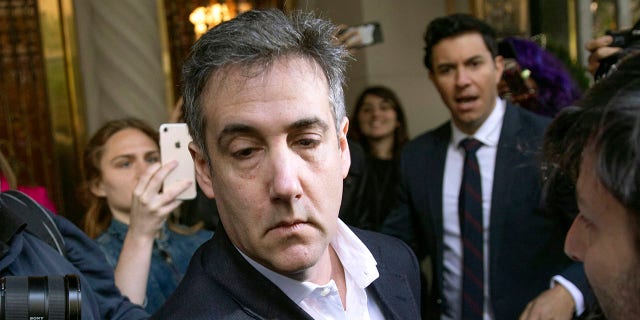
In this May 6, 2019, file photo, Michael Cohen, former attorney to President Donald Trump, leaves his apartment building before beginning his prison term in New York. (AP Photo/Kevin Hagen, File)
President Trump’s former BFF and personal attorney Michael Cohen has been granted a compassionate release from Otisville prison in upstate New York based on an unspecified, underlying medical condition that he has purportedly been hospitalized for, his lawyer Roger Adler said.
Cohen was arrested and sentenced to three years in federal prison for lying to Congress and violating campaign finance laws when he paid hush-money to women who claimed they had affairs with Trump before he became president.
The New York Post reported that Cohen has been busy behind bars penning a tell-all book about his time as Trump’s attorney and plans to publish it before the presidential election in November.
Cohen’s pal, comedian Tom Arnold, told the Daily Beast that he’s been in regular contact with Cohen and that his bombshell book would take no prisoners.
“It’s like ‘Jaws- you don’t see Jaws (the shark) very much, but you hear the music, and for Trump, he knows Michael is coming and Trump better hear the ‘Jaws’ music,” Arnold said, adding that the 53-year-old disbarred lawyer has nothing to lose.
GILBERTO RODRIGUEZ-OREJUELA
Among the high-profile inmates who want out is infamous Colombian cartel leader Gilberto Rodriguez-Orejuela.
The 81-year-old kingpin and his family led a powerful and violent cartel based in California that turned the deadly narcotics business into a corporate-like enterprise that exported 200 tons of the drug worth $2 billion into the United States.
He and his brother Miguel pleaded guilty in 2006 to cocaine-smuggling conspiracy charges and made a deal to spend 30 years in prison in exchange for federal authorities not going after their family members.
U.S. District Judge Federico Moreno described Rodriguez-Orejuela as a “big time drug dealer” at a February hearing where his lawyers asked that the octogenarian be released after spending 15 years in prison. At the hearing prosecutors pushed back on claims that Rodriguez-Orejuela was at “death’s door,” arguing he had recovered from prostate and colon cancer.
WILLIAM MCFARLAND
Lawyers for Fyre Festival CEO and founder Willam McFarland have petitioned the court for his early release.
The 28-year-old event promoter pleaded guilty in March 2018 to wire fraud and is currently serving a six-year prison sentence for his 2017 Bahamas-based music festival. McFarland scammed ticket holders and investors out of millions of dollars.
His lawyers argue he should be allowed to leave prison early because his alleged history of asthma, allergies and heart issues put him at a greater risk of contracting COVID-19 behind bars.
Surprisingly, McFarland told the New York Post that he’s not worried about catching coronavirus but supports the release of at-risk prisoners.
“Elderly people who are at the greatest medical risk should definitely be considered for release,” he said.
His comments were published in an April 3 article in which he claimed prison had changed him and that he was starting a new crowd-funding project behind bars for inmates to call their friends and family during the coronavirus outbreak.
He swears it’s not a scam.
VIKTORIYA NASYROVA
One of New York’s most peculiar criminals has also asked the court to shave time off her sentence.
Viktoriya Nasyrova grabbed headlines after being accused of trying to kill her look-alike in 2016 with a poisoned cheesecake.
The Russian native, 45, has been locked up at the Rose M. Singer Center in East Elmhurst, N.Y. for the past three years.
One day after the cheesecake incident, she returned to Olga Tsvyk’s home with poisoned chicken soup. When the beautician was knocked out, Nasyrova stole Tsvyk’s passport, some cash and a gold ring after trying to stage the scene to make it look like a suicide attempt.
Nasyrova has also been accused of drugging and killing a woman in Russia and then seducing the lead detective on the case before hopping a flight to New York in 2014. She was arrested in March 2017.
Last month she told the New York Post she fears for her life amid the coronavirus outbreak.
“We’re all going to drop dead here,” she said.
MARTIN SHKRELI
“Pharma bro” Martin Shkreli, the former CEO of Turing Pharmaceuticals who bragged about jacking up prices on lifesaving drugs, is also seeking an early release but his lawyers claim it’s because he’s got a heart of gold and is interested in helping find a cure for COVID-19.
Court papers filed in U.S. District Court in Brooklyn, N.Y., state the often-smirking Shkreli, who is serving a seven-year prison sentence after being convicted in 2017 on securities fraud and conspiracy charges, can be a more productive member of society when he’s not behind bars.
They claim the Wu-tang Clan loving 37-year-old has “devoted countless hours” to developing a cure and wants to be allowed to serve the rest of his sentence at home with an electronic monitor.
Although his lawyers claim his work on COVID-19 is in its “preliminary stages,” they said Shkreli is a “skilled medical researcher” who has committed his life’s work to the “life sciences and rare disease community.”
Shkreli gained notoriety in 2015 after he raised the price of anti-parisitic drug Daraprim by 5,000 percent. Though the move angered just about everyone who heard it, his downfall was linked to his management at Retrophin and the hedge fund MSMB Capital Management between 2009 and 2012.
There is no word on whether Wu-tang Clan will play a celebratory concert should Shkreli be granted an early release.
TEKASHI 6IX9INE
Brooklyn rapper Tekashi 6ix9ine (Daniel Hernandez) was released from a federal lockup to serve out the remainder of his two-year racketeering sentence at home.
Lawyers for the 23-year-old who suffers from asthma and was once hospitalized for bronchitis, secured his release after convincing U.S. District Judge Paul Engelmayer that his asthma presented an “extraordinary and compelling” reason to get out of jail early.
Hernandez, who has multiple face tattoos and used to sport a multi-colored man bun, pleaded guilty last year after testifying against members of Nine Trey Gangsta Bloods, a Rikers Island jail gang. He said the money made off of his music helped the group “so they could buy guns and stuff.”
Hernandez’s lawyer asked a federal judge on April 23 if his client could extend the perimeters of his house arrest and make music videos in his backyard.
YNW MELLY
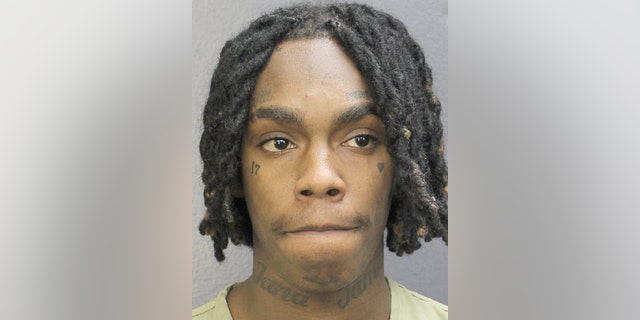
FT. LAUDERDALE, FL – FEBRUARY 13: In this handout photo provided by the Broward’s Sheriff’s Office, rapper YNW Melly, real name Jamell Demons, is seen in a police booking photo after being charged with two counts of murder in the first degree February 13, 2019 in Ft. Lauderdale, Florida.
(Broward Sheriff’s Office/Getty)
Lawyers on behalf of rapper YNW Melly (Jamelle Maurice Demons) claimed in legal documents that the 20-year-old was on the verge of dying and should be a candidate for restricted release.
They say Demons, who has been charged with double murder in the deaths of two fellow rappers, has the chills, head and body aches.
They said the Gillford, Fla., native has lost a lot of weight in prison and hasn’t had access to adequate healthcare.
CLICK HERE FOR THE FOX NEWS APP
Demons, best known for his songs “Murder on My Mind” and “Mixed Personalities,” says he fears for his life and that jail isn’t equipped to deal with the deadly pandemic.
The post High profile inmates from Michael Avenatti to Tekashi 6ix9ine who have been released from prison early beca… appeared first on Virus Reports.
]]>