

LANSING, MI — The ongoing COVID-19 pandemic continues to impact more and more people as Michigan hospitals facing economic struggles announce layoffs and furloughs at a time when they are treating thousands of patients.
Testing numbers continue to fluctuate as a backlog of cases led to a record high of daily deaths being reported in the state on Tuesday, April 21.
Meanwhile doctors across the state say finding proper ways to treat COVID-19, which stands for coronavirus disease 2019, change almost daily as experts work to better understand the virus that causes the illness.
Below is a look at the most recent developments related to the crisis.
State reports record high daily coronavirus deaths, but there’s a caveat
On Tuesday, Michigan reported the most deaths in a 24-hour period since the pandemic began. However, state officials are quick to say that while 232 deaths were reported, many of them are cases that are older, and the reporting is just now catching up.
Detroit reported 87 deaths Tuesday but Mayor Mike Duggan says not all the deaths took place between Monday and Tuesday.
Michigan has now had 2,700 people die from COVID-19. Updated confirmed case numbers show an additional 967 cases, bringing the state total to 32,967. Tuesday’s increase marked the highest single day jump since Thursday, April 16. As of April 17, 3,237 people have recovered.
Partisan politics infect Michigan coronavirus response
From complaints about the length and restrictions involved in Gov. Gretchen Whitmer’s stay-at-home order to accusations that the federal government isn’t doing enough to help states, the response to the pandemic has become increasingly political.
Take a look at how partisan politics has already infiltrated many levels of government and the impact that’s had on the response to the pandemic.
Health care employees laid off or furloughed at pair of Michigan health care systems
Although many hospitals are busier than ever, the cost of treating COVID-19 patients has led to many health care systems losing significant amounts of money during the crisis. On Tuesday, Beaumont Health announced it is temporarily laying off 2,475 employees, while Bronson Healthcare announced furloughs for employees.
Beaumont is also permanently eliminating 450 positions. Bronson announced executive level pay cuts, including a 25% pay cut for the CEO.
Protocols for treating COVID-19 change by the day, week
Health experts across the state say they continue to struggle with how to treat COVID-19 patients because in large part, they don’t know what they’re dealing with. Standard treatments for respiratory illnesses don’t work and what seems to work on one patient, has no effect on another.
“It’s a different disease than we’ve ever seen before,” said Dr. Anne Messman, an emergency department doctor for Detroit Medical Center.
“We don’t have year’s worth of data or randomized controlled trials to guide our management. We’re just going off to the experience of whatever country where COVID presented previously that can give us information. I’m not saying it wasn’t reliable, but the recommendations they were making don’t seem to be holding true over here.”
This story looks at how medical experts are trying to develop treatment plans and just how quickly those plans can change.
Governor Whitmer weighs in on 5-year-old’s death from virus
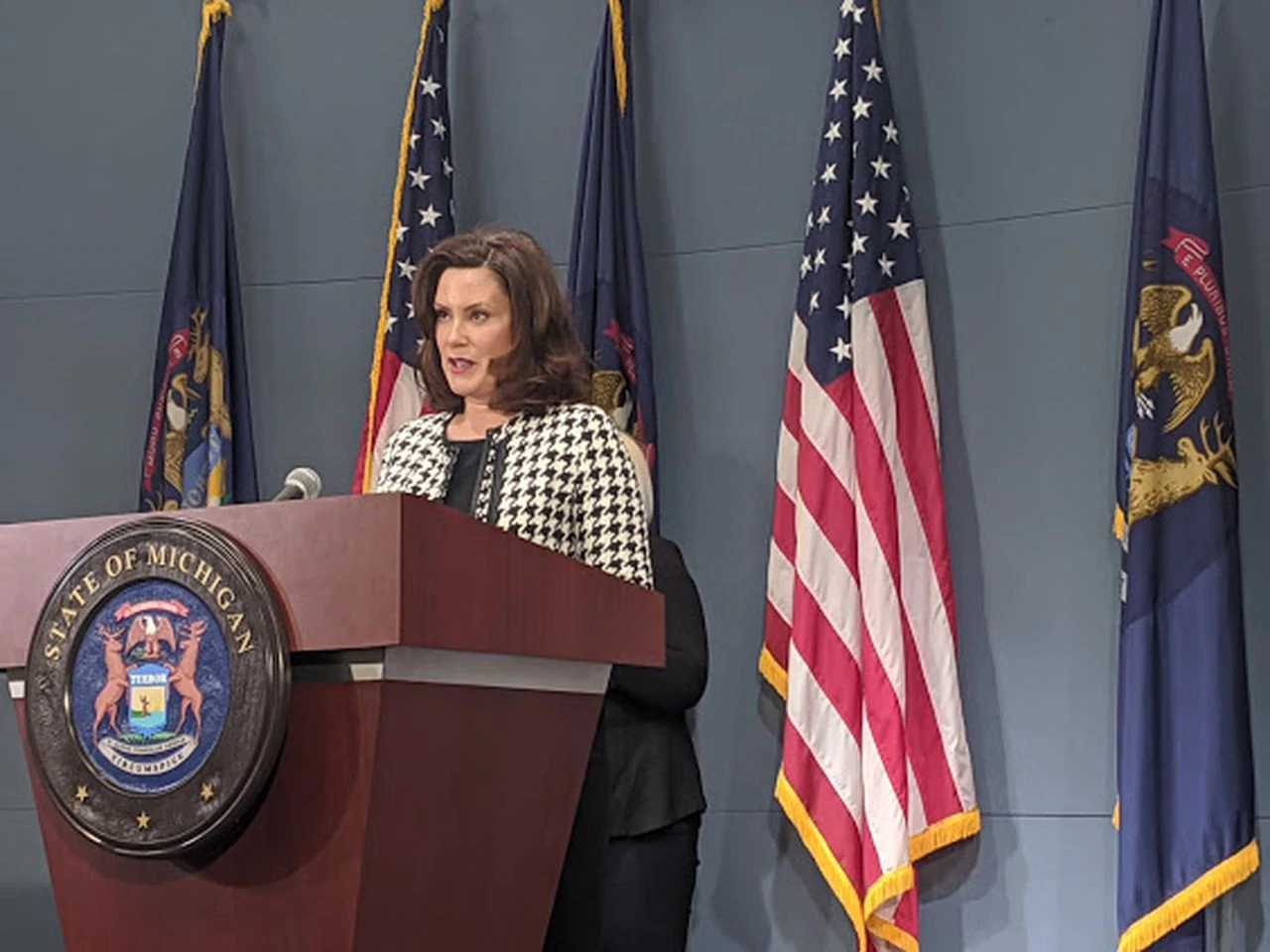
Whitmer spoke about the death of 5-year-old Skylar Herbert Tuesday, a day after Herbert became the youngest person in the state to die from COVID-19. Herbert’s parents, who are both front line workers in Detroit made the decision to remove their daughter from a ventilator Monday.
“They’ve been on the front line and they’ve served with honor and integrity,” Whitmer said. “They did not deserve to lose their child to this virus. Nobody does.”
Detroit reports 87 new deaths, Mayor Duggan says backlogged cases are to blame
Duggan announced Tuesday that Detroit is reporting 87 new deaths from the disease. However, he said that while the total is alarming, it was that high because dozens of cases were being reported that were backlogged.
“Eighty-seven people didn’t die yesterday. There are dozens of cases that are weeks old. Some of them back to March,” Duggan said.
Jackson County trying to declare some businesses ‘essential’ despite Whitmer’s order
Jackson County officials are considering a resolution that would declare certain businesses “essential” in the county in order to allow them to reopen despite Whitmer’s stay-at-home order. Republicans on the Jackson County Board of Commissioners are pushing for some sort of resolution rebuking the order ending April 30.
Another resolution being considered would simply state that the board believes the businesses should be open but would not give the businesses any authority to reopen. However, county officials are concerned if a Jackson County business reopens and gets punished by the state, it could point to the county resolution as its reasoning in a lawsuit.
Expert offers tips on disinfecting your home
With the importance of cleanliness stressed more now than ever, knowing exactly how to properly clean your home and which products to use to do so is important.
From how long you should leave a cleaner on a surface before wiping, to how to make safe homemade cleaners, this story gives you a look at how to keep your home virus free.
Michigan expands COVID-19 testing to all in-person workers
The state expanded its testing criteria Tuesday to allow anyone working face-to-face with members of the public, from health care workers to grocery store workers to get a COVID-19 test.
Expanded testing will help identify asymptomatic cases in which people may still be spreading the virus as they report to work. Health officials believe as many as 25 to 50 percent of people with COVID-19 might not show symptoms, according to the Centers for Disease Control and Prevention.
Drive-thru testing with on-site results opens in Dearborn
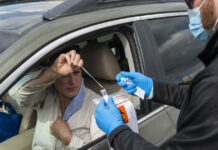
Residents concerned that they might have COVID-19 have a new and more timely way of determining if they are positive for the disease. A drive-thru testing site in Dearborn opened Tuesday that can perform a test and give results on site, allowing for people to quarantine or make arrangements immediately.
“We’re delivering on our commitment to helping increase the frequency and efficiency of testing,” said Troyen Brennan, chief medical officer and executive vice president of CVS Health, in a statement.
“Based on discussions we’re having with other states we expect our testing capacity will continue to increase, subject to availability of supplies.”
Parks staff to count cars, consider temporary closures
Many Michiganders are desperate for outdoor activity and recreation as the ongoing stay-at-home order restricts most of their traditional options. That’s led to many parks – which are open – to become overcrowded at peak times.
The Huron-Clinton Metroparks system will now begin counting cars in the parking lots and if too many cars are on site, staff will close the entrance. Counting will occur three times daily. The system operates 13 parks in Metro Detroit.
McDonald’s offering free meals to front line workers during COVID-19 pandemic
Frontline workers who continue to go to work every day during the COVID-19 pandemic can get a free meal each day from McDonald’s beginning Wednesday, April 22 until May 5. The company announced the offer Tuesday to all healthcare workers, police officers, firefighters and paramedics for free breakfast, lunch or dinner.
The meals are served in a Happy Meal box and a limited menu is available for the free meals. Valid ID is required to get a free meal. The limit is one per person per day and menu options may vary by restaurant.
CORONAVIRUS PREVENTION TIPS
In addition to washing hands regularly and not touching your face, officials recommend practicing social distancing, assuming anyone may be carrying the virus.
Health officials say you should be staying at least six feet away from others and working from home, if possible.
Carry hand sanitizer with you and use disinfecting wipes or disinfecting spray cleaners on frequently-touched surfaces in your home (door handles, faucets, counter tops) and when you go into places like stores.
Read more Michigan coronavirus coverage here
Michigan awarded federal funding for mental health services during coronavirus pandemic
Michigan health care system launches study testing for coronavirus antibodies
Bronson Healthcare announces pay cuts, furloughs amid coronavirus financial downturn
Michigan healthcare system lays off 2,475 due to ‘dire financial effects’ of coronavirus
Note to readers: if you purchase something through one of our affiliate links we may earn a commission.